Tell us about the job
Takes about a minute. No obligation.
A furnace in Edwards County cycles its burner and heat exchanger through a long heating season before it gets any rest. Homes in Edwards County, KS run heat about seven months a year, from October through April. The ignition system fires repeatedly across those months, and the heat exchanger expands and contracts with every cycle. By the time a furnace reaches mid-life here, a contractor diagnosing a fault looks hard at those components first, because the accumulated cycling load shows up in cracks, worn igniters, and degraded flame sensors well before a control board fails.
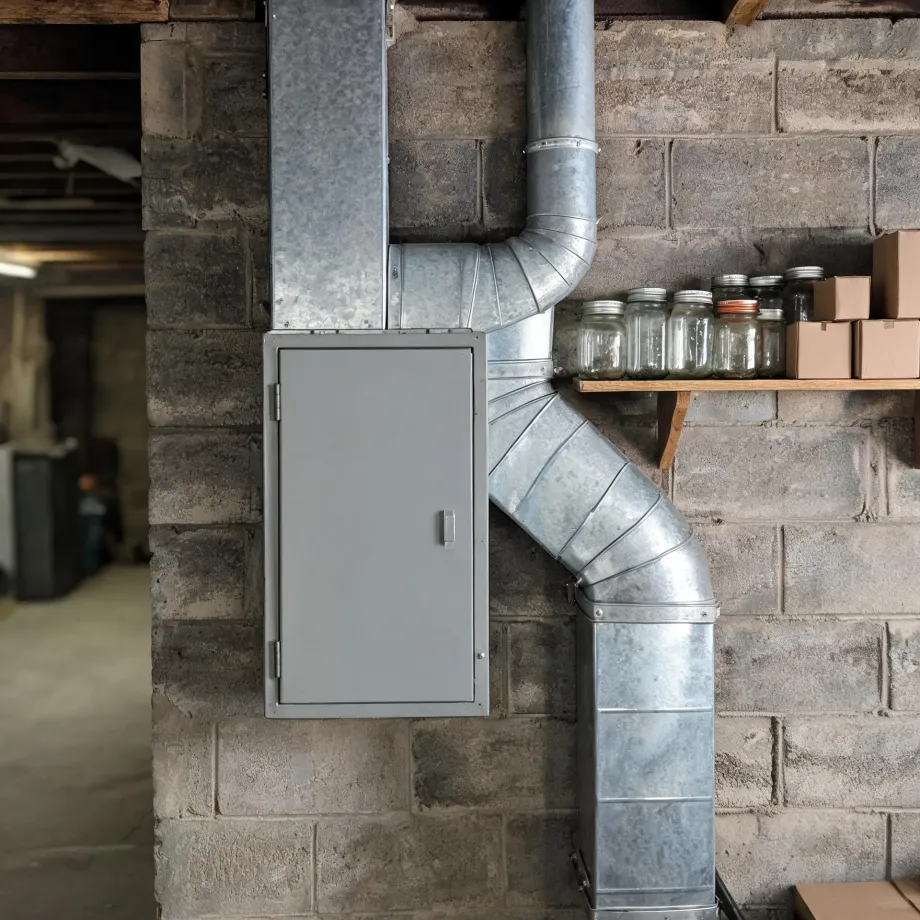
Ductwork in a house this old was routed and sized for equipment that has since been replaced, sometimes more than once, and each swap left its own marks on what a contractor now pulls apart. Half the homes in Edwards County, Kansas were built in 1948 or earlier (2020-2024 ACS 5-year). When a furnace in stock that old finally fails, what the opened unit contains matters more than how the job looked from the outside: heat exchangers cracked from decades of cycling, burners running on replacement parts that were themselves substituted years ago, and components whose original specifications no longer match anything on a current parts list. That last detail is what can turn a repair quote into a longer conversation about what can actually be sourced.
The Parts of a Furnace a Contractor Checks First
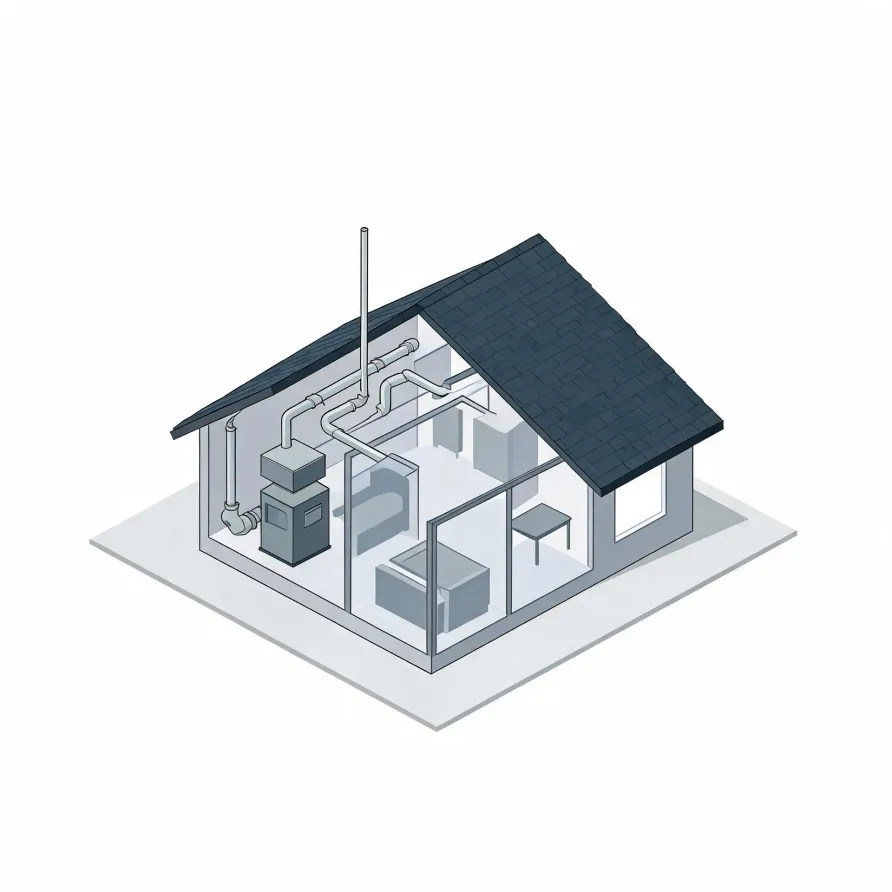
The heat exchanger sits at the core of the furnace cabinet and is where a contractor looks early in any repair call. Cracks or buildup there affect the whole system. The burner assembly sits just below it, drawing gas and producing the flame that starts the heating cycle.
The blower motor and its fan wheel sit in the lower section of the cabinet and push conditioned air into the supply plenum. The igniter and flame sensor work together at the burner; when a furnace fails to start or shuts off mid-cycle, those two parts are usually where the diagnosis begins.
The drawing shows a general layout of a typical furnace system, and a licensed contractor determines which components apply to the specific equipment and configuration in your home.
Get matched in Edwards CountyEdwards County, by the numbers
122 severe weather events were recorded in Edwards County, Kansas between 2015 and 2024.
NOAA National Centers for Environmental Information, Storm Events Database, bulk CSV export, events 2015-01-01 through 2024-12-31.Half the homes in Edwards County, Kansas were built in 1948 or earlier (2020-2024 ACS 5-year).
U.S. Census Bureau, 2020-2024 American Community Survey 5-Year EstimatesEdwards County, Kansas holds 1,549 housing units (2020-2024 ACS 5-year).
U.S. Census Bureau, 2020-2024 American Community Survey 5-Year EstimatesOwners occupy 79.2% of the occupied homes in Edwards County, Kansas (2020-2024 ACS 5-year).
U.S. Census Bureau, 2020-2024 American Community Survey 5-Year EstimatesFurnace Repair Rules & Standards on the Books for Edwards County, Kansas4 sourced rules and standards
What HVAC Repair Looks Like in Edwards County
Non-weatherized gas furnaces manufactured on or after November 19, 2015 must reach 80.0 percent AFUE.
Non-weatherized oil-fired furnaces manufactured on or after November 19, 2015 must reach 83.0 percent AFUE.
Mobile home gas furnaces manufactured on or after November 19, 2015 must reach 80.0 percent AFUE.
Non-weatherized gas furnaces manufactured on or after December 18, 2028 must reach 95.0 percent AFUE, up from the 80.0 percent minimum that applies to units manufactured before that date.
Severe Weather Events in Edwards County
Extreme weather puts real stress on furnace components, and how much stress depends entirely on local conditions. This chart shows the recorded severe weather history for {county}, so you can see what the equipment here has been working against.
122 severe weather events, 2015–2024. Source: NOAA National Centers for Environmental Information, Storm Events Database.