Tell us about the job
Takes about a minute. No obligation.
The burner, igniter, and heat exchanger on a Pawnee County furnace do not wear evenly across the calendar. Homes in Pawnee County, KS run heat about seven months a year, from October through April. A furnace cycling through that kind of heating season puts its ignition system through a high count of start-stop cycles, and the heat exchanger flexes with every one of them. By the time a homeowner calls for a repair, a contractor is usually looking at fatigue across several components, not a single point of failure. Cracks in a heat exchanger or a degraded igniter are the expected findings, not surprises.
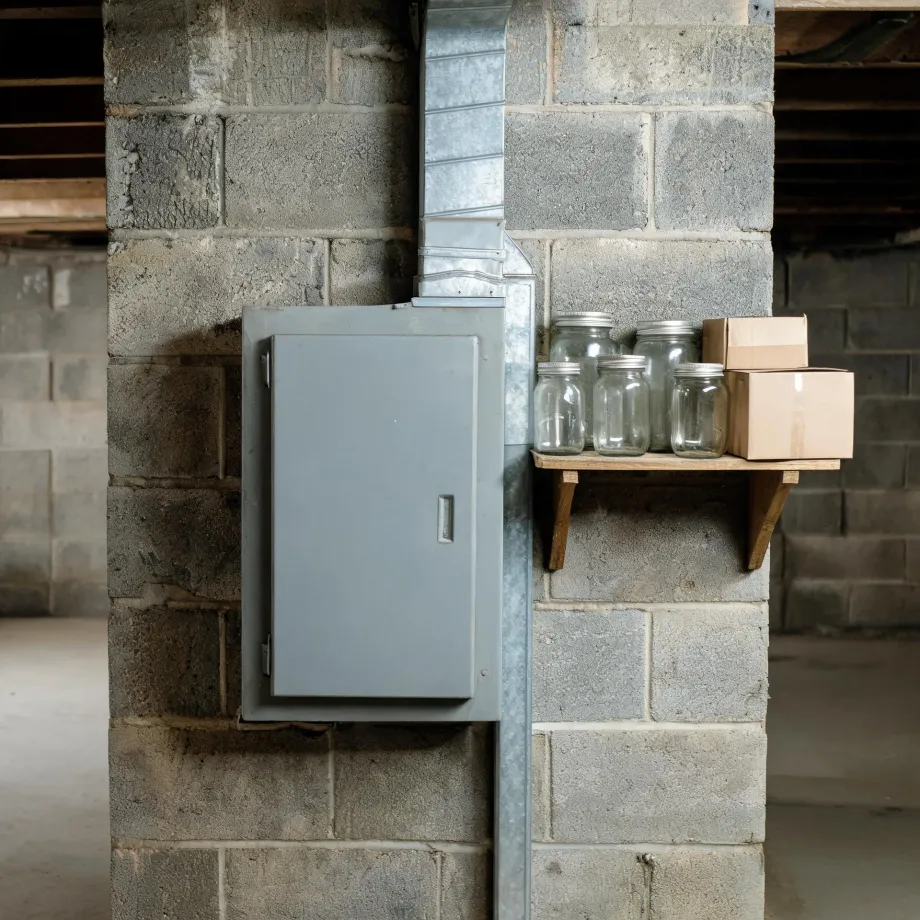
Older ductwork carries the history of every system that has run through it, and in a county where prewar construction makes up a significant share of the housing, that history shows up inside opened equipment as much as in the walls around it. Half the homes in Pawnee County, Kansas were built in 1956 or earlier (2020-2024 ACS 5-year). A furnace that has been patched and adapted across that span may be running on parts pulled from discontinued lines, and a contractor opening the unit has to confirm whether what is needed is still being manufactured before a repair scope takes shape. Some components have no current equivalent and the job changes when that is what turns up.
The Parts of a Furnace a Contractor Checks First
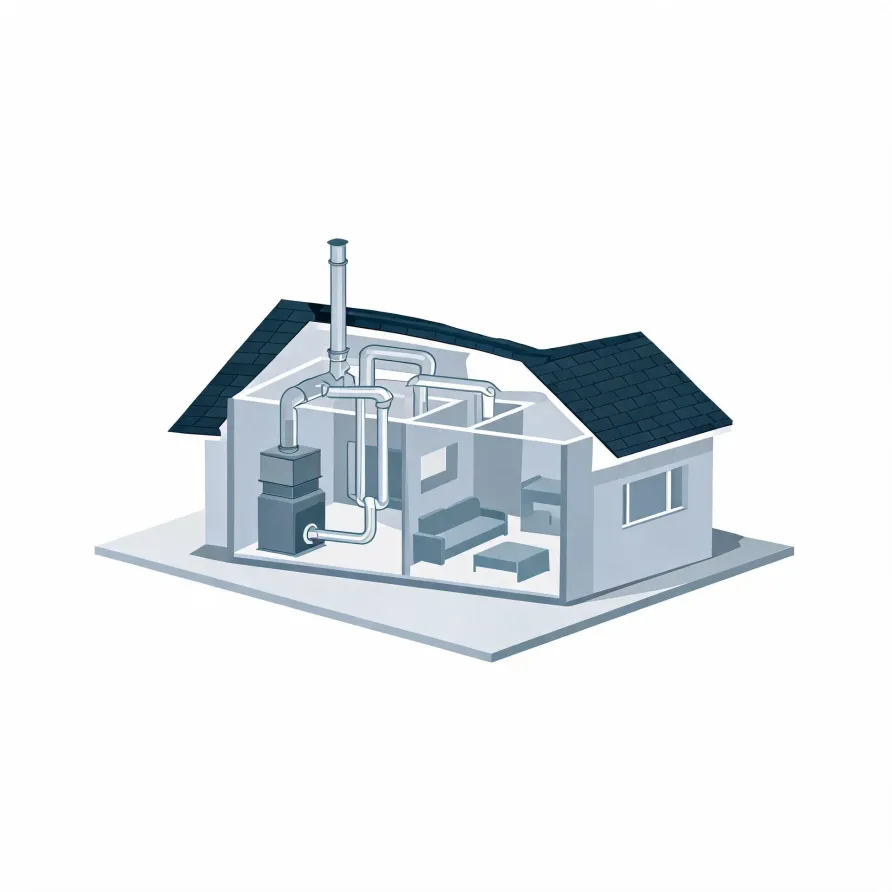
The furnace itself sits in the basement, utility room, or closet and is the piece a contractor goes to first. Inside it, the heat exchanger and burner assembly are the common failure points. A cracked heat exchanger or a burner that won't ignite are the kinds of faults that stop the system from producing heat at all.
The blower motor pushes conditioned air out through the supply side and pulls return air back in. The flue pipe runs from the furnace to an exterior wall or roofline, carrying combustion gases out of the house. The thermostat on an interior wall is the control signal for all of it, and a faulty one can mimic a much larger problem.
The drawing shows a typical layout, and a licensed contractor determines which parts apply and what condition they are in for your specific home.
Get matched in Pawnee CountyPawnee County by the Numbers
160 severe weather events were recorded in Pawnee County, Kansas between 2015 and 2024.
NOAA National Centers for Environmental Information, Storm Events Database, bulk CSV export, events 2015-01-01 through 2024-12-31.Half the homes in Pawnee County, Kansas were built in 1956 or earlier (2020-2024 ACS 5-year).
U.S. Census Bureau, 2020-2024 American Community Survey 5-Year EstimatesPawnee County, Kansas holds 3,057 housing units (2020-2024 ACS 5-year).
U.S. Census Bureau, 2020-2024 American Community Survey 5-Year EstimatesOwners occupy 66.2% of the occupied homes in Pawnee County, Kansas (2020-2024 ACS 5-year).
U.S. Census Bureau, 2020-2024 American Community Survey 5-Year EstimatesCodes & Standards Governing Furnace Repair in Pawnee County, Kansas4 sourced rules and standards
What HVAC Repair Looks Like in Pawnee County
Non-weatherized gas furnaces manufactured on or after November 19, 2015 must reach 80.0 percent AFUE.
Non-weatherized oil-fired furnaces manufactured on or after November 19, 2015 must reach 83.0 percent AFUE.
Mobile home gas furnaces manufactured on or after November 19, 2015 must reach 80.0 percent AFUE.
Non-weatherized gas furnaces manufactured on or after December 18, 2028 must reach 95.0 percent AFUE, up from the 80.0 percent minimum that applies to units manufactured before that date.
Severe Weather Events in Pawnee County
Weather puts direct load on heating equipment. Hard conditions accelerate wear on components that are already working at the edge of their design range, and what that looks like in Pawnee County shapes the repair patterns contractors see here.
160 severe weather events, 2015–2024. Source: NOAA National Centers for Environmental Information, Storm Events Database.