Tell us about the job
Takes about a minute. No obligation.
A furnace repair here starts with the burner assembly and ignition system, because those are the parts that cycle every time the unit fires. Homes in Stafford County, KS run heat about seven months a year, from October through April. That length of continuous seasonal use pushes wear onto the heat exchanger and the igniter well ahead of components that only run during brief shoulder seasons elsewhere. When a contractor opens a furnace in this county, cracked heat exchangers and degraded igniters are what they find most often, and a quote that does not account for both can leave the homeowner calling again before spring.
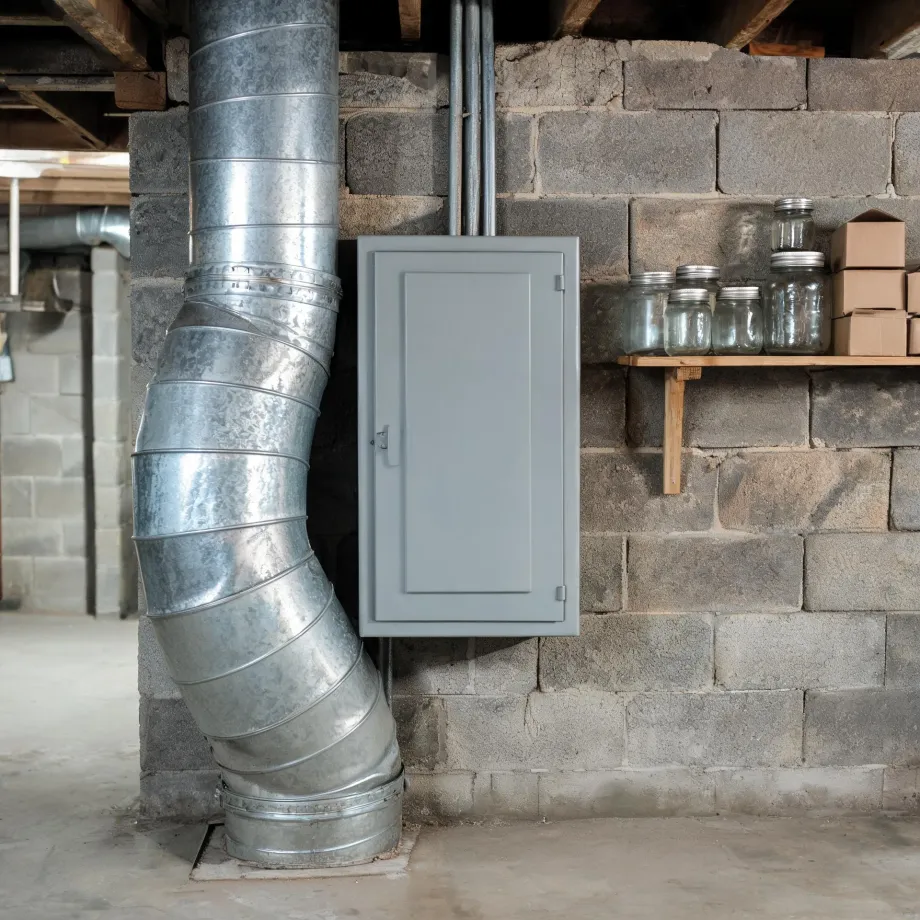
Ductwork in a house this old has seen several rounds of equipment come and go. What a technician finds when they open a furnace here matters more than the nameplate, because the part that has failed may belong to a product line the manufacturer stopped supporting years back. Half the homes in Stafford County, Kansas were built in 1951 or earlier (2020-2024 ACS 5-year). That history of repeated replacement means a repair quote in Stafford County has to account for sourcing before it can settle on a price. If a direct replacement part is no longer made, the contractor has to decide between an aftermarket fit, a modified solution, or a conversation about what comes next.
The Parts of a Furnace a Contractor Checks First
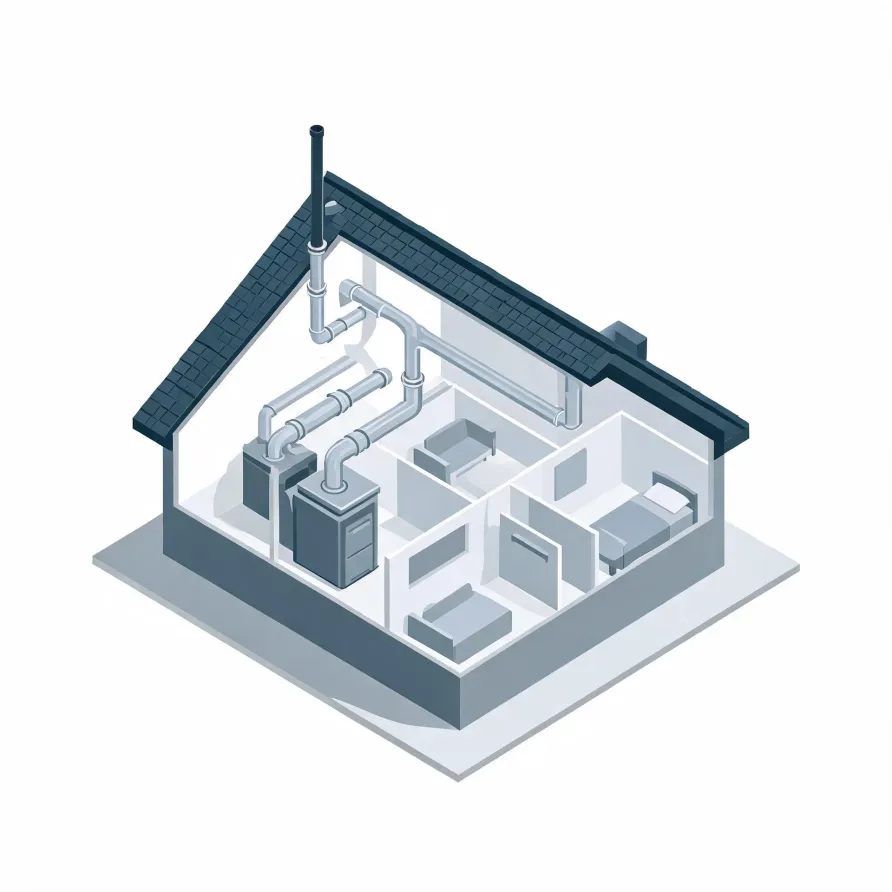
The furnace cabinet sits in the basement, utility room, or closet and is the core of the system. Inside it, the heat exchanger does the actual work of warming air, and a cracked or corroded exchanger is one of the first things a contractor looks at when a furnace is underperforming or throwing fault codes. The burner assembly, which fires beneath the heat exchanger, and the igniter that lights it are also early suspects when the unit fails to start or short-cycles.
The blower motor and fan sit at the base of the cabinet and push conditioned air out through the supply plenum. The flue pipe runs from the top of the cabinet to an exterior vent and carries combustion gases out of the house. A contractor checks the flue for blockages or separation because a compromised flue affects both safety and how well the burner operates.
The drawing shows a representative furnace layout, and a licensed contractor determines which components apply to the specific equipment and configuration in your home.
Get matched in Stafford CountyStafford County, by the numbers
105 severe weather events were recorded in Stafford County, Kansas between 2015 and 2024.
NOAA National Centers for Environmental Information, Storm Events Database, bulk CSV export, events 2015-01-01 through 2024-12-31.Half the homes in Stafford County, Kansas were built in 1951 or earlier (2020-2024 ACS 5-year).
U.S. Census Bureau, 2020-2024 American Community Survey 5-Year EstimatesStafford County, Kansas holds 2,093 housing units (2020-2024 ACS 5-year).
U.S. Census Bureau, 2020-2024 American Community Survey 5-Year EstimatesOwners occupy 82.3% of the occupied homes in Stafford County, Kansas (2020-2024 ACS 5-year).
U.S. Census Bureau, 2020-2024 American Community Survey 5-Year EstimatesCodes & Standards Behind Furnace Repair in Stafford County, Kansas4 sourced rules & standards
What the repair visit looks like
Non-weatherized gas furnaces manufactured on or after November 19, 2015 must reach 80.0 percent AFUE.
Non-weatherized oil-fired furnaces manufactured on or after November 19, 2015 must reach 83.0 percent AFUE.
Mobile home gas furnaces manufactured on or after November 19, 2015 must reach 80.0 percent AFUE.
Non-weatherized gas furnaces manufactured on or after December 18, 2028 must reach 95.0 percent AFUE, up from the 80.0 percent minimum that applies to units manufactured before that date.
Weather Pressure on HVAC Equipment in Stafford County
Stafford County weather puts real mechanical load on furnaces. Every hard weather event means the equipment works harder, and that wear shows up as repair needs a local contractor sees directly.
105 severe weather events, 2015–2024. Source: NOAA National Centers for Environmental Information, Storm Events Database.