Tell us about the job
Takes about a minute. No obligation.
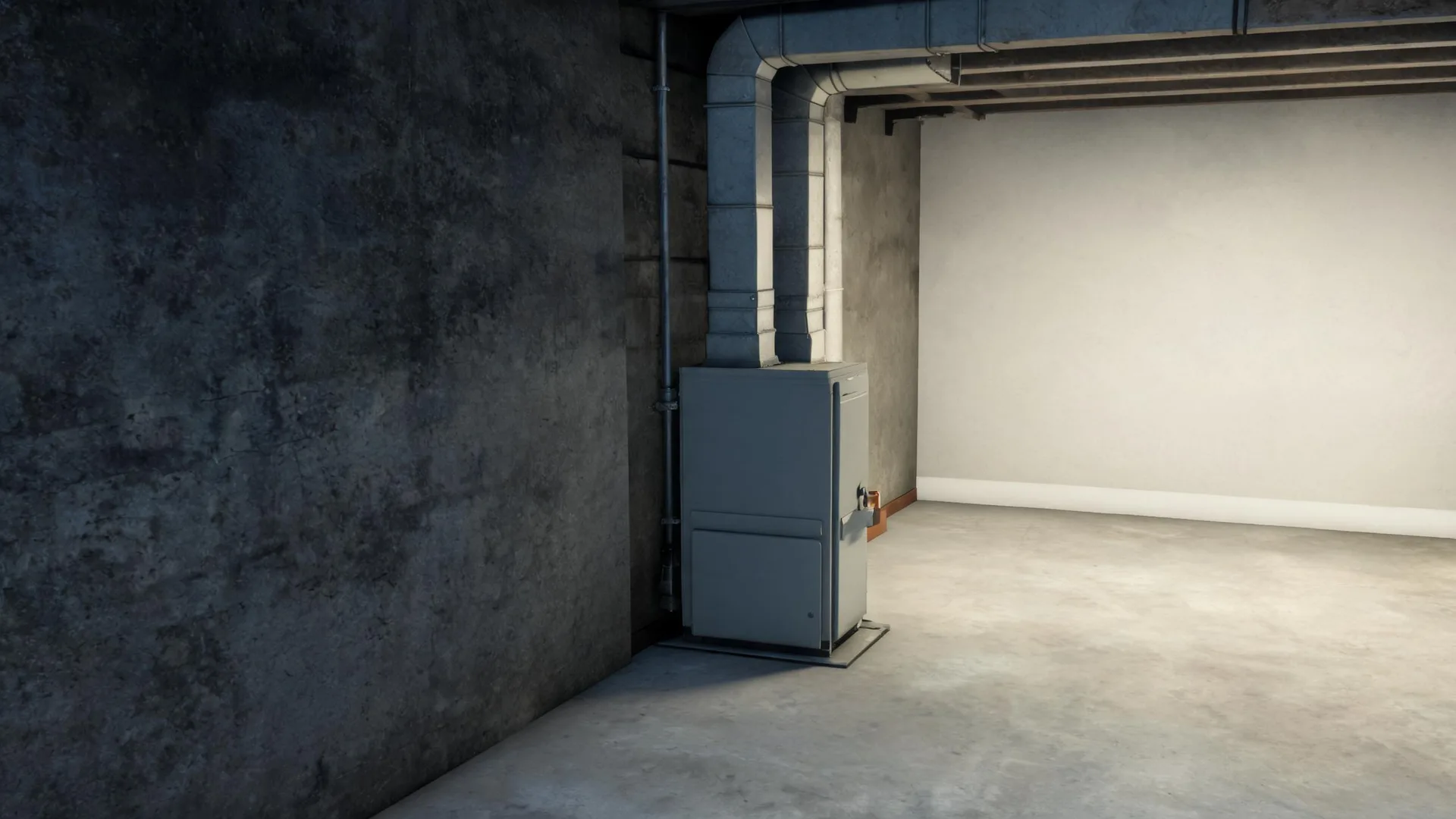
A furnace repair here starts with the parts that have worked hardest: the heat exchanger, the burner, and the ignition system. Homes in Rice County, KS run heat about seven months a year, from October through April. Each of those cycles on and off with every call for heat, and a long heating season loads them in ways that show up as cracks, carbon buildup, or igniter failure before other components have a chance to wear. A contractor working a repair in this county checks the heat exchanger first, because a cracked one is a safety issue and a billing surprise if it surfaces after other parts have already been replaced.
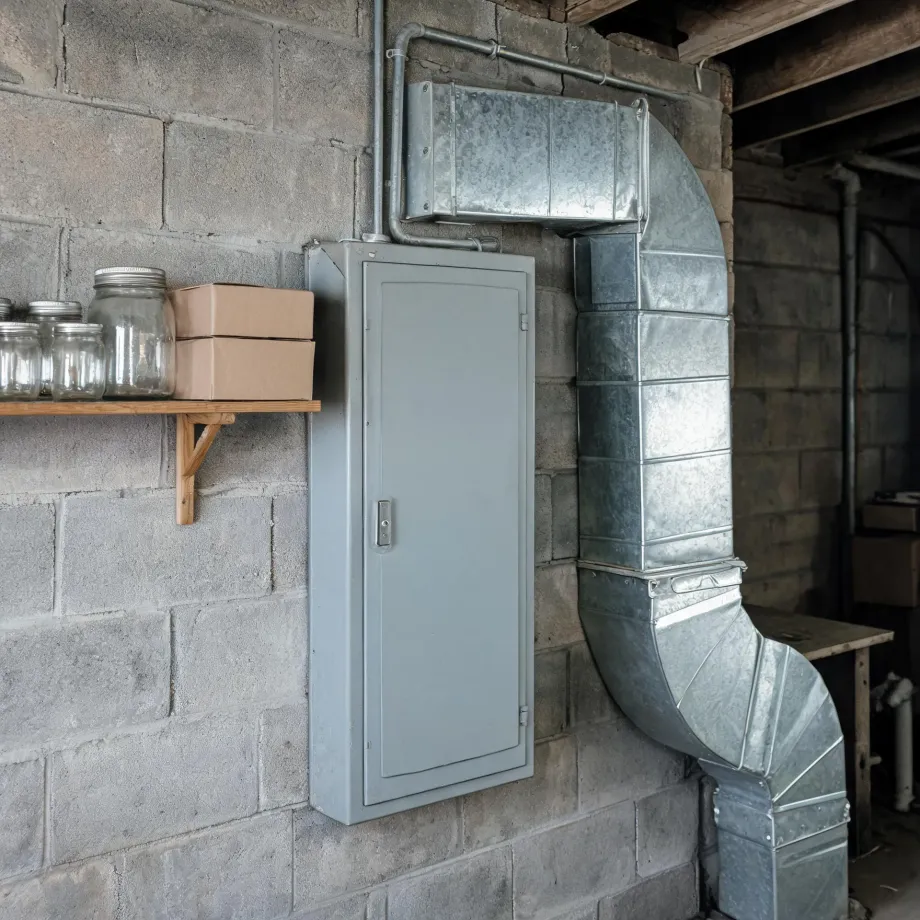
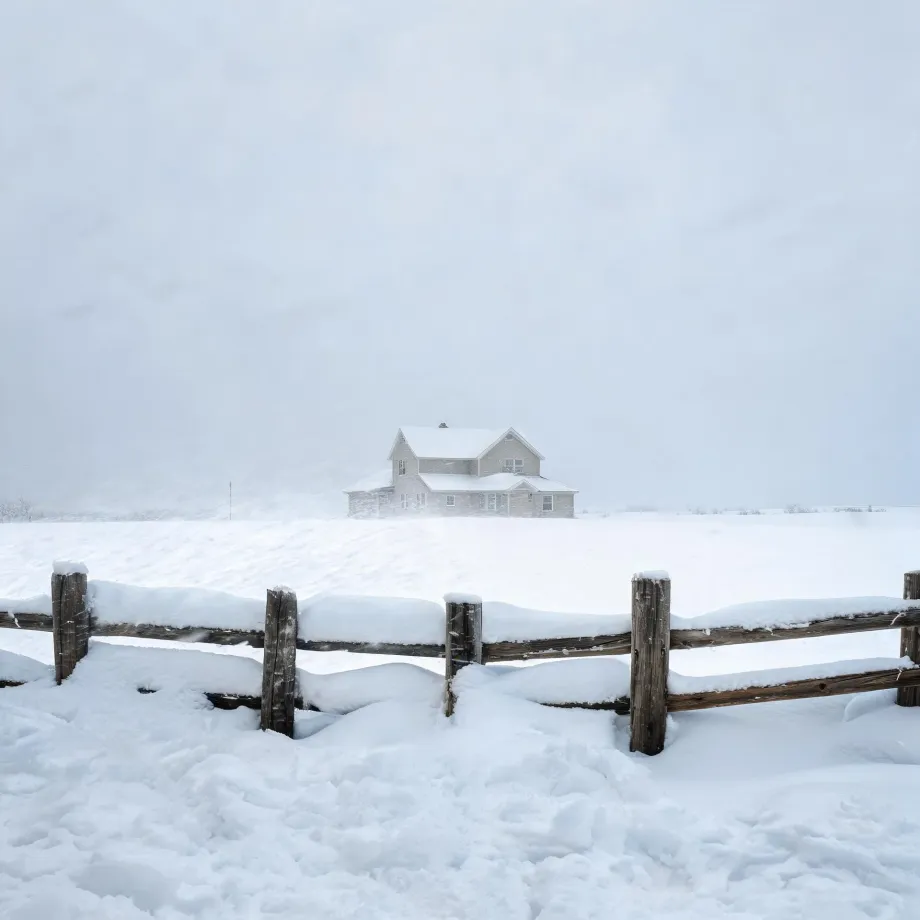
Half the homes in Rice County, Kansas were built in 1953 or earlier (2020-2024 ACS 5-year). A furnace sitting in stock this old has almost certainly been replaced at least once since the house was built, which means the unit a contractor opens is not necessarily old, but the parts it calls for can still be out of production. Heat exchangers, igniter assemblies, and control boards from discontinued product lines take time to source, and sometimes cannot be sourced at all. That gap between what the contractor finds inside the cabinet and what a distributor can actually ship is where repair jobs in Rice County either close quickly or stall.
The Parts of a Furnace a Contractor Checks First
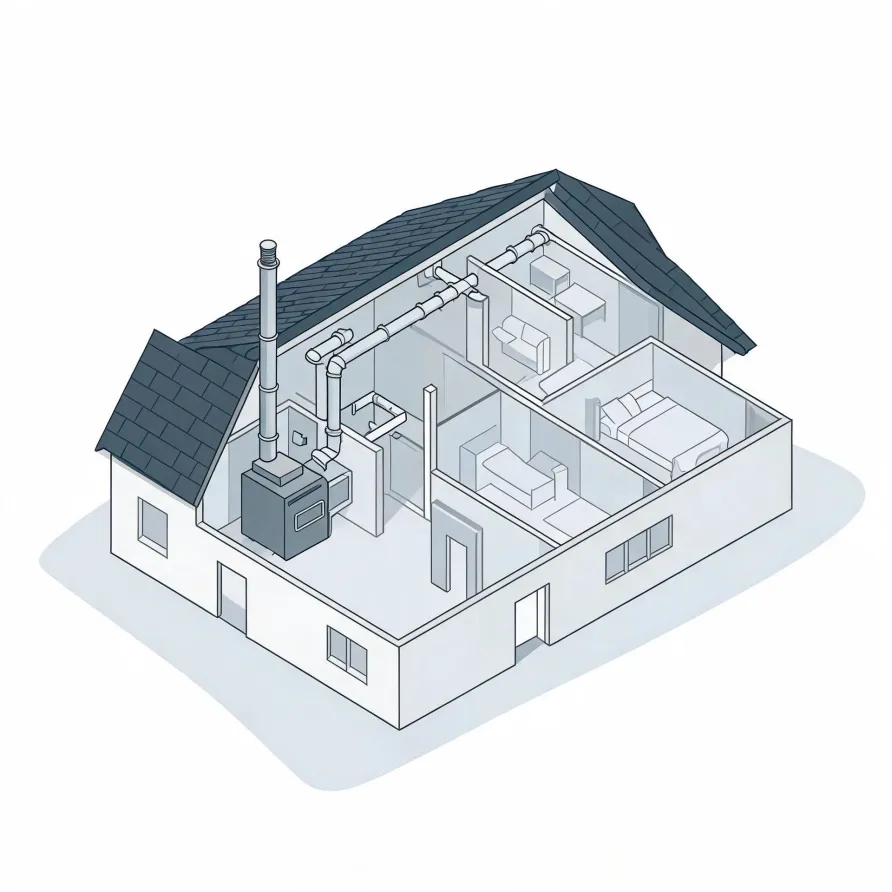
The heat exchanger sits inside the furnace cabinet in the basement or utility closet and is the piece a contractor goes to early when a furnace runs but heats poorly or trips the limit switch. The burners, which fire directly into that exchanger, get checked when the furnace fails to ignite or cycles off too fast. The blower motor sits at the bottom of the cabinet and moves conditioned air into the supply side of the house.
The flue pipe runs from the top of the cabinet up and out of the house, and a contractor checks it when combustion gases are not drafting correctly. The control board sits inside the cabinet and coordinates every other component. When something stops responding on cue, that board is often where the diagnosis leads.
The drawing shows a typical furnace layout, and a licensed contractor determines which components apply to the specific equipment and installation in your home.
Get matched in Rice CountyRice County, Kansas, by the numbers
153 severe weather events were recorded in Rice County, Kansas between 2015 and 2024.
NOAA National Centers for Environmental Information, Storm Events Database, bulk CSV export, events 2015-01-01 through 2024-12-31.Half the homes in Rice County, Kansas were built in 1953 or earlier (2020-2024 ACS 5-year).
U.S. Census Bureau, 2020-2024 American Community Survey 5-Year EstimatesRice County, Kansas holds 4,384 housing units (2020-2024 ACS 5-year).
U.S. Census Bureau, 2020-2024 American Community Survey 5-Year EstimatesOwners occupy 77.4% of the occupied homes in Rice County, Kansas (2020-2024 ACS 5-year).
U.S. Census Bureau, 2020-2024 American Community Survey 5-Year EstimatesCodes & Standards Behind Furnace Repair in Rice County, Kansas4 sourced rules & standards
What happens once a contractor comes out
Non-weatherized gas furnaces manufactured on or after November 19, 2015 must reach 80.0 percent AFUE.
Non-weatherized oil-fired furnaces manufactured on or after November 19, 2015 must reach 83.0 percent AFUE.
Mobile home gas furnaces manufactured on or after November 19, 2015 must reach 80.0 percent AFUE.
Non-weatherized gas furnaces manufactured on or after December 18, 2028 must reach 95.0 percent AFUE, up from the 80.0 percent minimum that applies to units manufactured before that date.
Severe Weather Events in Rice County, Year by Year
Kansas weather puts real strain on heating equipment over time. Hard conditions accelerate wear, and a furnace serving Rice County faces a local workload that a generic repair estimate will not account for.
153 severe weather events, 2015–2024. Source: NOAA National Centers for Environmental Information, Storm Events Database.