Tell us about the job
Takes about a minute. No obligation.
A contractor called out to repair a furnace in Hodgeman County starts with the burner assembly and heat exchanger, because those are the parts that have been cycling longest and hardest. Homes in Hodgeman County, KS run heat about seven months a year, from October through April. That run puts repeated thermal stress on the heat exchanger and works the ignition system through hundreds of cold-start cycles before spring. Cracks in the exchanger and igniter failures are what contractors find most often here, and they are the right place to begin.
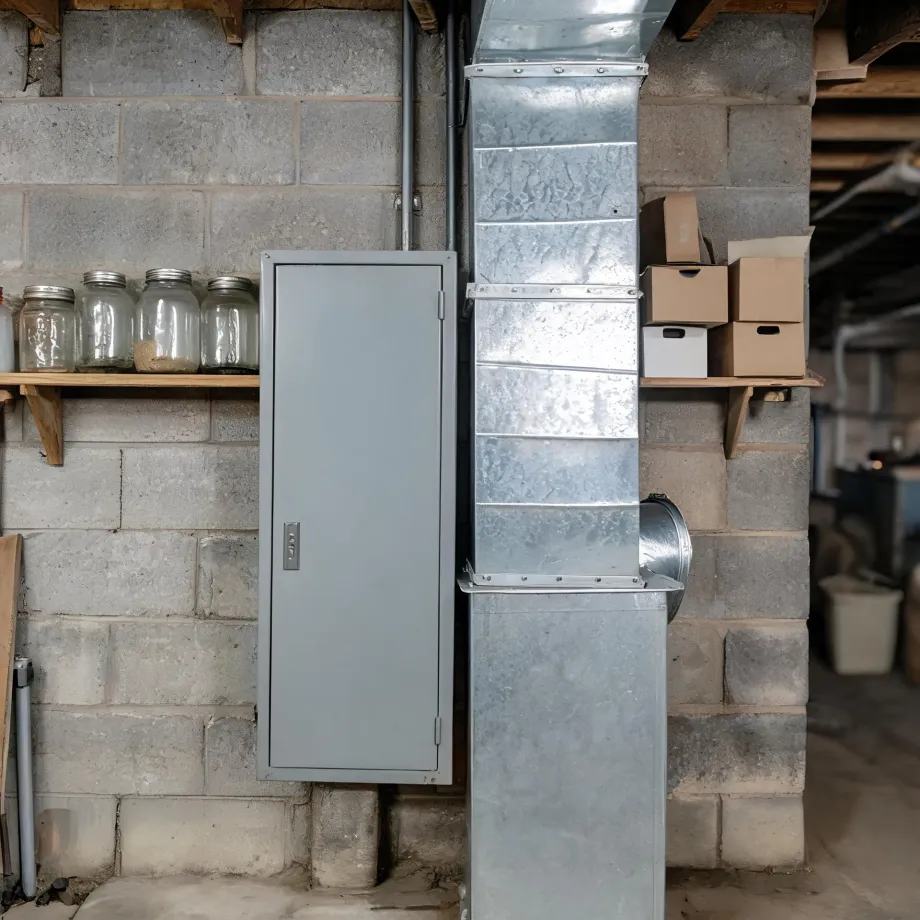
Furnaces running in the older half of Hodgeman County's housing stock carry components tied to configurations that have long since cycled out of production. Half the homes in Hodgeman County, Kansas were built in 1957 or earlier (2020-2024 ACS 5-year). When a contractor opens a unit in a house from that era, what they find inside shapes the repair more than anything visible from the outside: a cracked heat exchanger or a worn blower wheel may call for a part that requires sourcing from specialty suppliers rather than a standard order. That gap between what the unit needs and what is currently stocked is where the cost and the timeline of the job actually get decided.
The Parts of a Furnace a Contractor Checks First
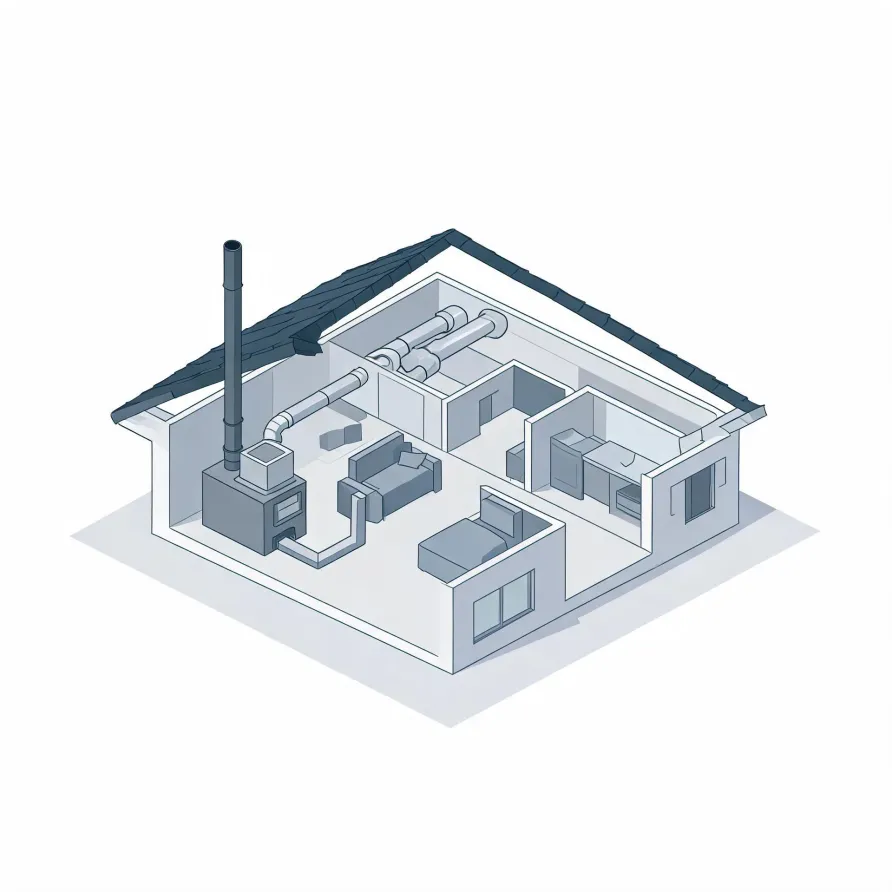
The heat exchanger sits at the core of the furnace cabinet in your basement or utility closet. It is the piece that transfers heat to the air moving through your home, and a crack or breach there is one of the first things a contractor rules out when the system is not performing. The burner assembly sits just below it, and a dirty or failed burner is another common starting point.
The blower motor pulls air across the heat exchanger and pushes it into the supply side of your duct system. It sits in the lower half of the furnace cabinet. The igniter and flame sensor work as a pair near the burner, and both are frequent culprits when a furnace starts a call for heat and then shuts down before the house warms.
The drawing shows the general layout of a furnace system, and a licensed contractor determines which parts apply to the specific unit and setup in your home.
Get matched in Hodgeman CountyHodgeman County by the Numbers
161 severe weather events were recorded in Hodgeman County, Kansas between 2015 and 2024.
NOAA National Centers for Environmental Information, Storm Events Database, bulk CSV export, events 2015-01-01 through 2024-12-31.Half the homes in Hodgeman County, Kansas were built in 1957 or earlier (2020-2024 ACS 5-year).
U.S. Census Bureau, 2020-2024 American Community Survey 5-Year EstimatesHodgeman County, Kansas holds 823 housing units (2020-2024 ACS 5-year).
U.S. Census Bureau, 2020-2024 American Community Survey 5-Year EstimatesOwners occupy 79.1% of the occupied homes in Hodgeman County, Kansas (2020-2024 ACS 5-year).
U.S. Census Bureau, 2020-2024 American Community Survey 5-Year EstimatesCodes & Standards Behind Furnace Repair in Hodgeman County, Kansas4 sourced rules and standards
What HVAC Repair Looks Like in Hodgeman County
Non-weatherized gas furnaces manufactured on or after November 19, 2015 must reach 80.0 percent AFUE.
Non-weatherized oil-fired furnaces manufactured on or after November 19, 2015 must reach 83.0 percent AFUE.
Mobile home gas furnaces manufactured on or after November 19, 2015 must reach 80.0 percent AFUE.
Non-weatherized gas furnaces manufactured on or after December 18, 2028 must reach 95.0 percent AFUE, up from the 80.0 percent minimum that applies to units manufactured before that date.
Severe Weather Events in Hodgeman County
Hodgeman County weather puts real strain on furnaces. The harder a heating system works to keep up with conditions outside, the sooner its components need attention.
161 severe weather events, 2015–2024. Source: NOAA National Centers for Environmental Information, Storm Events Database.