Tell us about the job
Takes about a minute. No obligation.
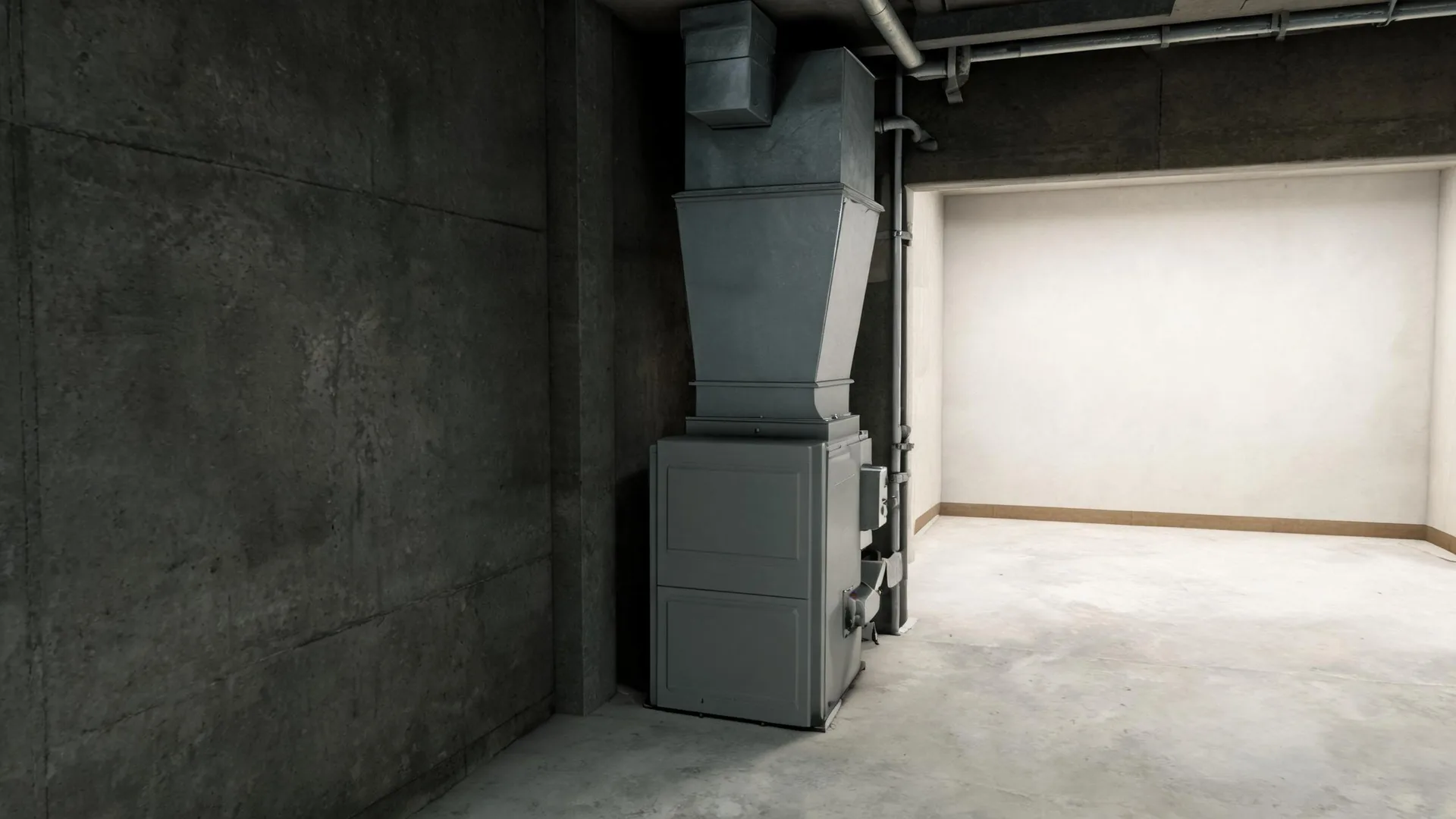
A furnace repair in Gray County starts at the parts that take the most punishment: the burner, the igniter, and the heat exchanger. Homes in Gray County, KS run heat about seven months a year, from October through April. Every cycle through that season stresses the heat exchanger through expansion and contraction, and the ignition system fires each time the thermostat calls for heat. By the time a homeowner notices a problem, those components have already logged serious wear. A contractor here checks the heat exchanger for cracks and the igniter for degradation before pricing anything else, because that is where the load lands.
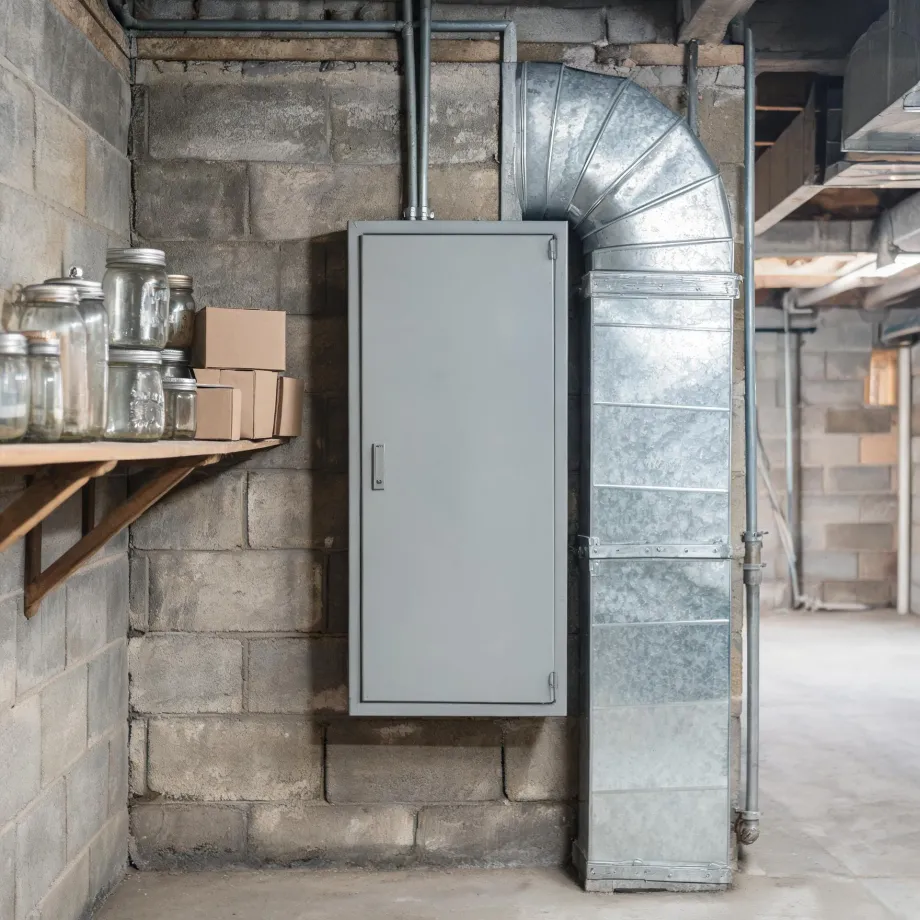
Older ductwork and aging electrical are installation concerns. For repair work, what matters is what the opened furnace actually contains. Half the homes in Gray County, Kansas were built in 1976 or earlier (2020-2024 ACS 5-year). A heat exchanger that has run through that many heating seasons may show fatigue cracking that is not visible until the cabinet is off, and burner assemblies from that era often take components a contractor has to source rather than pull from a shelf. That gap between available stock and what the unit requires is where repair estimates either hold or don't.
The Parts of a Furnace a Contractor Checks First
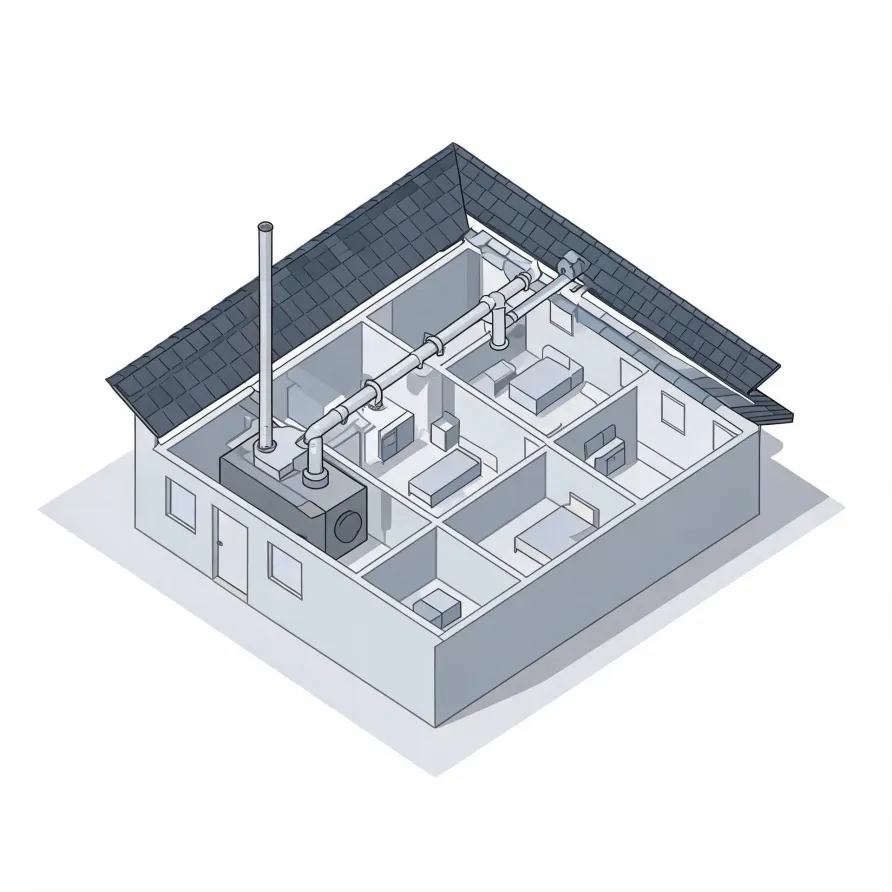
The furnace itself sits in a utility room, basement, or closet and is the piece a contractor opens first. Inside it, the heat exchanger is the most consequential part to inspect: cracks or corrosion there let combustion gases into the living space. The burners, igniter, and flame sensor are all housed in the same cabinet and are common sources of no-heat calls.
The blower motor sits at the base of the furnace and pushes conditioned air into the supply plenum above it. The flue pipe runs from the top of the cabinet to an exterior wall or roof and is what a contractor checks when combustion or venting is suspect. The thermostat, mounted on an interior wall, is where a diagnostic often starts because a wiring or calibration fault there can mimic a failed furnace.
The drawing shows a typical furnace layout, and a licensed contractor determines which parts apply to your specific system and home.
Get matched in Gray CountyGray County, Kansas, by the numbers
213 severe weather events were recorded in Gray County, Kansas between 2015 and 2024.
NOAA National Centers for Environmental Information, Storm Events Database, bulk CSV export, events 2015-01-01 through 2024-12-31.Half the homes in Gray County, Kansas were built in 1976 or earlier (2020-2024 ACS 5-year).
U.S. Census Bureau, 2020-2024 American Community Survey 5-Year EstimatesGray County, Kansas holds 2,354 housing units (2020-2024 ACS 5-year).
U.S. Census Bureau, 2020-2024 American Community Survey 5-Year EstimatesOwners occupy 77.1% of the occupied homes in Gray County, Kansas (2020-2024 ACS 5-year).
U.S. Census Bureau, 2020-2024 American Community Survey 5-Year EstimatesCodes & Standards Covering Furnace Repair in Gray County, Kansas4 sourced rules and standards
What Happens When the Contractor Comes Out
Non-weatherized gas furnaces manufactured on or after November 19, 2015 must reach 80.0 percent AFUE.
Non-weatherized oil-fired furnaces manufactured on or after November 19, 2015 must reach 83.0 percent AFUE.
Mobile home gas furnaces manufactured on or after November 19, 2015 must reach 80.0 percent AFUE.
Non-weatherized gas furnaces manufactured on or after December 18, 2028 must reach 95.0 percent AFUE, up from the 80.0 percent minimum that applies to units manufactured before that date.
Severe Weather Events in Gray County
Gray County's weather puts real strain on heating equipment. How hard a furnace works, and how often it needs attention, is shaped by what the local climate throws at it year after year.
213 severe weather events, 2015–2024. Source: NOAA National Centers for Environmental Information, Storm Events Database.