Tell us about the job
Takes about a minute. No obligation.
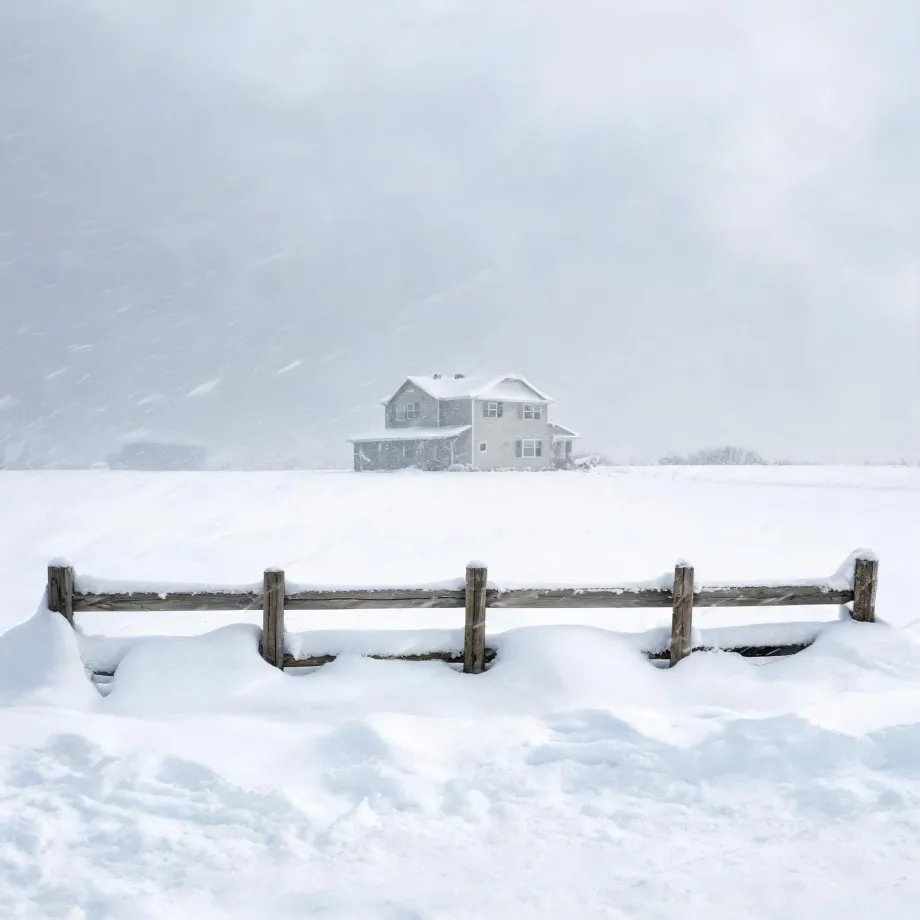
A furnace repair in Ford County starts with the parts that cycle hardest: the igniter, the heat exchanger, and the burner assembly. Homes in Ford County, KS run heat about seven months a year, from October through April. Each of those cycles leaves a small mark on the ignition system and the heat exchanger. Over a long heating career, those marks add up to cracks, carbon buildup, and igniter failure. A contractor working a repair here checks the heat exchanger for stress fractures before quoting anything else, because that is where the load concentrates and where a missed finding turns a repair call into a safety problem.
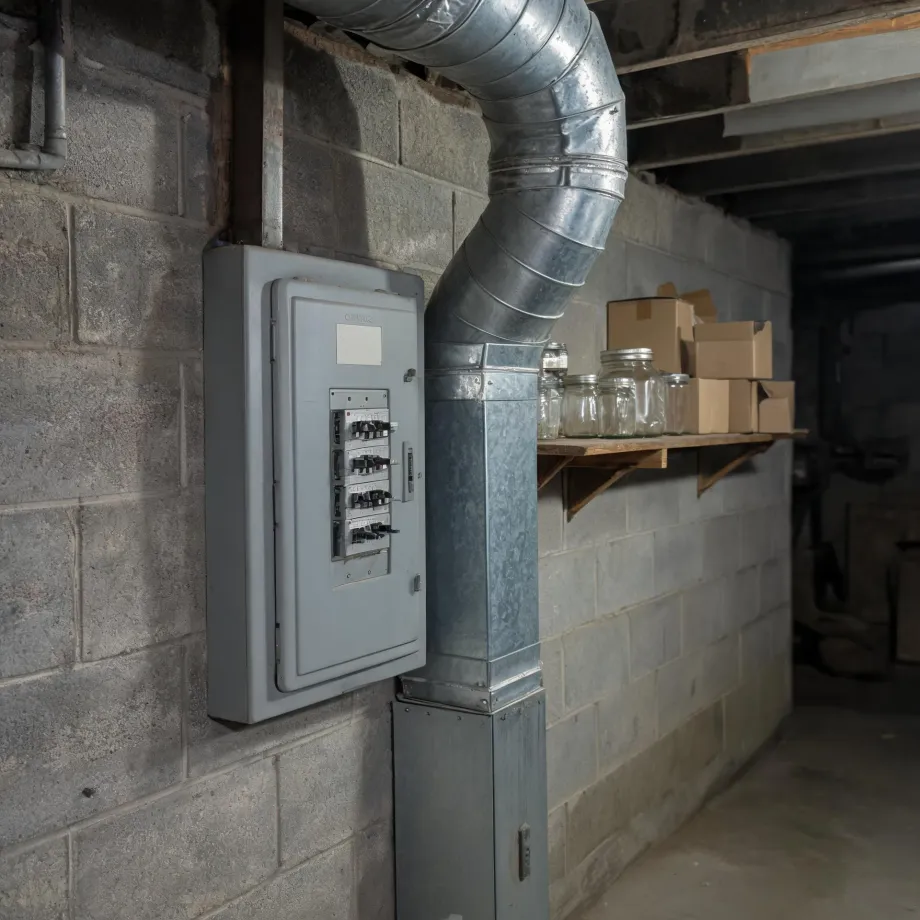
Ductwork sized for a previous generation of furnaces does not always move air the way a current system expects, and the gaps show up once a unit is open and running. Half the homes in Ford County, Kansas were built in 1972 or earlier (2020-2024 ACS 5-year). A furnace repair here often produces a second question: whether what the contractor finds inside the equipment is a parts problem or a distribution problem, because the repair bill changes depending on which it is. Replacement components for systems installed long after the original build are still available, but what the ductwork delivers to each room is a different diagnosis entirely.
The Parts of a Furnace a Contractor Checks First
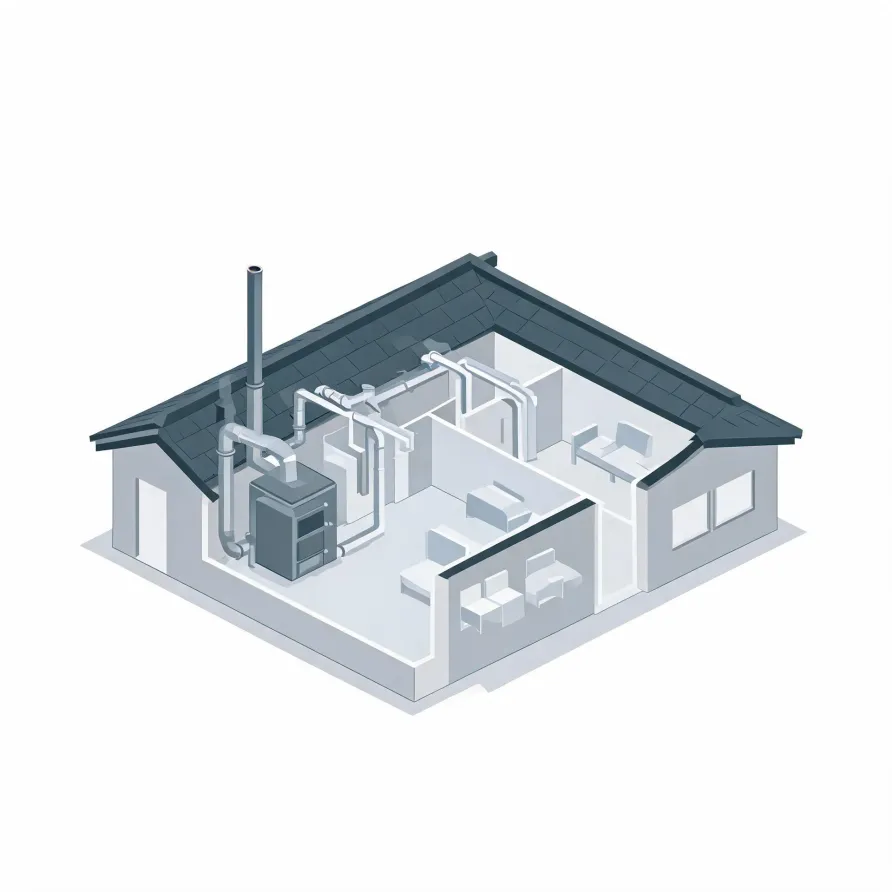
The furnace cabinet itself sits in a basement, utility room, or closet and is the piece a contractor opens first. Inside it, the heat exchanger is the part that takes the most abuse and is the most common reason a furnace stops producing heat safely. The burners, which fire inside that exchanger, are checked next for ignition problems.
The blower motor moves conditioned air out of the cabinet and into the duct system. It sits at the base of the cabinet and is a frequent source of weak airflow or strange sounds. Alongside it, the control board, flame sensor, and inducer motor each handle a specific job in the firing sequence, and a fault in any one of them can shut the whole system down.
The drawing shows a typical furnace layout, and a licensed contractor determines which parts apply to the specific system in your home.
Get matched in Ford CountyFord County, Kansas, by the numbers
484 severe weather events were recorded in Ford County, Kansas between 2015 and 2024.
NOAA National Centers for Environmental Information, Storm Events Database, bulk CSV export, events 2015-01-01 through 2024-12-31.Half the homes in Ford County, Kansas were built in 1972 or earlier (2020-2024 ACS 5-year).
U.S. Census Bureau, 2020-2024 American Community Survey 5-Year EstimatesFord County, Kansas holds 12,743 housing units (2020-2024 ACS 5-year).
U.S. Census Bureau, 2020-2024 American Community Survey 5-Year EstimatesOwners occupy 62.5% of the occupied homes in Ford County, Kansas (2020-2024 ACS 5-year).
U.S. Census Bureau, 2020-2024 American Community Survey 5-Year EstimatesCodes & Standards Governing Furnace Repair in Ford County, Kansas4 sourced rules and standards
What Happens When a Contractor Comes Out
Non-weatherized gas furnaces manufactured on or after November 19, 2015 must reach 80.0 percent AFUE.
Non-weatherized oil-fired furnaces manufactured on or after November 19, 2015 must reach 83.0 percent AFUE.
Mobile home gas furnaces manufactured on or after November 19, 2015 must reach 80.0 percent AFUE.
Non-weatherized gas furnaces manufactured on or after December 18, 2028 must reach 95.0 percent AFUE, up from the 80.0 percent minimum that applies to units manufactured before that date.
Severe Weather Events in Ford County
Ford County's weather puts real stress on heating equipment over time. How often that stress hits shapes what local furnaces go through and what repair work tends to follow.
484 severe weather events, 2015–2024. Source: NOAA National Centers for Environmental Information, Storm Events Database.