Tell us about the job
Takes about a minute. No obligation.
A furnace here earns its wear on the burner and the heat exchanger, and that is where a contractor starts when something goes wrong. Homes in Linn County, KS run heat about seven months a year, from October through April. Cycling that many times across that many months stresses the igniter, the flame sensor, and the heat exchanger in ways that a shorter season would leave mostly undiscovered. A contractor who skips those components and heads straight for the blower or the controls is working backward. The heat exchanger in particular cracks from thermal fatigue, and a cracked one changes the scope of the job entirely.
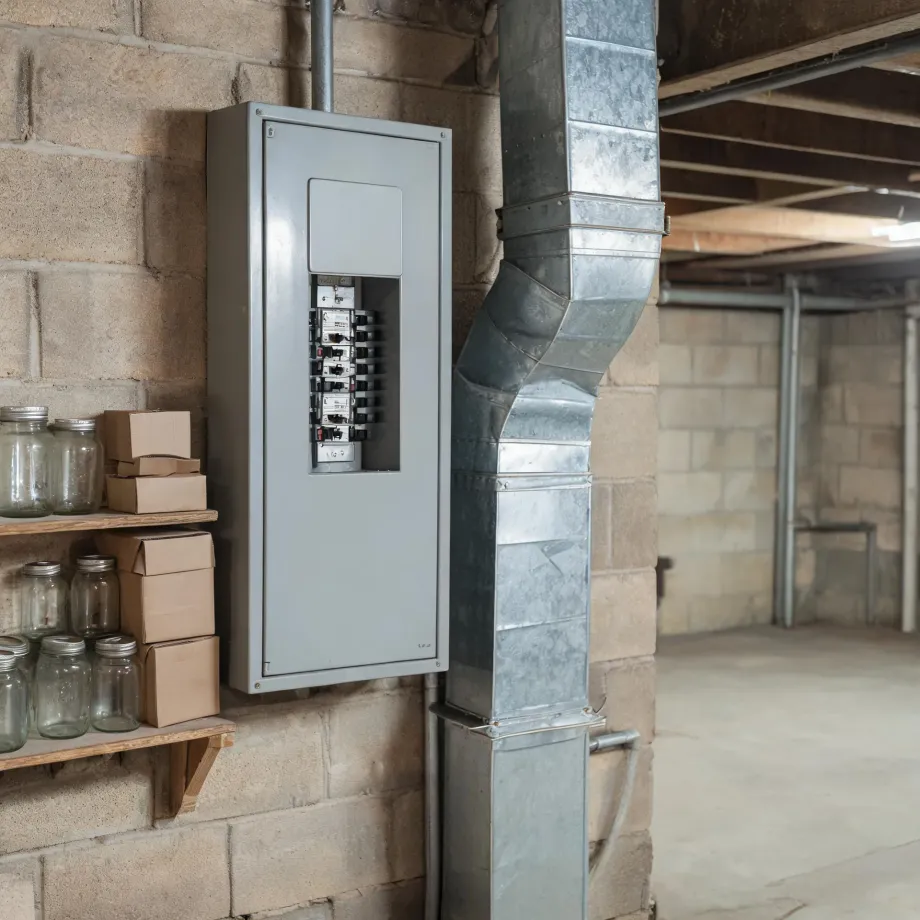
Replacement parts are where a furnace repair in Linn County can stall. Half the homes in Linn County, Kansas were built in 1983 or earlier (2020-2024 ACS 5-year). A system running in housing that old has likely cycled through at least one set of components already, and the heat exchangers, control boards, and igniters it takes may sit at the edge of what distributors still stock. A contractor who opens the unit knowing that goes to the parts search before quoting labor, because a repair that looks straightforward on the outside can depend entirely on whether the right component ships this week or not at all.
The Parts of a Furnace a Contractor Checks First
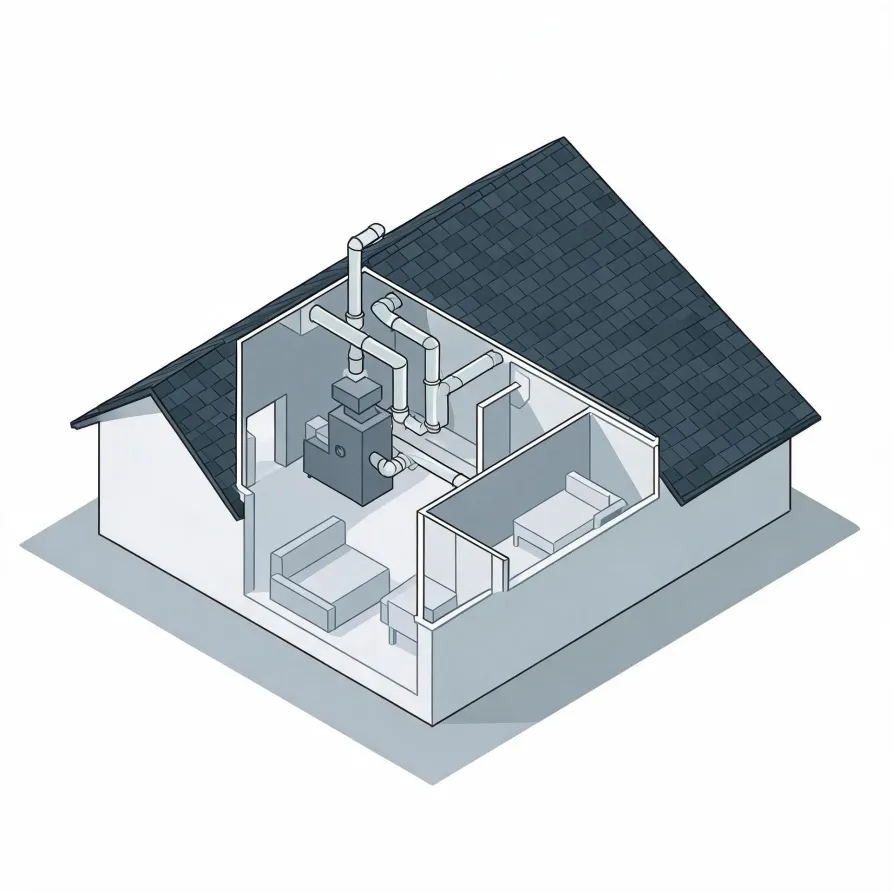
The heat exchanger sits inside the furnace cabinet and is where a contractor looks early in any repair call. Cracks or buildup there affect the whole system. The burner assembly, also inside the cabinet, is what produces the heat, and a contractor checks it for ignition failures, dirty ports, and flame sensor problems.
The blower motor and its fan wheel push conditioned air into the duct system and sit at the base of the cabinet. The control board ties every component together and is what a contractor reads for fault codes when the furnace is not behaving as it should. The flue pipe runs from the cabinet to the outside and has to be clear for combustion gases to exit.
The drawing shows a general layout of these components, and a licensed contractor determines what applies to the specific equipment and configuration in your house.
Get matched in Linn CountyLinn County, Kansas, by the numbers
68 severe weather events were recorded in Linn County, Kansas between 2015 and 2024.
NOAA National Centers for Environmental Information, Storm Events Database, bulk CSV export, events 2015-01-01 through 2024-12-31.Half the homes in Linn County, Kansas were built in 1983 or earlier (2020-2024 ACS 5-year).
U.S. Census Bureau, 2020-2024 American Community Survey 5-Year EstimatesLinn County, Kansas holds 5,222 housing units (2020-2024 ACS 5-year).
U.S. Census Bureau, 2020-2024 American Community Survey 5-Year EstimatesOwners occupy 81.1% of the occupied homes in Linn County, Kansas (2020-2024 ACS 5-year).
U.S. Census Bureau, 2020-2024 American Community Survey 5-Year EstimatesFurnace Repair Rules & Codes for Linn County, Kansas4 sourced standards and regulations
What the repair visit looks like
Non-weatherized gas furnaces manufactured on or after November 19, 2015 must reach 80.0 percent AFUE.
Non-weatherized oil-fired furnaces manufactured on or after November 19, 2015 must reach 83.0 percent AFUE.
Mobile home gas furnaces manufactured on or after November 19, 2015 must reach 80.0 percent AFUE.
Non-weatherized gas furnaces manufactured on or after December 18, 2028 must reach 95.0 percent AFUE, up from the 80.0 percent minimum that applies to units manufactured before that date.
Severe Weather Events in Linn County
Furnaces in Linn County work against whatever the climate puts them through, and Kansas weather puts them through a lot. The stress that builds up over hard seasons is what drives repair calls, which is why local weather patterns are part of the picture for any furnace running here.
68 severe weather events, 2015–2024. Source: NOAA National Centers for Environmental Information, Storm Events Database.