Tell us about the job
Takes about a minute. No obligation.
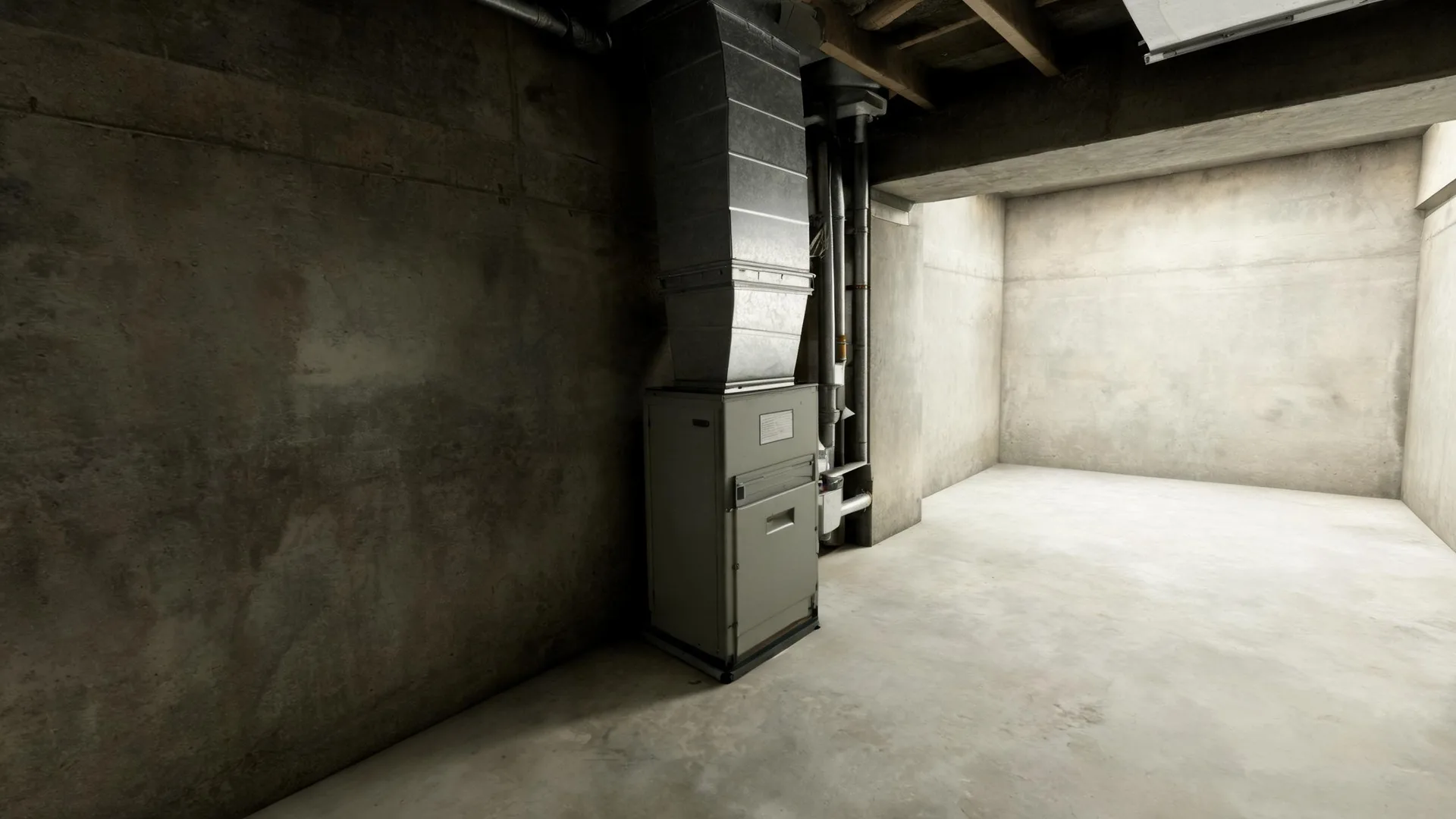
A furnace repair in Miami County starts with the parts that do the most work: the ignition system, the burner, and the heat exchanger. Homes in Miami County, KS run heat about seven months a year, from October through April. Each cycle through that season loads the heat exchanger with expansion and contraction, and the ignition system fires every time the thermostat calls. A contractor who opens a furnace here expects wear on those components first, and quotes accordingly. Cracks in the heat exchanger or a failing igniter are not surprises at that level of use.
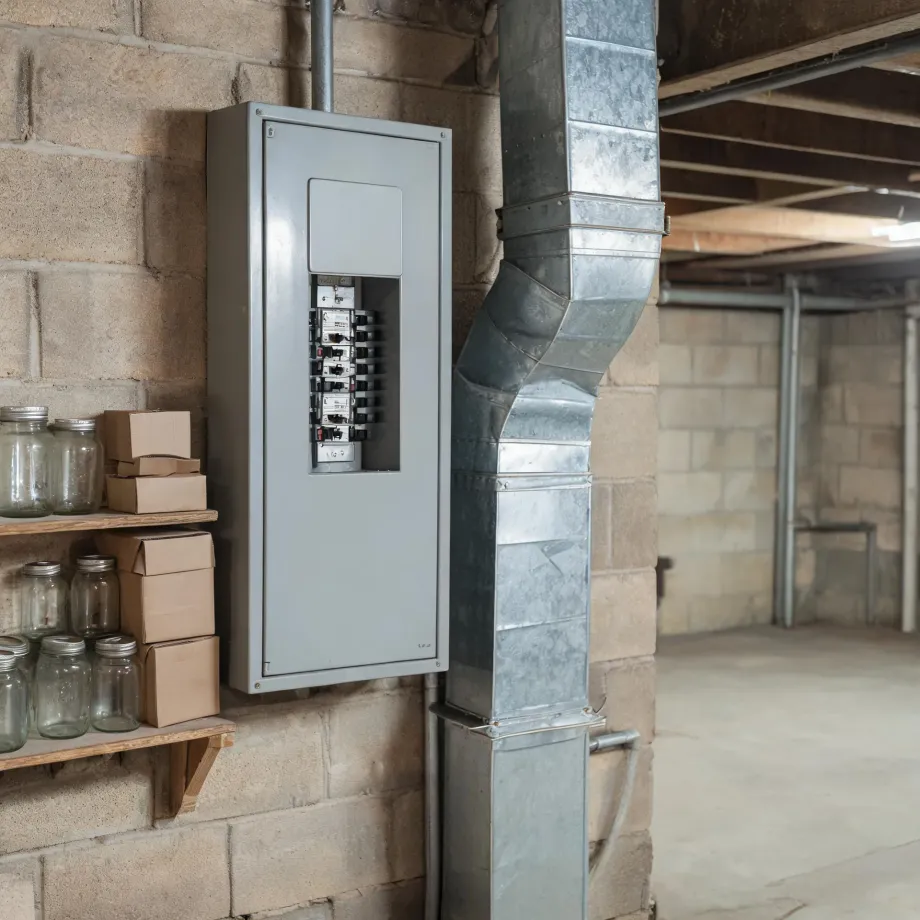
Half the homes in Miami County, Kansas were built in 1987 or earlier (2020-2024 ACS 5-year). A furnace running in a house that old has likely been serviced through multiple ownership changes, and the parts it relies on may no longer move through standard supply chains. When a contractor opens the unit, the question is whether what they find inside can still be sourced, or whether the repair becomes a sourcing problem before it becomes a technical one. Sheet metal and wiring from the original build add context, but the repair lives or dies on what the opened system actually requires and whether a supplier still stocks it.
The Parts of a Furnace a Contractor Checks First
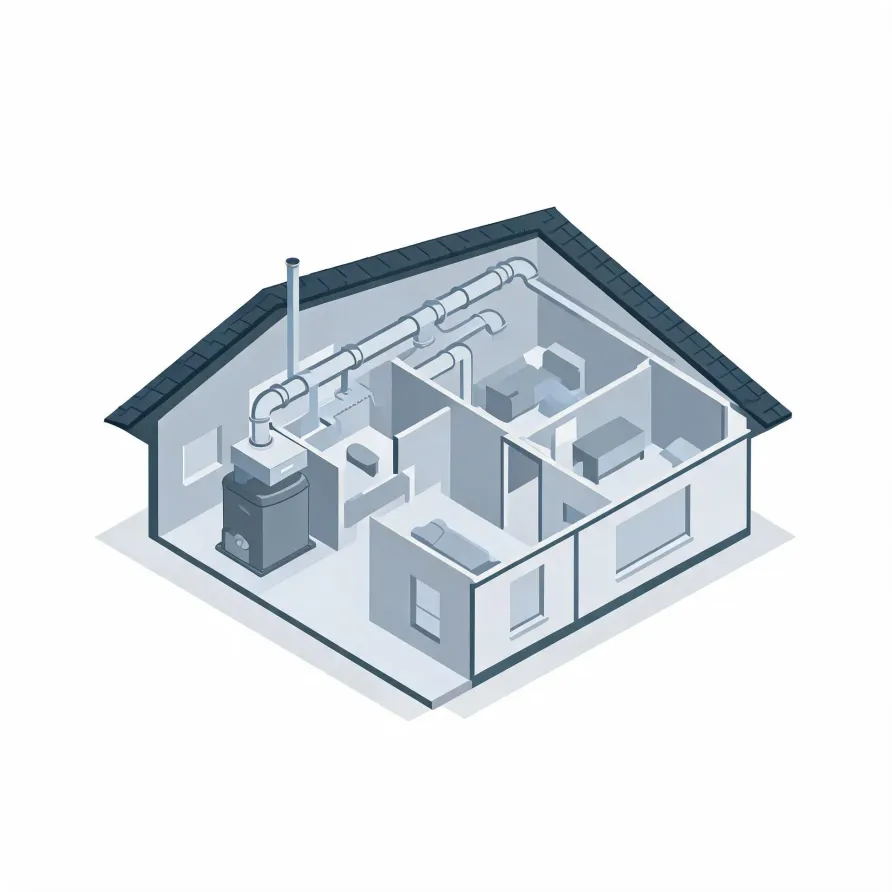
The furnace cabinet sits in the basement, utility room, or closet and holds most of what a contractor will examine. Inside it, the heat exchanger does the work of warming air, and a cracked or corroded exchanger is one of the first things a technician looks for when a furnace heats poorly or trips the system off. The burners, which sit just below the exchanger, are another early stop when the unit fails to ignite or runs unevenly.
The blower motor and fan assembly sit at the base of the cabinet and push conditioned air into the duct system. When airflow feels weak or the unit runs but delivers little heat, the blower is where a contractor looks. The flue pipe, which exits the cabinet and vents combustion gases out of the house, gets checked when something smells wrong or the furnace shuts down unexpectedly.
The drawing shows a typical furnace layout, and a licensed contractor determines which components apply to the specific equipment and configuration in your home.
Get matched in Miami CountyMiami County, Kansas, by the numbers
73 severe weather events were recorded in Miami County, Kansas between 2015 and 2024.
NOAA National Centers for Environmental Information, Storm Events Database, bulk CSV export, events 2015-01-01 through 2024-12-31.Half the homes in Miami County, Kansas were built in 1987 or earlier (2020-2024 ACS 5-year).
U.S. Census Bureau, 2020-2024 American Community Survey 5-Year EstimatesMiami County, Kansas holds 14,262 housing units (2020-2024 ACS 5-year).
U.S. Census Bureau, 2020-2024 American Community Survey 5-Year EstimatesOwners occupy 78.2% of the occupied homes in Miami County, Kansas (2020-2024 ACS 5-year).
U.S. Census Bureau, 2020-2024 American Community Survey 5-Year EstimatesFurnace Repair Rules & Codes for Miami County, Kansas4 sourced rules and standards
What HVAC Repair Looks Like in Miami County
Non-weatherized gas furnaces manufactured on or after November 19, 2015 must reach 80.0 percent AFUE.
Non-weatherized oil-fired furnaces manufactured on or after November 19, 2015 must reach 83.0 percent AFUE.
Mobile home gas furnaces manufactured on or after November 19, 2015 must reach 80.0 percent AFUE.
Non-weatherized gas furnaces manufactured on or after December 18, 2028 must reach 95.0 percent AFUE, up from the 80.0 percent minimum that applies to units manufactured before that date.
Severe Weather Events in Miami County
Kansas weather puts real strain on heating equipment, and Miami County gets its share of conditions that push furnaces hard. How often that happens locally shapes how much repair work furnaces here actually see.
73 severe weather events, 2015–2024. Source: NOAA National Centers for Environmental Information, Storm Events Database.