Tell us about the job
Takes about a minute. No obligation.
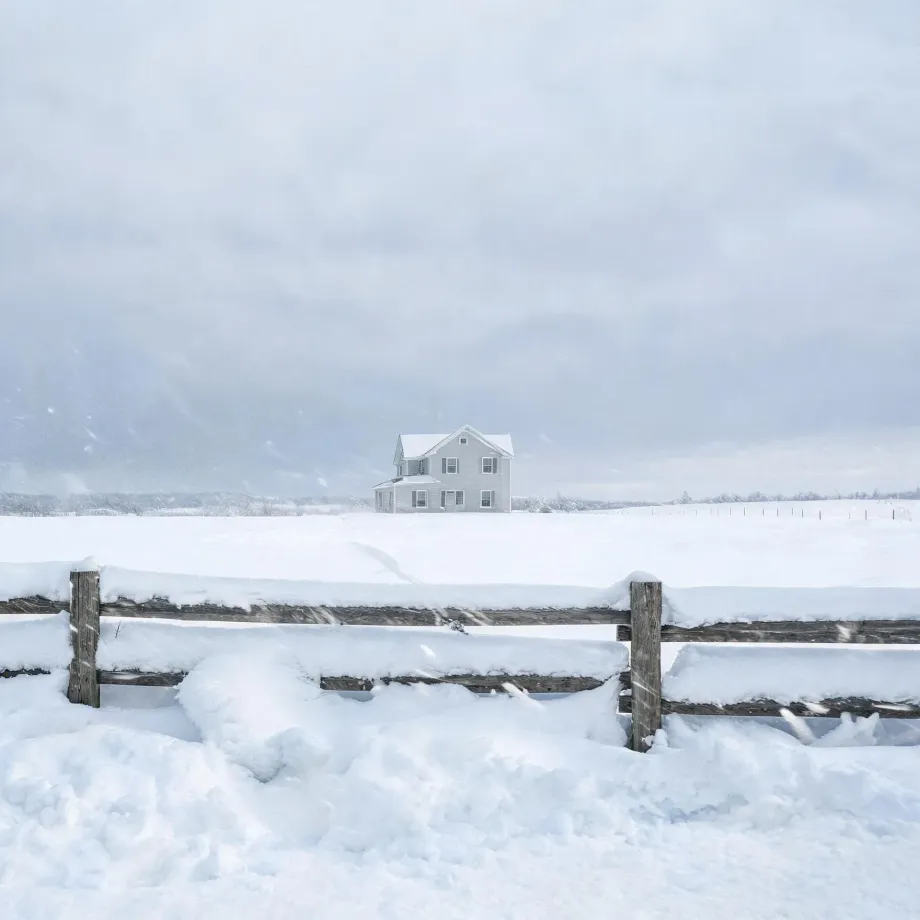
A furnace repair in Johnson County starts with one failed part and quickly becomes a question about the rest of the system. Homes in Johnson County, KS run heat about seven months a year, from October through April. The burner, heat exchanger, and ignition components cycle through that load every year, and wear on each of them accumulates at the same rate. When a contractor pulls a furnace apart here, a cracked heat exchanger or a worn igniter is rarely traveling alone. The contractor checks the adjacent components before quoting the job, because a second failure partway through a heating season costs more than catching it now.
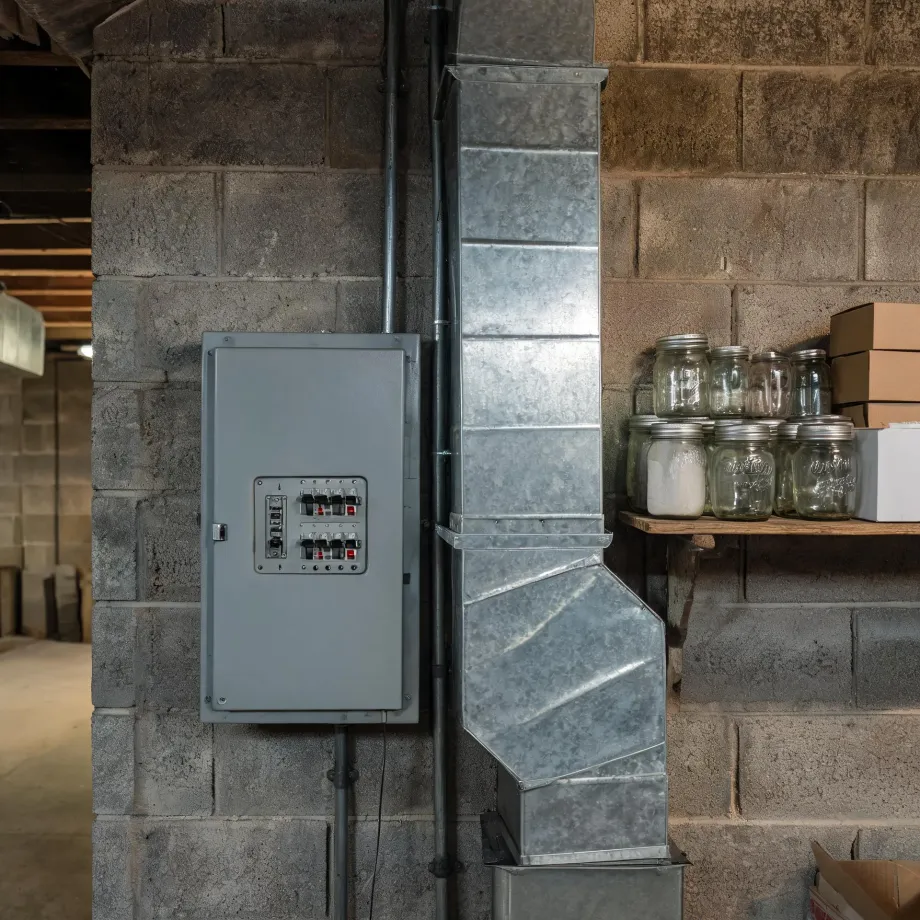
Furnace parts do not age at the same rate the house does, but in stock this old, the gap between what a system takes and what a distributor has on the shelf is where a repair job can turn. Half the homes in Johnson County, Kansas were built in 1989 or earlier (2020-2024 ACS 5-year). A contractor who opens a furnace here and finds a cracked heat exchanger or a failed inducer motor has to confirm the part exists before the scope of the repair is set. If it does not, the job changes shape entirely. That is a real variable in this county, and pricing without checking it first produces a quote that does not hold.
The Parts of a Furnace a Contractor Checks First
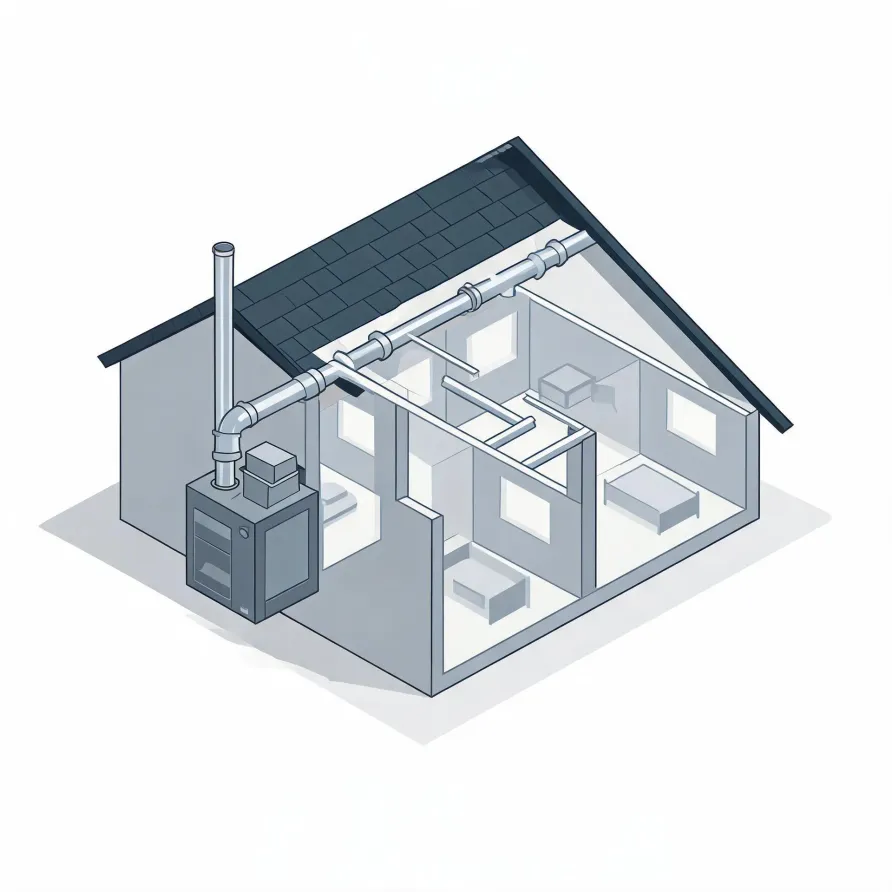
The heat exchanger sits at the core of the furnace cabinet in your basement, utility room, or closet. It is the piece the combustion gases pass through, and a crack or failure there is where a contractor's attention goes first. The burner assembly feeds it from below, and a dirty or misfiring burner is one of the more common reasons a furnace stops producing heat.
The blower motor and fan sit in the lower half of the cabinet and push conditioned air out into the duct system. The igniter, flame sensor, and control board all live inside the cabinet as well. These smaller components are frequent repair targets because they handle repeated ignition cycles and are the first things a contractor will test when the furnace runs but does not heat, or does not run at all.
The drawing shows a general furnace layout, and a licensed contractor will determine which components apply to the specific unit and setup in your home.
Get matched in Johnson CountyJohnson County, Kansas, by the numbers
367 severe weather events were recorded in Johnson County, Kansas between 2015 and 2024.
NOAA National Centers for Environmental Information, Storm Events Database, bulk CSV export, events 2015-01-01 through 2024-12-31.Half the homes in Johnson County, Kansas were built in 1989 or earlier (2020-2024 ACS 5-year).
U.S. Census Bureau, 2020-2024 American Community Survey 5-Year EstimatesJohnson County, Kansas holds 259,655 housing units (2020-2024 ACS 5-year).
U.S. Census Bureau, 2020-2024 American Community Survey 5-Year EstimatesOwners occupy 68.5% of the occupied homes in Johnson County, Kansas (2020-2024 ACS 5-year).
U.S. Census Bureau, 2020-2024 American Community Survey 5-Year EstimatesFurnace Repair Rules and Codes for Johnson County, Kansas4 sourced regulations and standards
What the repair visit looks like
Non-weatherized gas furnaces manufactured on or after November 19, 2015 must reach 80.0 percent AFUE.
Non-weatherized oil-fired furnaces manufactured on or after November 19, 2015 must reach 83.0 percent AFUE.
Mobile home gas furnaces manufactured on or after November 19, 2015 must reach 80.0 percent AFUE.
Non-weatherized gas furnaces manufactured on or after December 18, 2028 must reach 95.0 percent AFUE, up from the 80.0 percent minimum that applies to units manufactured before that date.
Severe Weather Events in Johnson County
Heating equipment works harder when the weather outside is rough. How often Johnson County sees severe conditions shapes how much stress local furnaces carry, and that wear is what drives repair demand here.
367 severe weather events, 2015–2024. Source: NOAA National Centers for Environmental Information, Storm Events Database.