Tell us about the job
Takes about a minute. No obligation.
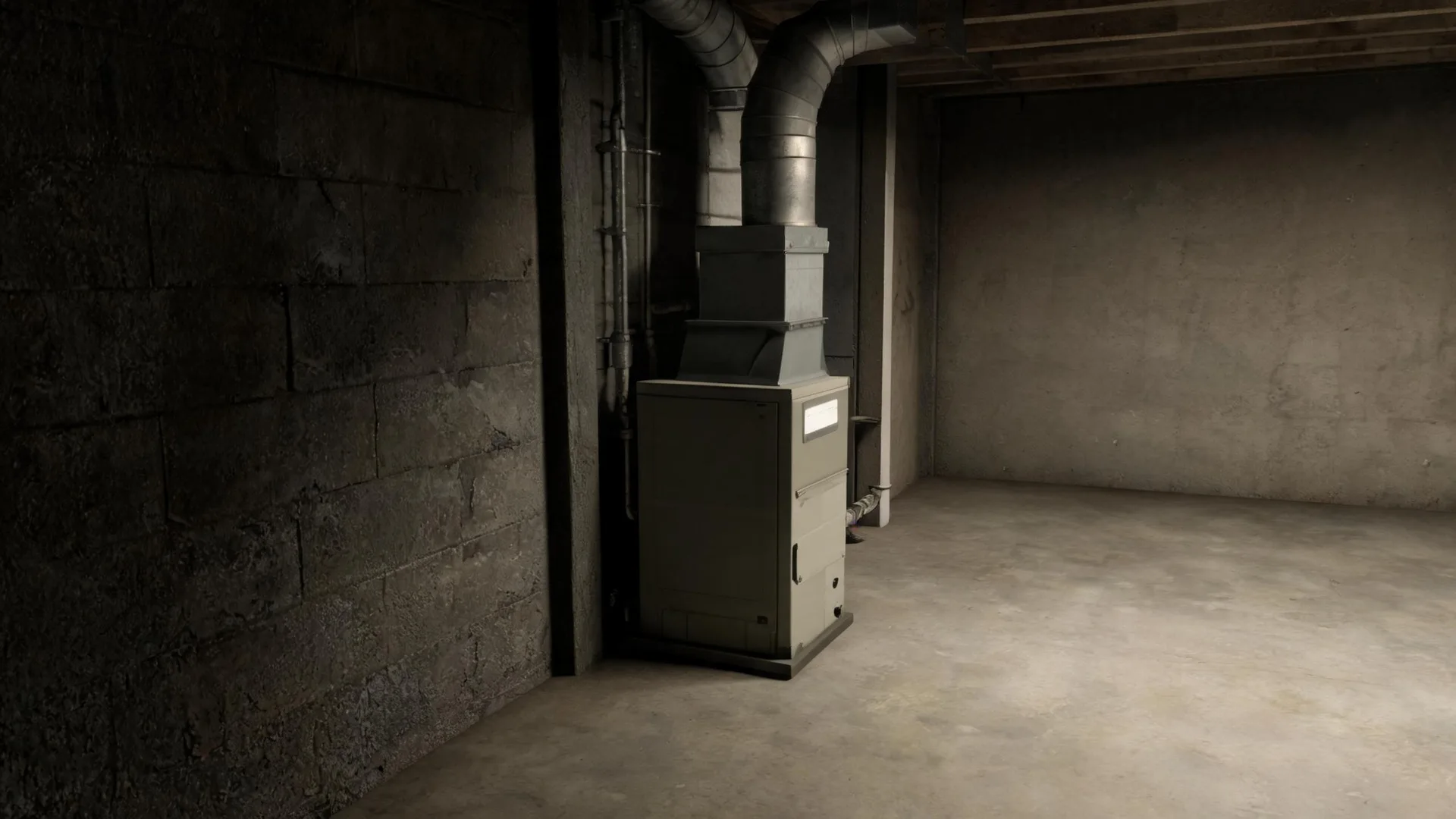
A furnace repair call here starts with the burner and heat exchanger, because those are the parts doing the work every time the system cycles. Homes in Leavenworth County, KS run heat about seven months a year, from October through April. That kind of continuous seasonal demand puts wear on the ignition system and the heat exchanger in ways a short-season furnace never accumulates. Cracks in a heat exchanger or a fouled igniter are not random failures in this county; they follow directly from how many heating cycles the equipment has run through. A contractor prices the burner assembly and ignition components first, not last.
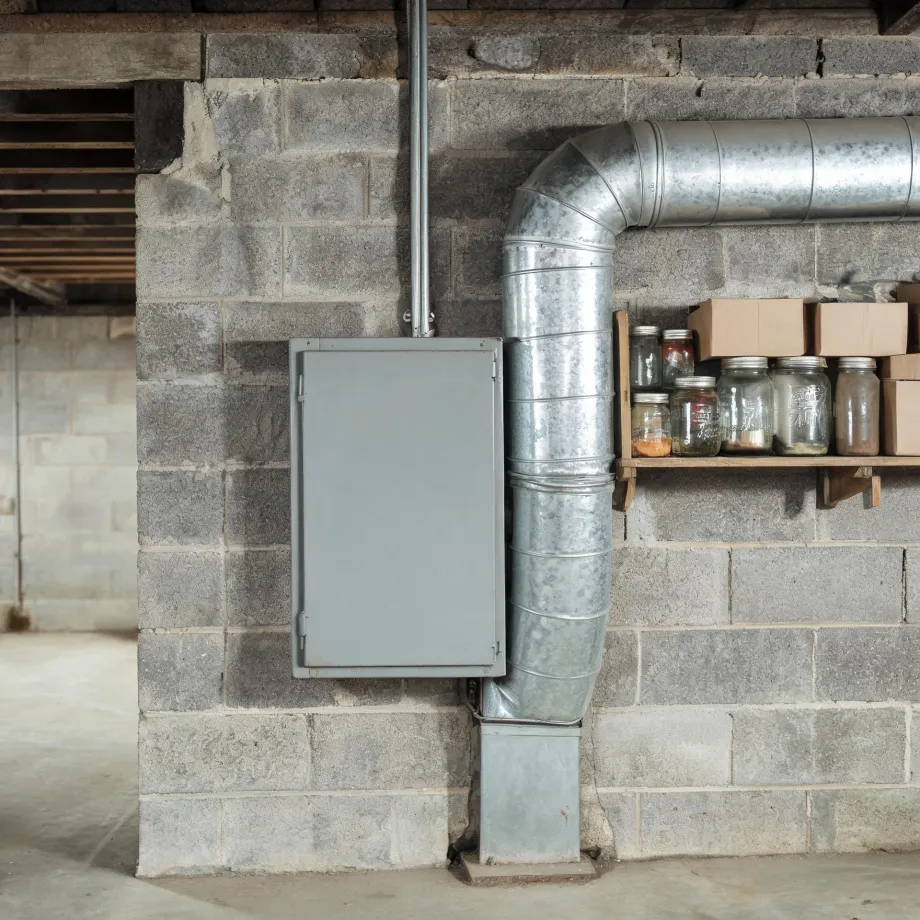
Furnaces in houses from this stretch of Leavenworth County's housing stock are often running on components whose replacement parts are no longer standard inventory. Half the homes in Leavenworth County, Kansas were built in 1982 or earlier (2020-2024 ACS 5-year). A contractor who opens a furnace in stock this old may find that the heat exchanger, the control board, or the gas valve it takes belongs to a product line a manufacturer discontinued years back. That parts availability question is what actually sets the repair scope, and it is decided by what is inside the unit, not by anything visible from the outside.
The Parts of a Furnace a Contractor Checks First
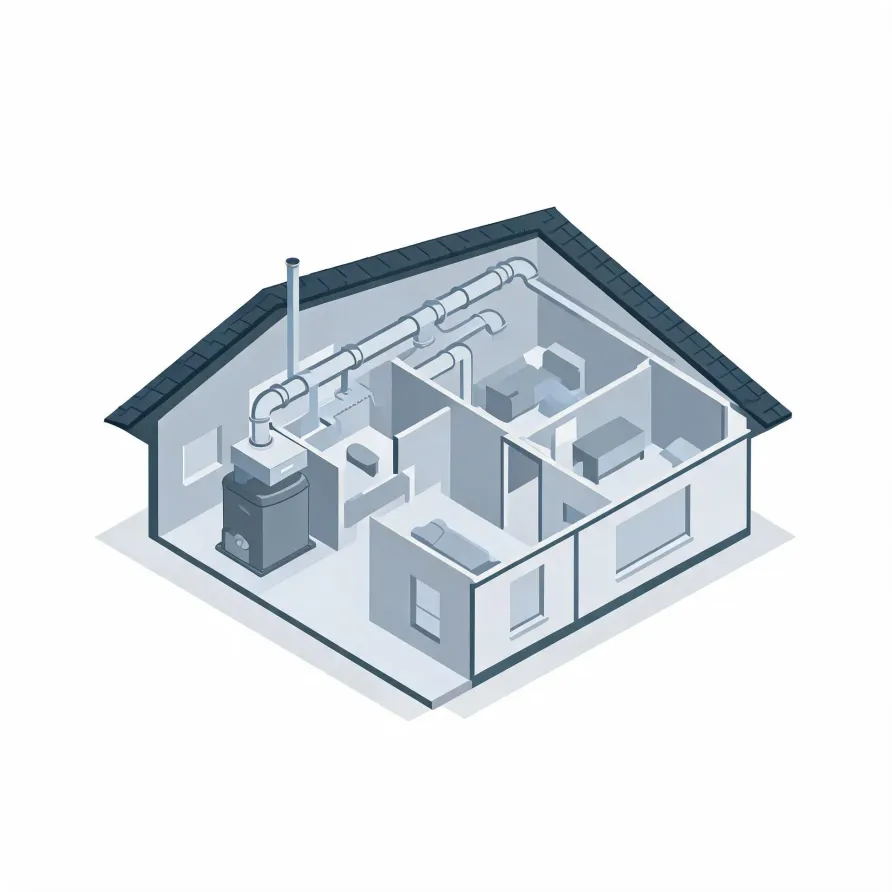
The heat exchanger sits inside the furnace cabinet in the basement or utility room and is the piece a contractor goes to early when something is wrong. Cracks or holes there let combustion gases into the air supply, which is a serious fault. The burners, also inside the cabinet, are where the flame begins, and a contractor reads them for uneven color or delayed ignition.
The blower motor pushes conditioned air out through the supply side of the system and is a common source of weak airflow or strange noise. The flue pipe runs from the furnace up and out of the house and gets checked for blockages or separation. The control board and the flame sensor both sit inside the cabinet and are the first electrical suspects when the furnace starts behaving erratically or refuses to start.
The drawing shows a representative layout, and a licensed contractor determines exactly which components apply to your specific system and installation.
Get matched in Leavenworth CountyLeavenworth County, by the record
137 severe weather events were recorded in Leavenworth County, Kansas between 2015 and 2024.
NOAA National Centers for Environmental Information, Storm Events Database, bulk CSV export, events 2015-01-01 through 2024-12-31.Half the homes in Leavenworth County, Kansas were built in 1982 or earlier (2020-2024 ACS 5-year).
U.S. Census Bureau, 2020-2024 American Community Survey 5-Year EstimatesLeavenworth County, Kansas holds 31,865 housing units (2020-2024 ACS 5-year).
U.S. Census Bureau, 2020-2024 American Community Survey 5-Year EstimatesOwners occupy 69.3% of the occupied homes in Leavenworth County, Kansas (2020-2024 ACS 5-year).
U.S. Census Bureau, 2020-2024 American Community Survey 5-Year EstimatesFurnace Repair Rules & Codes for Leavenworth County, Kansas4 sourced standards and regulations
What HVAC Repair Looks Like in Leavenworth County
Non-weatherized gas furnaces manufactured on or after November 19, 2015 must reach 80.0 percent AFUE.
Non-weatherized oil-fired furnaces manufactured on or after November 19, 2015 must reach 83.0 percent AFUE.
Mobile home gas furnaces manufactured on or after November 19, 2015 must reach 80.0 percent AFUE.
Non-weatherized gas furnaces manufactured on or after December 18, 2028 must reach 95.0 percent AFUE, up from the 80.0 percent minimum that applies to units manufactured before that date.
Severe Weather Events in Leavenworth County
Extreme weather puts real stress on furnace components, from heat exchangers to ignition systems, and the strain accumulates over time. How hard local weather pushes on that equipment shapes how often repair work becomes necessary, which is why weather history belongs on a page about furnace service in this area.
137 severe weather events, 2015–2024. Source: NOAA National Centers for Environmental Information, Storm Events Database.