Tell us about the job
Takes about a minute. No obligation.
A contractor quoting furnace repair in Riley County has to account for what the burner, heat exchanger, and ignition system have already been through before touching anything. Homes in Riley County, KS run heat about seven months a year, from October through April. That adds up to real cycle count on the ignition components and thermal stress on the heat exchanger, which are the parts a contractor checks first. A crack or a failing igniter here is not surprising when the system has been lighting off and shutting down through the cold months, year after year. The repair scope follows the wear.
Furnace heat exchangers and limit switches in housing stock this mature tend to arrive at a repair call already worn thin, not failing from a single event but from seasons of accumulated stress on components sized and seated for equipment that preceded what runs in the house now. Half the homes in Riley County, Kansas were built in 1984 or earlier (2020-2024 ACS 5-year). That gap between the building and the furnace in it is where a repair bill gets decided: a contractor who opens the unit on a no-heat call finds conditions that a newer installation would not have produced, and the parts that system takes are not always the ones a supplier stocks off the shelf.
The Parts of a Furnace a Contractor Checks First
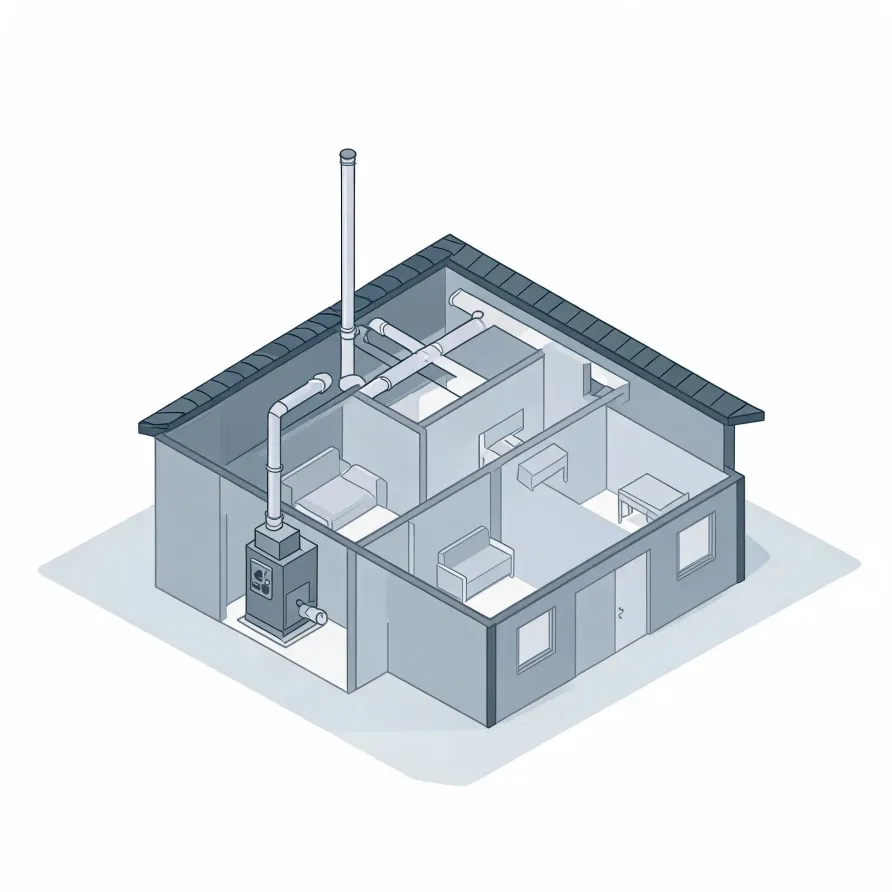
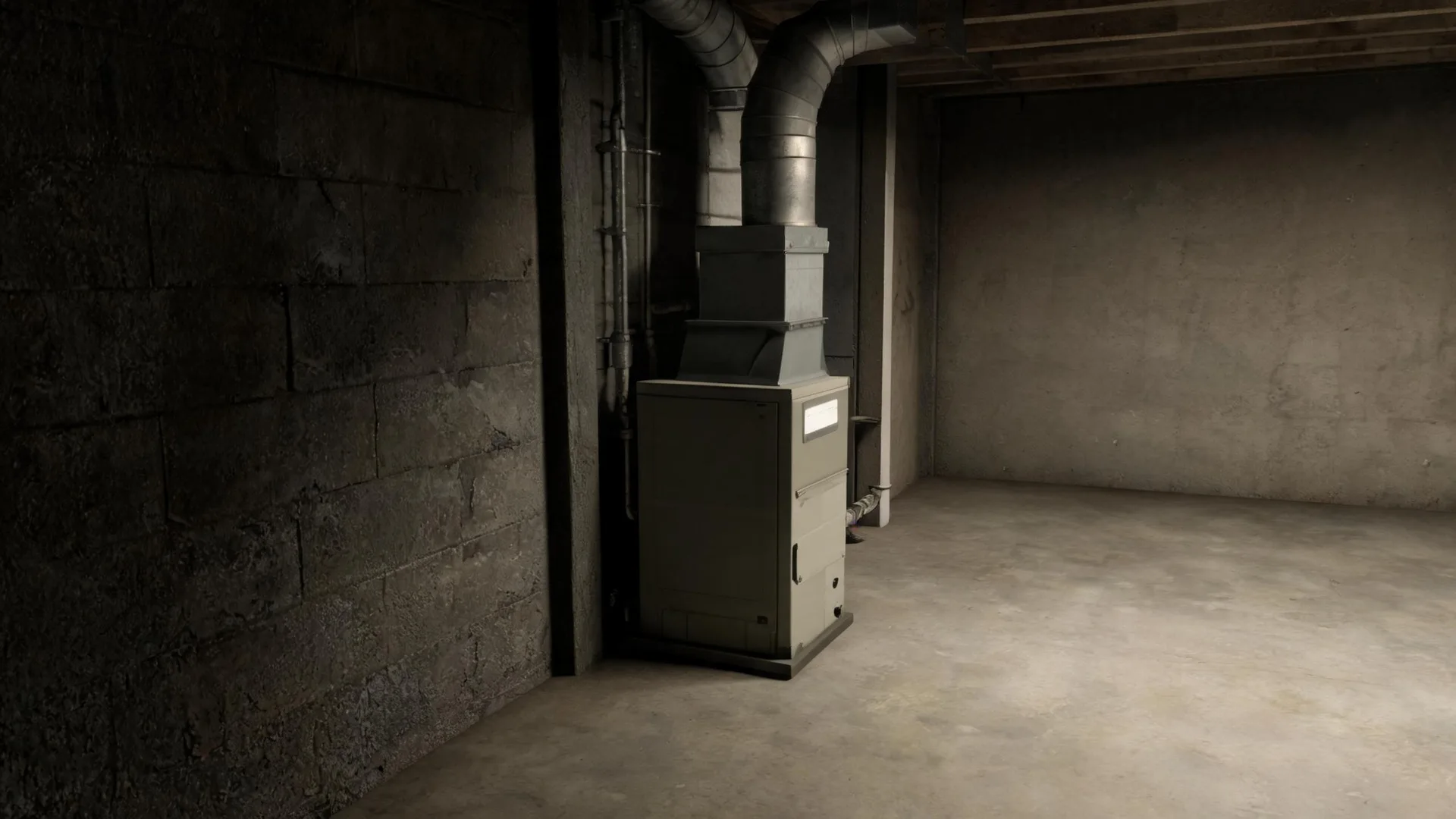
The heat exchanger sits at the core of the furnace cabinet in your basement, utility room, or closet, and it is the part that warms the air your home breathes. When it cracks or corrodes, you may smell something off or find the furnace cycling on and off without finishing a heating cycle. The burner assembly sits just below it, and a contractor will look there when the furnace fails to light or holds a weak, uneven flame.
The blower motor and its fan wheel sit at the base of the cabinet and push conditioned air into the supply side of your duct system. The inducer motor pulls combustion gases out through the flue at the start of each cycle, and the control board ties all of it together, reading sensors and telling each part when to run. A failing inducer or a board sending bad signals are frequent starting points for a diagnostic.
The drawing shows the general layout of a furnace system, and a licensed contractor determines which components apply and what condition they are in for your specific home.
Get matched in Riley CountyRiley County, by the numbers
187 severe weather events were recorded in Riley County, Kansas between 2015 and 2024.
NOAA National Centers for Environmental Information, Storm Events Database, bulk CSV export, events 2015-01-01 through 2024-12-31.Half the homes in Riley County, Kansas were built in 1984 or earlier (2020-2024 ACS 5-year).
U.S. Census Bureau, 2020-2024 American Community Survey 5-Year EstimatesRiley County, Kansas holds 30,755 housing units (2020-2024 ACS 5-year).
U.S. Census Bureau, 2020-2024 American Community Survey 5-Year EstimatesOwners occupy 46.1% of the occupied homes in Riley County, Kansas (2020-2024 ACS 5-year).
U.S. Census Bureau, 2020-2024 American Community Survey 5-Year EstimatesCodes & Standards Covering Furnace Repair in Riley County, Kansas4 sourced rules and standards
What the Repair Visit Looks Like
Non-weatherized gas furnaces manufactured on or after November 19, 2015 must reach 80.0 percent AFUE.
Non-weatherized oil-fired furnaces manufactured on or after November 19, 2015 must reach 83.0 percent AFUE.
Mobile home gas furnaces manufactured on or after November 19, 2015 must reach 80.0 percent AFUE.
Non-weatherized gas furnaces manufactured on or after December 18, 2028 must reach 95.0 percent AFUE, up from the 80.0 percent minimum that applies to units manufactured before that date.
Severe Weather Events in Riley County, Year by Year
Kansas weather puts real stress on heating equipment, and how much stress depends on where you are. Repair demand in Riley County follows local conditions, so the pattern of severe weather here is part of the picture for any furnace running through it.
187 severe weather events, 2015–2024. Source: NOAA National Centers for Environmental Information, Storm Events Database.