Tell us about the job
Takes about a minute. No obligation.
Homes in Pottawatomie County, KS run heat about seven months a year, from October through April. Burners and igniters cycle every time the thermostat calls for heat, and a furnace running through most of fall, all of winter, and into spring accumulates that cycling on parts with finite tolerances. When a system comes in for repair, a contractor looks at the heat exchanger for cracks and the ignition system for wear before chasing anything else, because those components absorb the most starts. A flame sensor that passes inspection in May can fail on the first cold morning in October after sitting idle all summer.
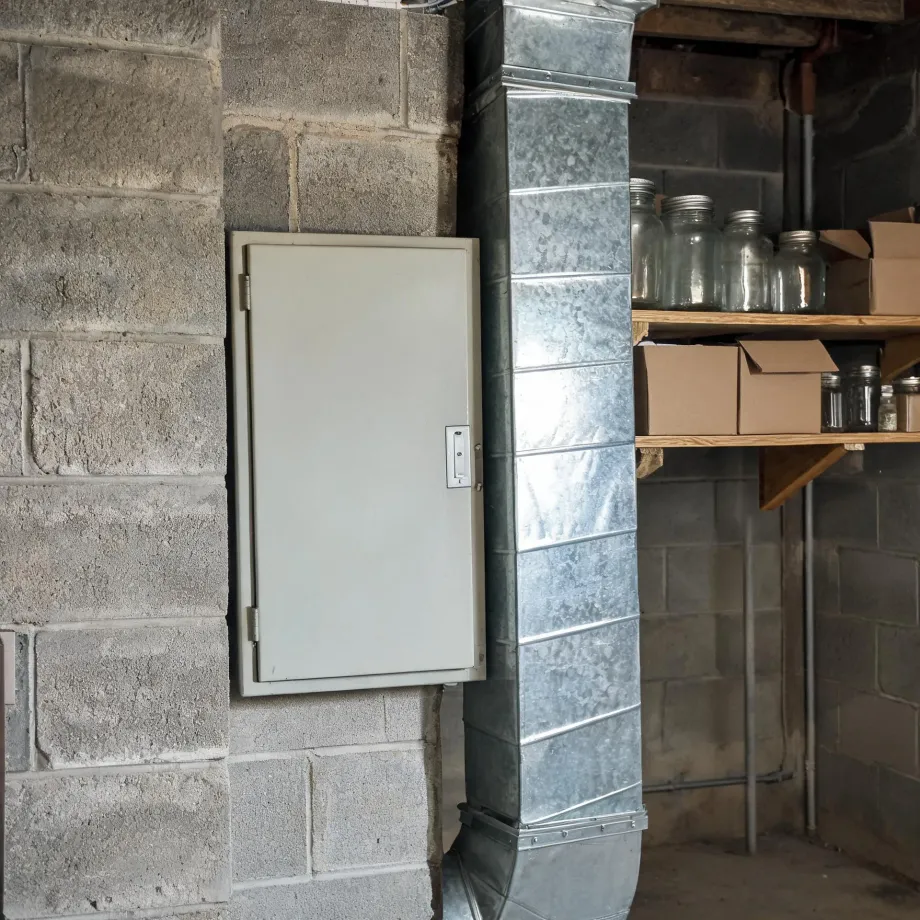
Furnaces in housing this old have often been replaced once or twice already, and each swap leaves the cabinet holding parts from different generations of equipment. Half the homes in Pottawatomie County, Kansas were built in 1987 or earlier (2020-2024 ACS 5-year). That layering is what a contractor reads when the unit comes open: a heat exchanger from one era sitting against a burner assembly from another, with wear patterns that do not match because they were never the same age. Parts for the oldest surviving components are harder to source, and that affects whether a repair is worth pricing or whether a full replacement is the practical path forward.
The Parts of a Furnace a Contractor Checks First
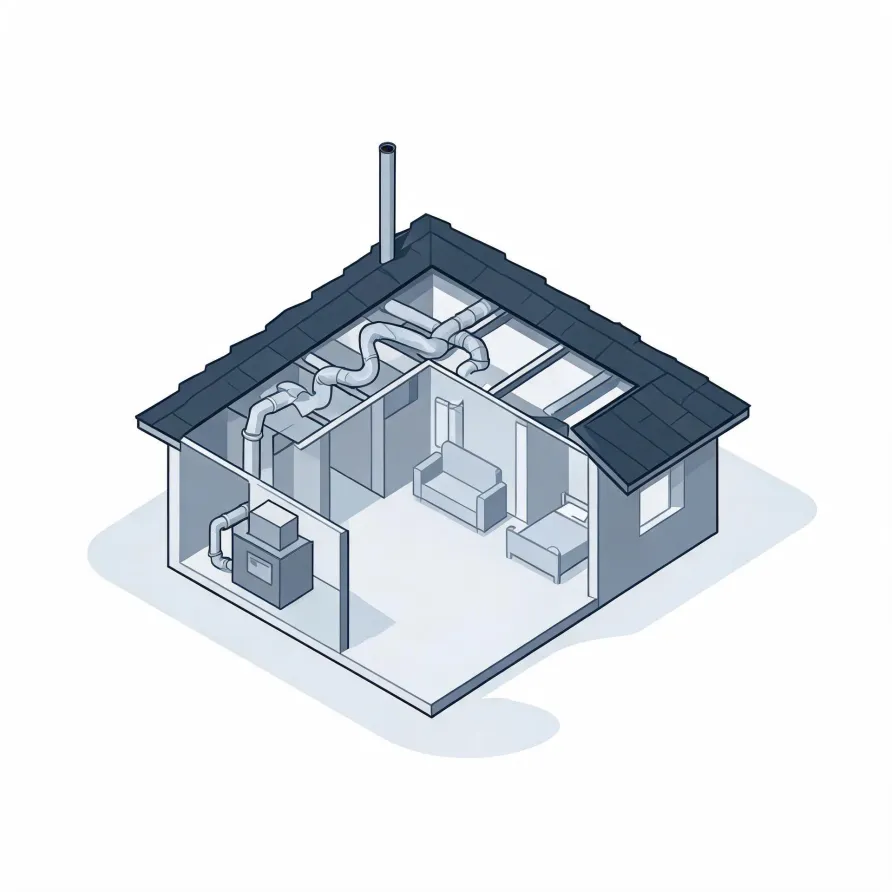
The furnace itself sits in a basement, utility room, or closet and is the piece a contractor goes to first. Inside it, the heat exchanger is the part most likely to be behind a heating failure or a carbon monoxide concern, and the burners that fire beneath it are checked right alongside it. The blower motor, which pushes conditioned air out of the unit and into the house, is another common source of trouble when airflow drops or stops.
The flue pipe runs from the furnace to an exterior wall or up through the roof and carries combustion gases out of the house. The thermostat, mounted on a wall in the living space, is the control point for the whole system and is often the first thing a contractor tests when a furnace is not responding. The gas valve and igniter sit inside the cabinet and are inspected when the burners fail to light.
The drawing shows a representative layout, and a licensed contractor determines which components apply and what condition they are in for your specific home.
Get matched in Pottawatomie CountyPottawatomie County, by the numbers
171 severe weather events were recorded in Pottawatomie County, Kansas between 2015 and 2024.
NOAA National Centers for Environmental Information, Storm Events Database, bulk CSV export, events 2015-01-01 through 2024-12-31.Half the homes in Pottawatomie County, Kansas were built in 1987 or earlier (2020-2024 ACS 5-year).
U.S. Census Bureau, 2020-2024 American Community Survey 5-Year EstimatesPottawatomie County, Kansas holds 10,214 housing units (2020-2024 ACS 5-year).
U.S. Census Bureau, 2020-2024 American Community Survey 5-Year EstimatesOwners occupy 82.2% of the occupied homes in Pottawatomie County, Kansas (2020-2024 ACS 5-year).
U.S. Census Bureau, 2020-2024 American Community Survey 5-Year EstimatesFurnace Repair Rules & Codes for Pottawatomie County, Kansas4 sourced rules and standards
What HVAC Repair Looks Like in Pottawatomie County
Non-weatherized gas furnaces manufactured on or after November 19, 2015 must reach 80.0 percent AFUE.
Non-weatherized oil-fired furnaces manufactured on or after November 19, 2015 must reach 83.0 percent AFUE.
Mobile home gas furnaces manufactured on or after November 19, 2015 must reach 80.0 percent AFUE.
Non-weatherized gas furnaces manufactured on or after December 18, 2028 must reach 95.0 percent AFUE, up from the 80.0 percent minimum that applies to units manufactured before that date.
Severe Weather Events in Pottawatomie County
Pottawatomie County weather puts real hours on furnace equipment. Stress from extreme conditions is one of the main reasons repair calls happen, which makes local weather history a practical part of understanding what furnaces here go through.
171 severe weather events, 2015–2024. Source: NOAA National Centers for Environmental Information, Storm Events Database.