Tell us about the job
Takes about a minute. No obligation.
A furnace repair in Jackson County starts with the burner assembly and heat exchanger, because those are the parts that cycle every time the system fires. Homes in Jackson County, KS run heat about seven months a year, from October through April. That kind of sustained cycling leaves wear on the igniter, the heat exchanger welds, and the burner ports in ways that shorter seasons do not produce. A contractor who skips a close look at the heat exchanger on an older furnace here is working without the most relevant piece of information the equipment can give.
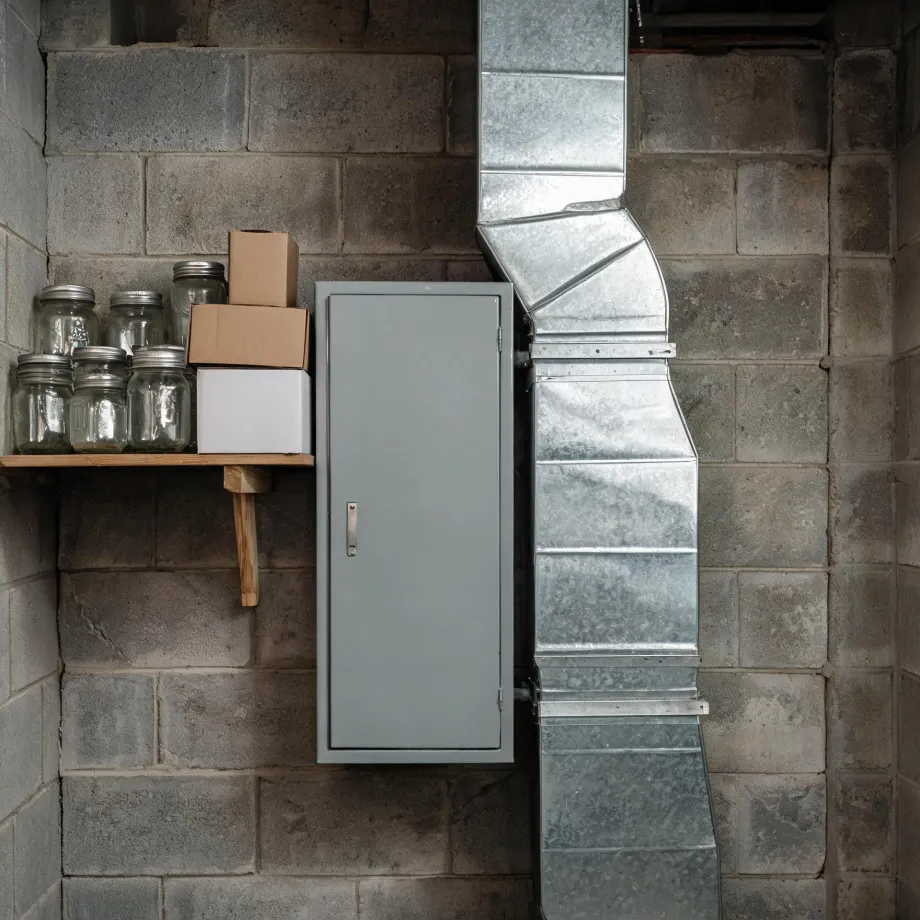
Ductwork in houses this old was put in for systems that no longer exist, and the furnaces that replaced those systems were fitted to whatever the house already had. Half the homes in Jackson County, Kansas were built in 1976 or earlier (2020-2024 ACS 5-year). That history means a contractor opening a furnace here is as likely to be looking for a part that has gone out of production as one that simply failed. When a component is discontinued, the repair either waits on a specialty supplier or becomes a replacement conversation. The age of the structure rarely drives that outcome; what drives it is how long the current unit has been running and what the manufacturer still supports.
The Parts of a Furnace a Contractor Checks First
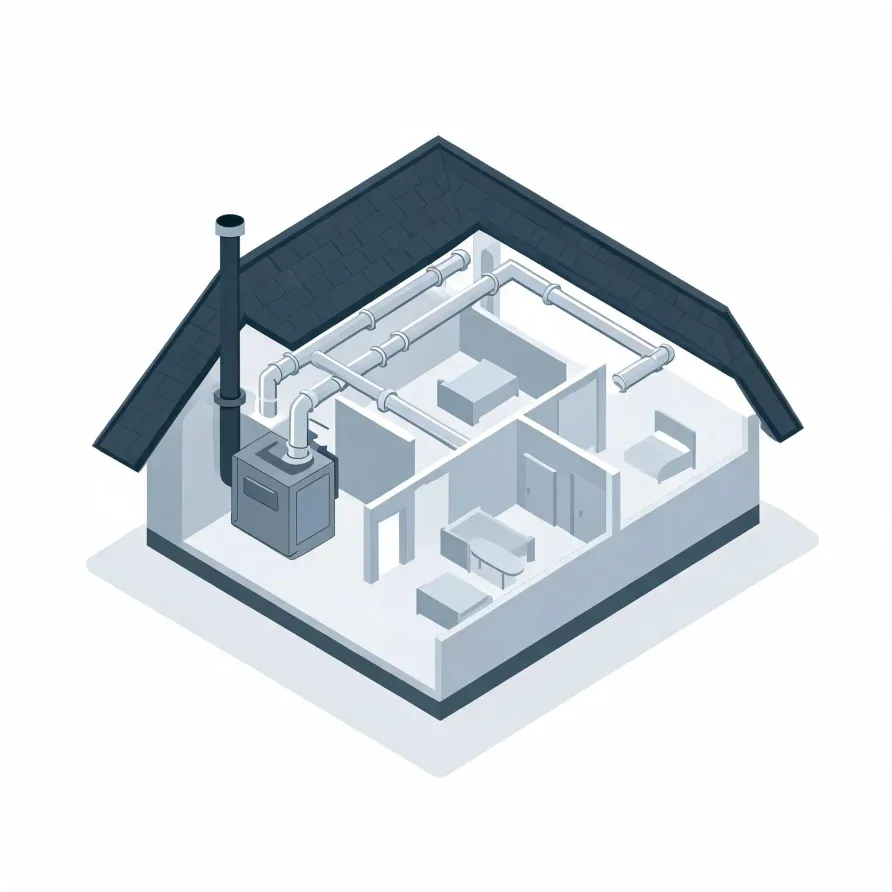
The heat exchanger sits at the core of the furnace cabinet and is where a contractor looks early in any repair call. Cracks or fatigue there affect both heat output and safety. The burner assembly feeds flame into that chamber, and a failed igniter or dirty burner is one of the most common reasons a furnace stops producing heat.
The blower motor and its fan wheel sit in the lower section of the cabinet and push conditioned air into the supply plenum. The flue pipe runs from the top of the furnace to an exterior vent and carries combustion gases out of the house. The control board ties all of it together, reading signals from the thermostat and telling each component when to act.
The drawing shows a typical furnace layout, and a licensed contractor determines which components apply and what condition they are in for your specific system.
Get matched in Jackson CountyJackson County, Kansas, by the numbers
98 severe weather events were recorded in Jackson County, Kansas between 2015 and 2024.
NOAA National Centers for Environmental Information, Storm Events Database, bulk CSV export, events 2015-01-01 through 2024-12-31.Half the homes in Jackson County, Kansas were built in 1976 or earlier (2020-2024 ACS 5-year).
U.S. Census Bureau, 2020-2024 American Community Survey 5-Year EstimatesJackson County, Kansas holds 5,638 housing units (2020-2024 ACS 5-year).
U.S. Census Bureau, 2020-2024 American Community Survey 5-Year EstimatesOwners occupy 77.1% of the occupied homes in Jackson County, Kansas (2020-2024 ACS 5-year).
U.S. Census Bureau, 2020-2024 American Community Survey 5-Year EstimatesFurnace Repair Rules & Codes for Jackson County, Kansas4 sourced standards and laws
What happens when a contractor comes out
Non-weatherized gas furnaces manufactured on or after November 19, 2015 must reach 80.0 percent AFUE.
Non-weatherized oil-fired furnaces manufactured on or after November 19, 2015 must reach 83.0 percent AFUE.
Mobile home gas furnaces manufactured on or after November 19, 2015 must reach 80.0 percent AFUE.
Non-weatherized gas furnaces manufactured on or after December 18, 2028 must reach 95.0 percent AFUE, up from the 80.0 percent minimum that applies to units manufactured before that date.
Severe Weather Events in Jackson County
Hard weather puts real strain on furnace systems, cycling them through demand spikes and recovery loads that add up over time. How much of that a furnace in Jackson County has absorbed is a local question, and it shapes what a repair technician finds when they open the unit.
98 severe weather events, 2015–2024. Source: NOAA National Centers for Environmental Information, Storm Events Database.