Tell us about the job
Takes about a minute. No obligation.
Homes in Hamilton County, KS run heat about seven months a year, from October through April. A furnace cycling through that kind of heating demand puts its burner assembly, heat exchanger, and ignition components through sustained stress every year. Cracks in a heat exchanger, carbon buildup on a burner, and igniter degradation are not random failures here. They follow the load. A contractor looking at a furnace repair in Hamilton County checks those parts first, because they carry the accumulated wear of back-to-back seasons with little off-time between them.
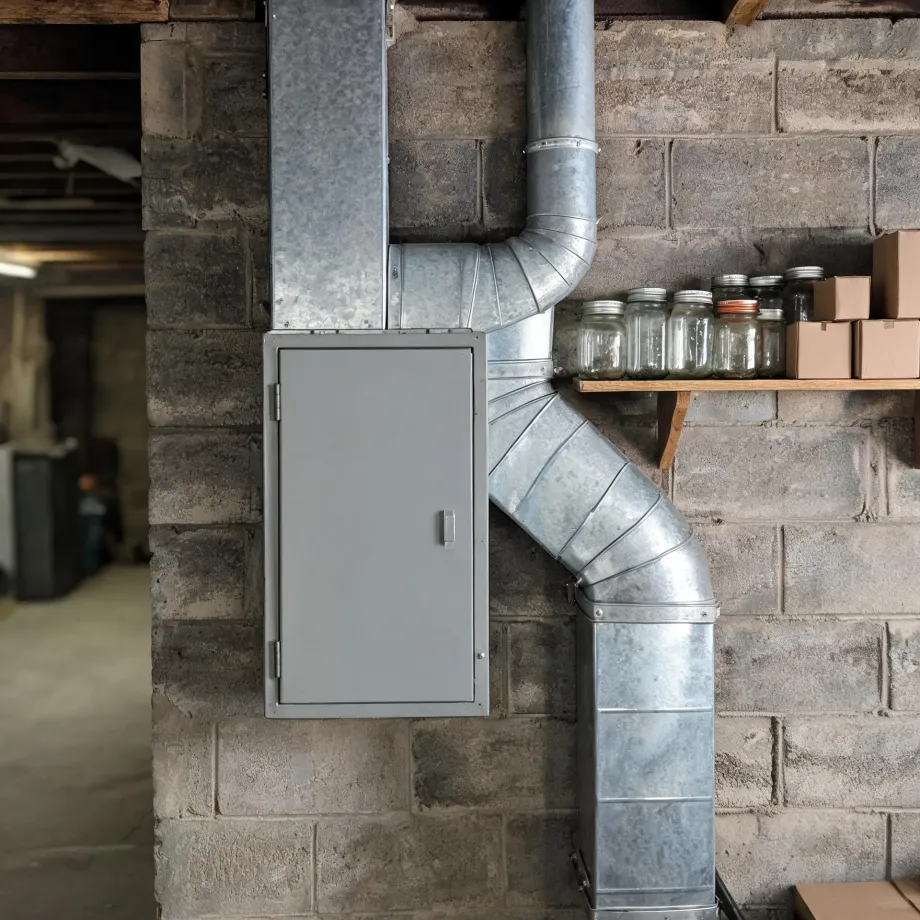
Furnace repair on older housing stock turns on one question a contractor cannot answer from the street: whether the parts the unit takes are still in production. Half the homes in Hamilton County, Kansas were built in 1970 or earlier (2020-2024 ACS 5-year). Equipment installed into houses built that long ago has cycled through more than one replacement already, and the furnace a contractor opens today is often running on a configuration that drifted from original spec as parts were substituted over the years. Heat exchanger sections, gas valves, and limit switches for that era of equipment exist in shrinking supply, and a repair that looks routine from the outside can stall on a part that takes weeks to source or no longer ships at all.
The Parts of a Furnace a Contractor Checks First
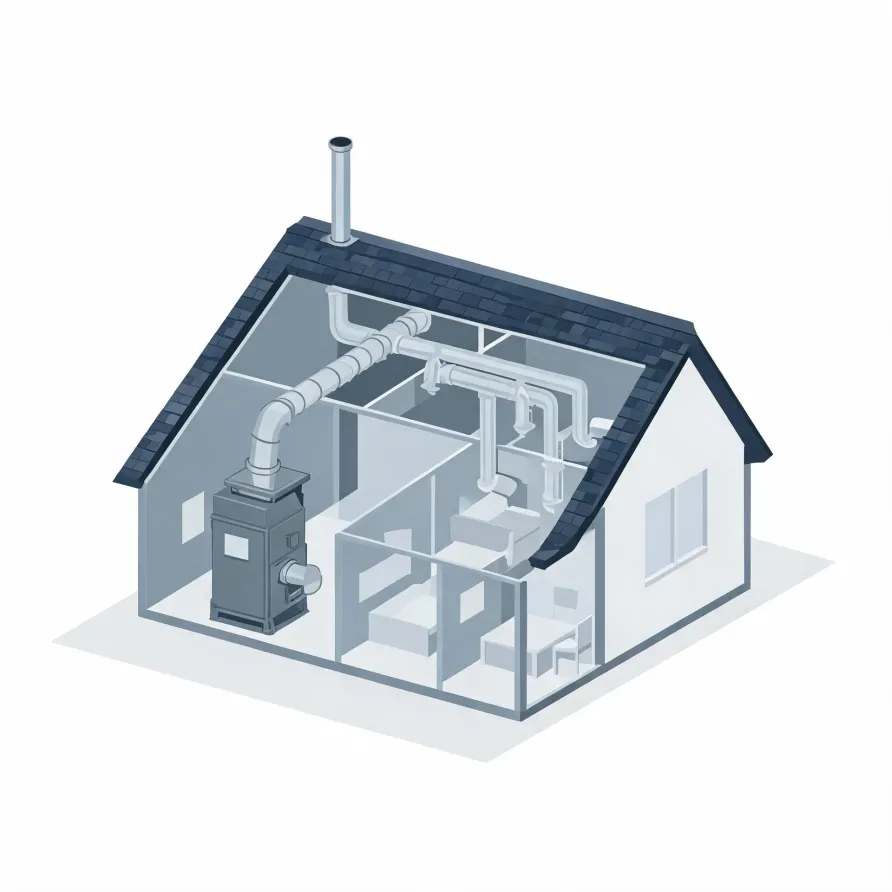
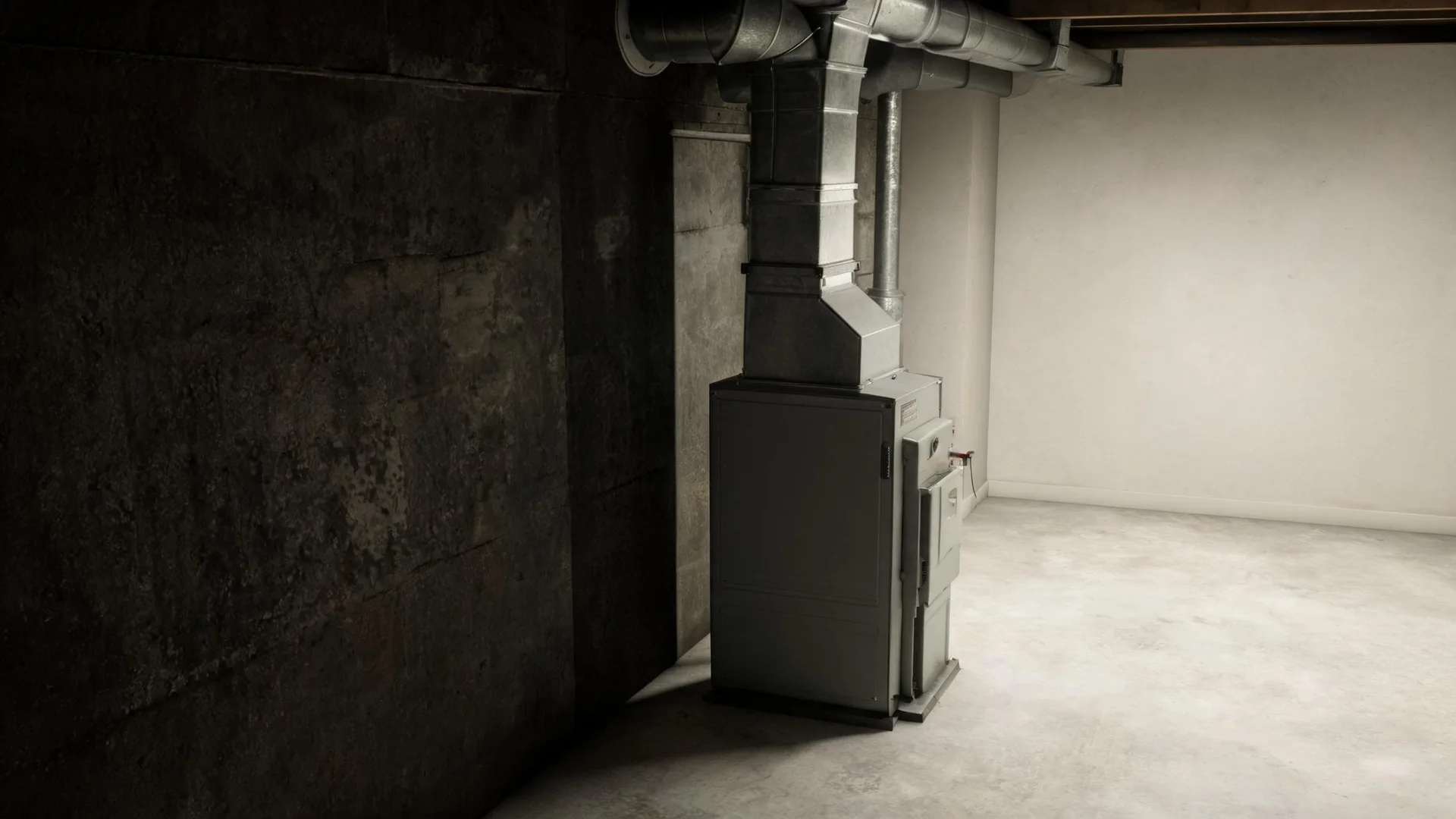
The heat exchanger sits at the core of the furnace cabinet and is the piece a contractor looks at closely early on. Cracks or stress in that metal shell let combustion gases mix with household air, so it is a primary suspect when a furnace runs poorly or trips a safety shutoff. The burner assembly, which sits just below it, is checked at the same time.
The blower motor and its wheel sit at the base of the cabinet and push conditioned air out through the supply side of the system. The inducer motor, the ignitor, the flame sensor, and the control board each have a role in starting and sustaining a heating cycle, and any one of them can be the reason a furnace fails to light, short-cycles, or stops mid-run.
The drawing shows the general layout of a furnace system, and a licensed contractor determines which components are actually at issue in your specific installation.
Get matched in Hamilton CountyHamilton County, Kansas, by the numbers
169 severe weather events were recorded in Hamilton County, Kansas between 2015 and 2024.
NOAA National Centers for Environmental Information, Storm Events Database, bulk CSV export, events 2015-01-01 through 2024-12-31.Half the homes in Hamilton County, Kansas were built in 1970 or earlier (2020-2024 ACS 5-year).
U.S. Census Bureau, 2020-2024 American Community Survey 5-Year EstimatesHamilton County, Kansas holds 1,014 housing units (2020-2024 ACS 5-year).
U.S. Census Bureau, 2020-2024 American Community Survey 5-Year EstimatesOwners occupy 77.1% of the occupied homes in Hamilton County, Kansas (2020-2024 ACS 5-year).
U.S. Census Bureau, 2020-2024 American Community Survey 5-Year EstimatesCodes & Standards Governing Furnace Repair in Hamilton County, Kansas4 sourced rules and standards
What HVAC Repair Looks Like in Hamilton County
Non-weatherized gas furnaces manufactured on or after November 19, 2015 must reach 80.0 percent AFUE.
Non-weatherized oil-fired furnaces manufactured on or after November 19, 2015 must reach 83.0 percent AFUE.
Mobile home gas furnaces manufactured on or after November 19, 2015 must reach 80.0 percent AFUE.
Non-weatherized gas furnaces manufactured on or after December 18, 2028 must reach 95.0 percent AFUE, up from the 80.0 percent minimum that applies to units manufactured before that date.
Severe Weather Events in Hamilton County
Heating equipment works harder when the weather outside is extreme, and that workload shortens the life of components and brings failures forward. What happens in Hamilton County shapes what local furnaces are asked to do, which makes the weather record a direct part of understanding repair demand here.
169 severe weather events, 2015–2024. Source: NOAA National Centers for Environmental Information, Storm Events Database.