Tell us about the job
Takes about a minute. No obligation.
Sizing a furnace for Hamilton County is not a generic exercise because the equipment has to be matched to what this specific winter workload does to the heat exchanger and burner over years of cycling. Homes in Hamilton County, KS run heat about seven months a year, from October through April. A furnace that is undersized runs longer to meet the thermostat, stressing the heat exchanger through more thermal cycles each week than a properly sized unit would face. A contractor quoting a replacement here has to establish the right output for this house before anything else, because an install that would hold up fine somewhere milder will show cracks in the heat exchanger and ignition system sooner under this load.
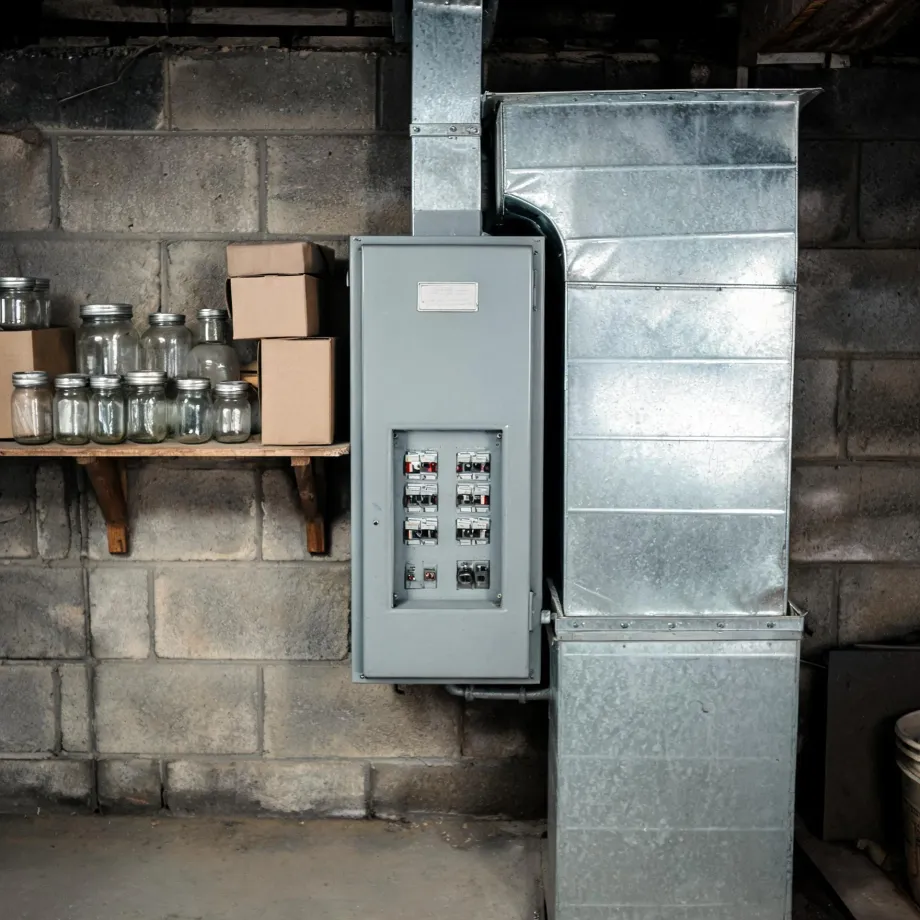
Ductwork in this county's older homes was sized and configured for equipment that is no longer made, and a new furnace draws and distributes air differently enough that the existing runs sometimes need to be reworked before installation can proceed. Half the homes in Hamilton County, Kansas were built in 1970 or earlier (2020-2024 ACS 5-year). That history is baked into the framing and the mechanical chases, which means a contractor has to assess what is already in the walls before settling on equipment size or quoting the job. The electrical service tells a similar story. A panel that was sufficient when the house was built may not carry what a modern furnace and its controls require.
What Gets Installed With a New Furnace
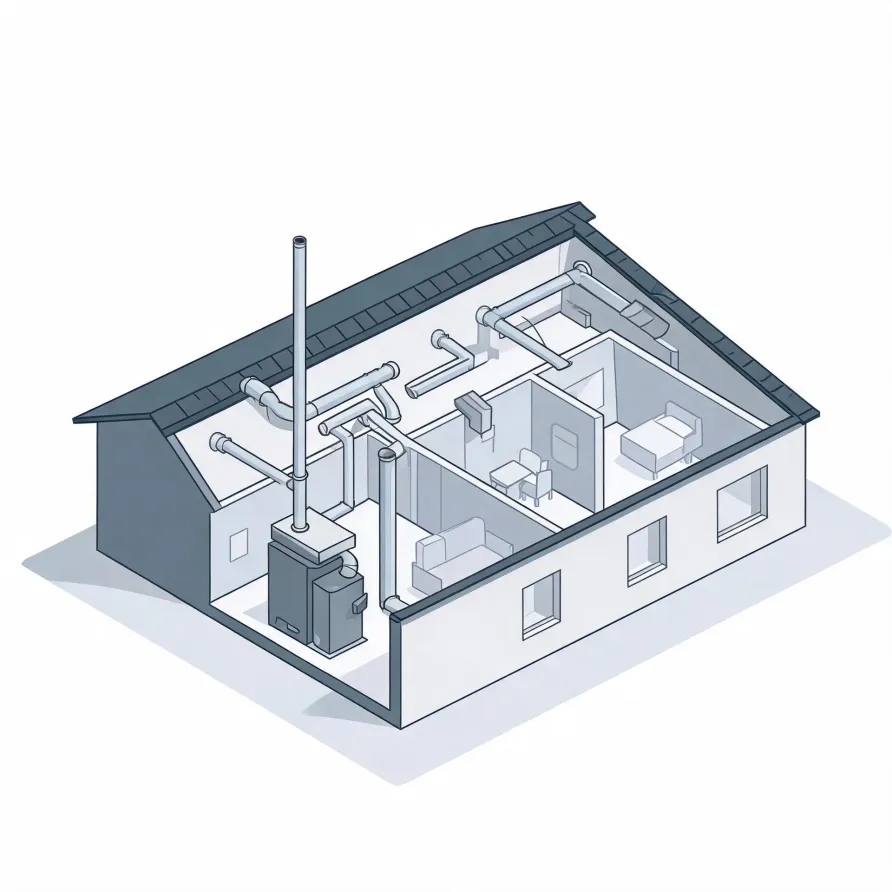
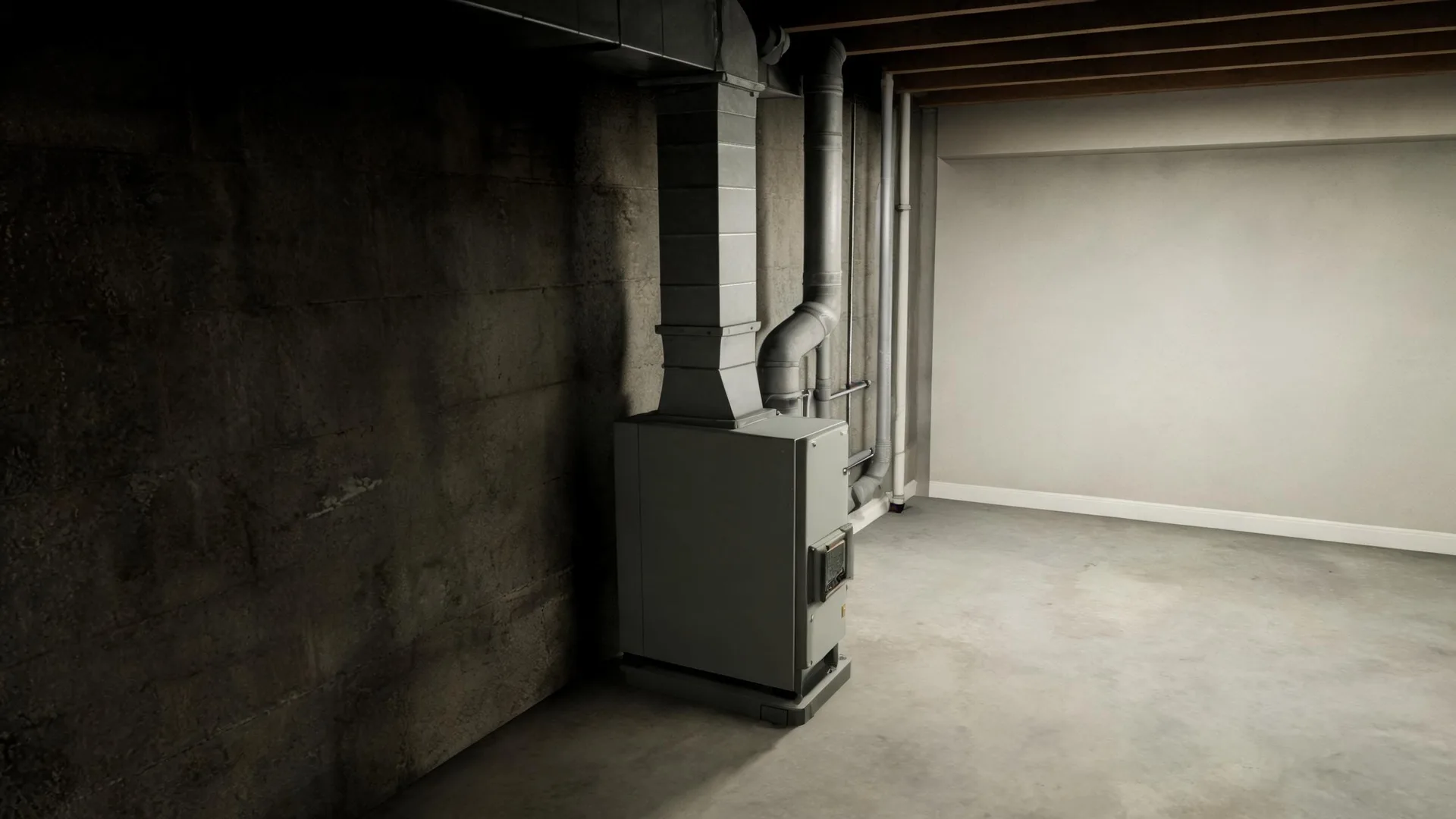
The furnace itself sits in the basement, utility room, or closet and is the unit a homeowner sees first when they look at the system. Inside it, the heat exchanger and the burner assembly occupy the core of the cabinet. The blower motor sits below them and pushes conditioned air out into the living space.
The flue pipe runs from the top or back of the furnace to an exterior wall or up through the roof, carrying combustion gases out of the house. The thermostat mounts on an interior wall and is the control point the homeowner touches day to day. A filter housing sits at the air intake side of the cabinet, where incoming air passes through before reaching the blower.
The drawing shows a representative layout, and a licensed contractor determines exactly what applies to this house.
Get matched in Hamilton CountyHamilton County, Kansas, by the numbers
169 severe weather events were recorded in Hamilton County, Kansas between 2015 and 2024.
NOAA National Centers for Environmental Information, Storm Events Database, bulk CSV export, events 2015-01-01 through 2024-12-31.Half the homes in Hamilton County, Kansas were built in 1970 or earlier (2020-2024 ACS 5-year).
U.S. Census Bureau, 2020-2024 American Community Survey 5-Year EstimatesHamilton County, Kansas holds 1,014 housing units (2020-2024 ACS 5-year).
U.S. Census Bureau, 2020-2024 American Community Survey 5-Year EstimatesOwners occupy 77.1% of the occupied homes in Hamilton County, Kansas (2020-2024 ACS 5-year).
U.S. Census Bureau, 2020-2024 American Community Survey 5-Year EstimatesFurnace Installation Rules & Codes for Hamilton County, Kansas4 sourced standards and regulations
What a Hamilton County HVAC Installation Looks Like
Non-weatherized gas furnaces manufactured on or after November 19, 2015 must reach 80.0 percent AFUE.
Non-weatherized oil-fired furnaces manufactured on or after November 19, 2015 must reach 83.0 percent AFUE.
Mobile home gas furnaces manufactured on or after November 19, 2015 must reach 80.0 percent AFUE.
Non-weatherized gas furnaces manufactured on or after December 18, 2028 must reach 95.0 percent AFUE, up from the 80.0 percent minimum that applies to units manufactured before that date.
Severe Weather Events in Hamilton County
Kansas weather puts real demands on heating equipment, and Hamilton County is no exception to that pressure. A furnace sized and installed for local conditions handles those demands differently than one spec'd for a milder climate, which is why the weather record here is relevant to the installation decision.
169 severe weather events, 2015–2024. Source: NOAA National Centers for Environmental Information, Storm Events Database.