Tell us about the job
Takes about a minute. No obligation.
Homes in Osage County, KS run heat about seven months a year, from October through April. A furnace running that long each year puts its heaviest wear on the burner assembly and heat exchanger, because those are the parts that cycle every time the thermostat calls. By the time a furnace shows a fault, the ignition system and heat exchanger have absorbed years of thermal stress. A contractor quoting a repair here prices those components first, not because they always fail, but because they carry the load every season and show it when they do.
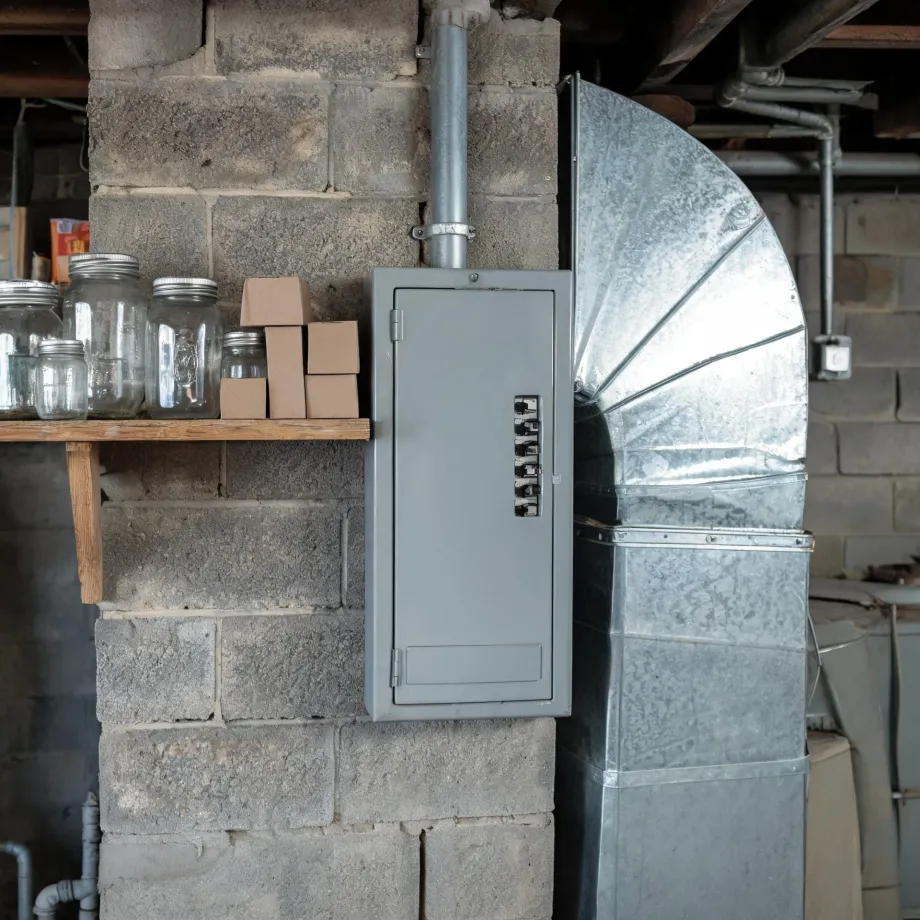
Ductwork in a house this old was sized and routed for whatever system the original builder put in, and furnaces have changed substantially since. Half the homes in Osage County, Kansas were built in 1974 or earlier (2020-2024 ACS 5-year). A contractor who opens a furnace in stock like this often finds that the failed component, a heat exchanger section, a control board, a gas valve assembly, takes a part number that manufacturers stopped running years ago. That search for a discontinued part is where repair timelines and costs actually get decided, and it is something the outside of the unit tells you nothing about.
The Parts of a Furnace a Contractor Checks First
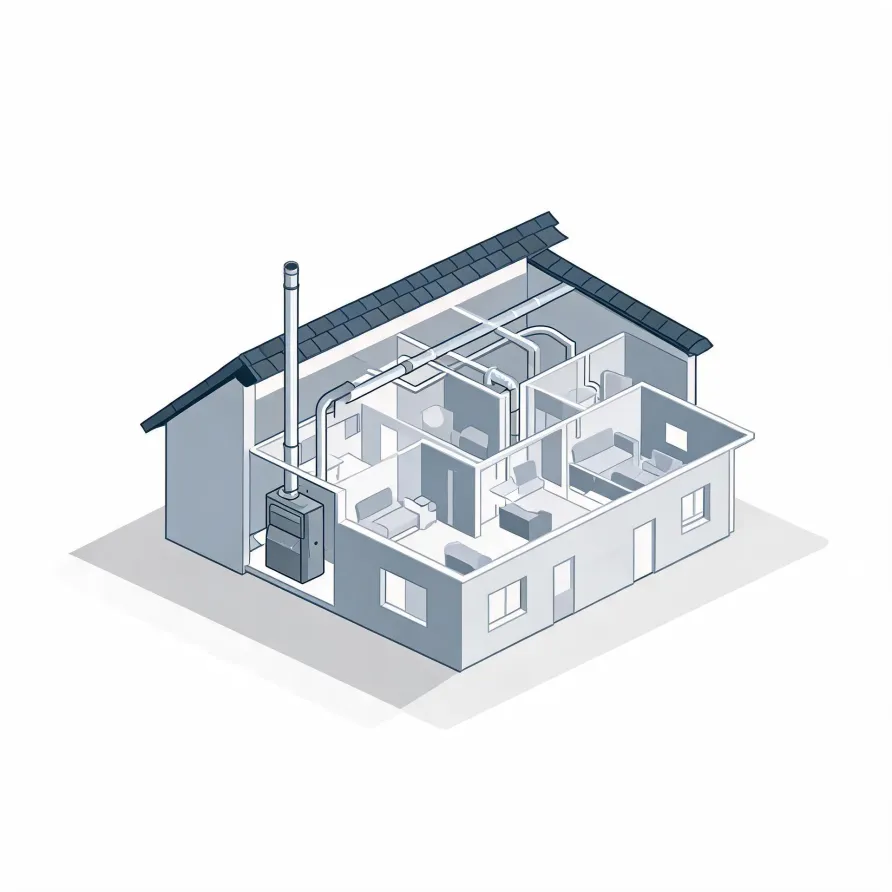
The heat exchanger sits at the core of the furnace cabinet in your basement or utility closet, and it is the piece a contractor looks at closely when something smells wrong or the system is cycling off too soon. The burners feed it; the blower motor pushes conditioned air across it and out into the house. Either of those can be the source of a no-heat call.
The igniter and flame sensor sit near the burner assembly and handle the job of starting and confirming combustion on each cycle. The inducer motor and flue venting run from the top of the cabinet to the outside, and a fault anywhere along that path triggers safety shutoffs that can look, from the outside, like a dead furnace.
The drawing shows a typical furnace layout, and a licensed contractor determines which components apply to the specific unit and installation in your home.
Get matched in Osage CountyOsage County, by the record
157 severe weather events were recorded in Osage County, Kansas between 2015 and 2024.
NOAA National Centers for Environmental Information, Storm Events Database, bulk CSV export, events 2015-01-01 through 2024-12-31.Half the homes in Osage County, Kansas were built in 1974 or earlier (2020-2024 ACS 5-year).
U.S. Census Bureau, 2020-2024 American Community Survey 5-Year EstimatesOsage County, Kansas holds 7,337 housing units (2020-2024 ACS 5-year).
U.S. Census Bureau, 2020-2024 American Community Survey 5-Year EstimatesOwners occupy 82.4% of the occupied homes in Osage County, Kansas (2020-2024 ACS 5-year).
U.S. Census Bureau, 2020-2024 American Community Survey 5-Year EstimatesCodes & Standards Behind Furnace Repair in Osage County, Kansas4 sourced rules and standards
What HVAC Repair Looks Like in Osage County
Non-weatherized gas furnaces manufactured on or after November 19, 2015 must reach 80.0 percent AFUE.
Non-weatherized oil-fired furnaces manufactured on or after November 19, 2015 must reach 83.0 percent AFUE.
Mobile home gas furnaces manufactured on or after November 19, 2015 must reach 80.0 percent AFUE.
Non-weatherized gas furnaces manufactured on or after December 18, 2028 must reach 95.0 percent AFUE, up from the 80.0 percent minimum that applies to units manufactured before that date.
Severe Weather Events in Osage County
Weather puts hours on heating equipment. The more a furnace cycles hard through cold snaps and pressure swings, the sooner its components show wear, which is why local weather history is a practical starting point for understanding repair demand in Osage County.
157 severe weather events, 2015–2024. Source: NOAA National Centers for Environmental Information, Storm Events Database.