Tell us about the job
Takes about a minute. No obligation.
Sizing a furnace for this county starts with understanding the load the equipment actually carries. Homes in Osage County, KS run heat about seven months a year, from October through April. The burner and heat exchanger cycle repeatedly across those months, and a unit that leaves any headroom in its heat output will run longer each cycle to compensate, wearing the ignition system and heat exchanger faster than the manufacturer's schedule assumes. A contractor quoting a replacement here has to work out the right capacity before anything else, because an undersized unit does not fail quietly.
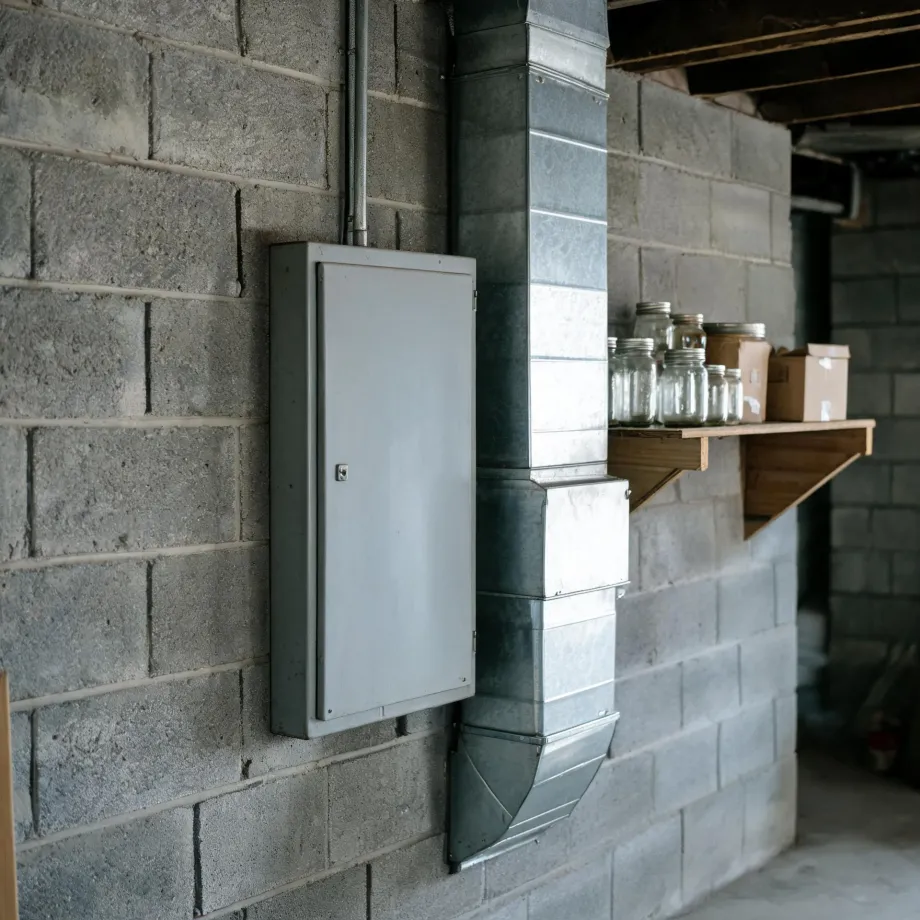
Ductwork laid out for an earlier generation of furnaces shapes what a new installation actually costs here. Half the homes in Osage County, Kansas were built in 1974 or earlier (2020-2024 ACS 5-year). A furnace installed decades later draws different airflow volumes and often runs on different electrical demands than what the original trunk lines were sized for. A contractor quoting a new furnace has to trace what is in the walls and attic before pricing the equipment, because ductwork that cannot carry the new system's output will need modification regardless of which unit is chosen.
What Gets Installed With a New Furnace
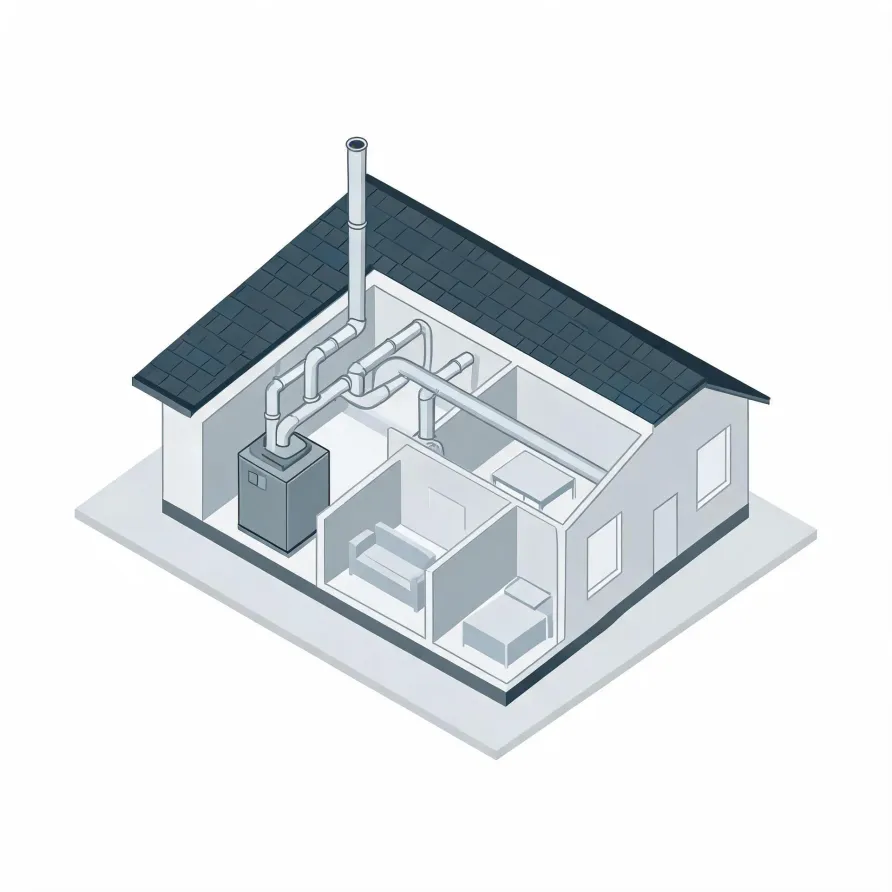
The furnace itself sits in the basement, utility room, or closet and is the core unit a contractor places first. Attached to it is the flue or vent pipe, which runs through the wall or up through the roof and carries combustion gases out of the house. The air handler, when separate, sits alongside the furnace and moves conditioned air into the duct system.
The thermostat mounts on an interior wall and is the control point for the whole system. Near the furnace, a contractor also installs the filter housing and the gas supply connection, both of which tie directly into how the unit runs from day one.
The drawing beside this text shows a general layout of these components, and a licensed contractor determines exactly what the installation involves in your specific home.
Get matched in Osage CountyOsage County, by the numbers
157 severe weather events were recorded in Osage County, Kansas between 2015 and 2024.
NOAA National Centers for Environmental Information, Storm Events Database, bulk CSV export, events 2015-01-01 through 2024-12-31.Half the homes in Osage County, Kansas were built in 1974 or earlier (2020-2024 ACS 5-year).
U.S. Census Bureau, 2020-2024 American Community Survey 5-Year EstimatesOsage County, Kansas holds 7,337 housing units (2020-2024 ACS 5-year).
U.S. Census Bureau, 2020-2024 American Community Survey 5-Year EstimatesOwners occupy 82.4% of the occupied homes in Osage County, Kansas (2020-2024 ACS 5-year).
U.S. Census Bureau, 2020-2024 American Community Survey 5-Year EstimatesFurnace Installation Rules & Standards for Osage County, Kansas4 sourced rules and standards
What Happens During an HVAC Installation in Osage County
Non-weatherized gas furnaces manufactured on or after November 19, 2015 must reach 80.0 percent AFUE.
Non-weatherized oil-fired furnaces manufactured on or after November 19, 2015 must reach 83.0 percent AFUE.
Mobile home gas furnaces manufactured on or after November 19, 2015 must reach 80.0 percent AFUE.
Non-weatherized gas furnaces manufactured on or after December 18, 2028 must reach 95.0 percent AFUE, up from the 80.0 percent minimum that applies to units manufactured before that date.
Severe Weather Events in Osage County
Osage County weather puts real load on heating equipment, and that load shapes what a furnace here needs to handle over its lifetime. Sizing and installation decisions that ignore local conditions produce systems that underperform when the weather demands most.
157 severe weather events, 2015–2024. Source: NOAA National Centers for Environmental Information, Storm Events Database.