Tell us about the job
Takes about a minute. No obligation.
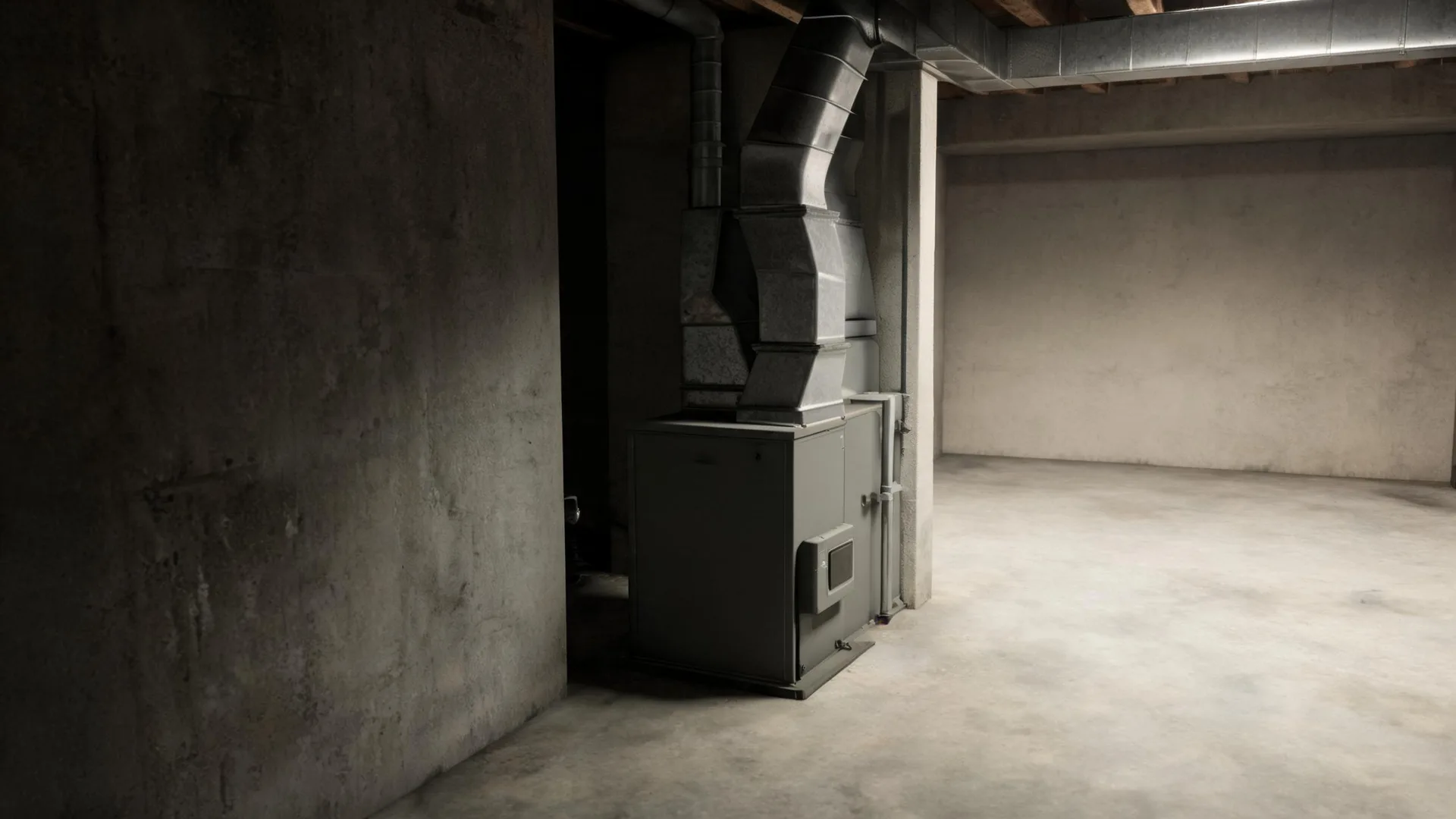
Sizing a furnace for this county starts with knowing exactly what the burner is being asked to carry. Homes in Franklin County, KS run heat about seven months a year, from October through April. A heat exchanger cycling through that kind of sustained demand accumulates wear on the ignition system and burner components at a pace that a loose or hurried install only accelerates. A contractor quoting a replacement here has to run a proper load calculation before settling on equipment capacity, because an undersized unit will short-cycle through every cold month and show it in cracked components well ahead of schedule.
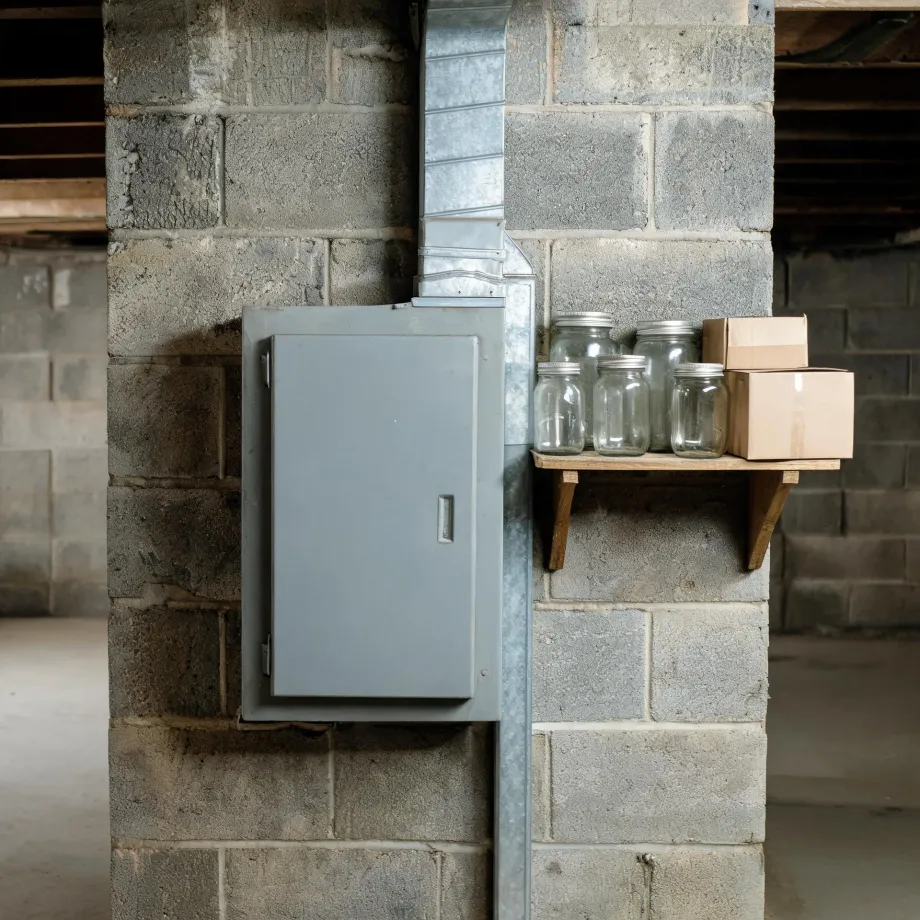
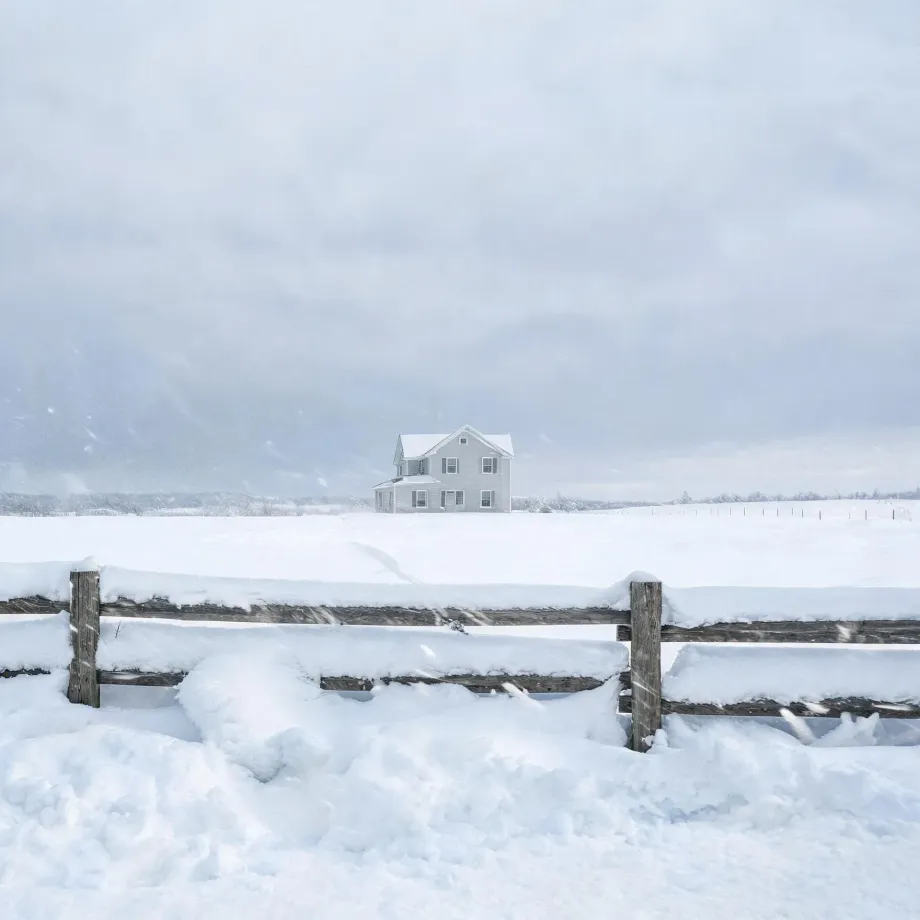
Existing ductwork is what a furnace installation turns on in this county, and what that ductwork can carry is not something a contractor can read from the outside. Half the homes in Franklin County, Kansas were built in 1975 or earlier (2020-2024 ACS 5-year). A house built in that era was ducted for a system it has long since stopped running, and the routing, sizing, and condition of that ductwork determine whether a new furnace drops in or whether the job grows. The electrical side follows the same logic: service panels from that period were not laid out for current draw requirements. What a contractor finds once they are inside the walls decides the scope.
What Gets Installed With a New Furnace
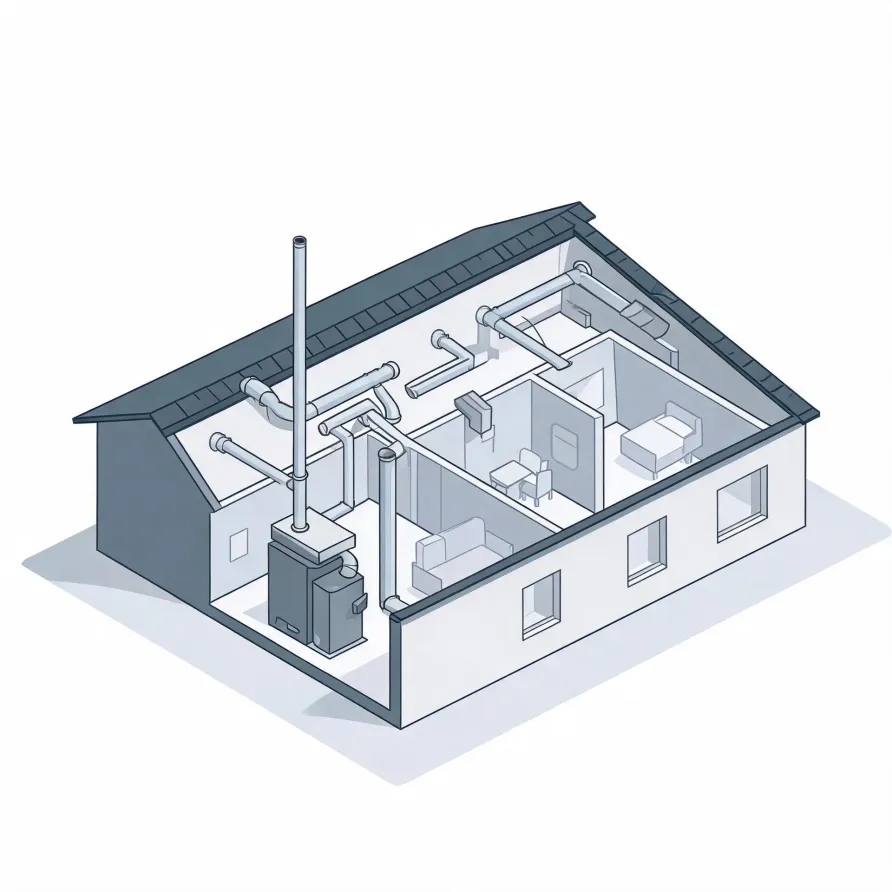
The furnace itself sits in a utility space, basement, or closet and is the unit a homeowner is most likely to recognize on sight. A contractor sets it in place, connects it to the gas supply, and ties it into the home's existing duct openings. The heat exchanger lives inside that cabinet, transferring heat into the airstream that moves through the house.
The flue pipe runs from the furnace to an exterior vent, carrying combustion gases out of the living space. Alongside it, the contractor installs or replaces the air handler components, the blower assembly that pulls return air across the heat exchanger and pushes conditioned air back out, and the condensate drain line if the new unit is a high-efficiency model that produces moisture during operation.
The drawing shows a typical layout, and a licensed contractor determines exactly what applies to this house.
Get matched in Franklin CountyFranklin County, Kansas, by the numbers
123 severe weather events were recorded in Franklin County, Kansas between 2015 and 2024.
NOAA National Centers for Environmental Information, Storm Events Database, bulk CSV export, events 2015-01-01 through 2024-12-31.Half the homes in Franklin County, Kansas were built in 1975 or earlier (2020-2024 ACS 5-year).
U.S. Census Bureau, 2020-2024 American Community Survey 5-Year EstimatesFranklin County, Kansas holds 11,310 housing units (2020-2024 ACS 5-year).
U.S. Census Bureau, 2020-2024 American Community Survey 5-Year EstimatesOwners occupy 72.2% of the occupied homes in Franklin County, Kansas (2020-2024 ACS 5-year).
U.S. Census Bureau, 2020-2024 American Community Survey 5-Year EstimatesFurnace Installation Rules on the Books for Franklin County, Kansas4 codes, standards & statutes
What the Installation Actually Looks Like
Non-weatherized gas furnaces manufactured on or after November 19, 2015 must reach 80.0 percent AFUE.
Non-weatherized oil-fired furnaces manufactured on or after November 19, 2015 must reach 83.0 percent AFUE.
Mobile home gas furnaces manufactured on or after November 19, 2015 must reach 80.0 percent AFUE.
Non-weatherized gas furnaces manufactured on or after December 18, 2028 must reach 95.0 percent AFUE, up from the 80.0 percent minimum that applies to units manufactured before that date.
Severe Weather Events in Franklin County
Extreme weather puts real strain on heating equipment, shortening the life of components sized and installed without local conditions in mind. A furnace that handles Franklin County winters is a different spec than one built for somewhere else.
123 severe weather events, 2015–2024. Source: NOAA National Centers for Environmental Information, Storm Events Database.