Tell us about the job
Takes about a minute. No obligation.
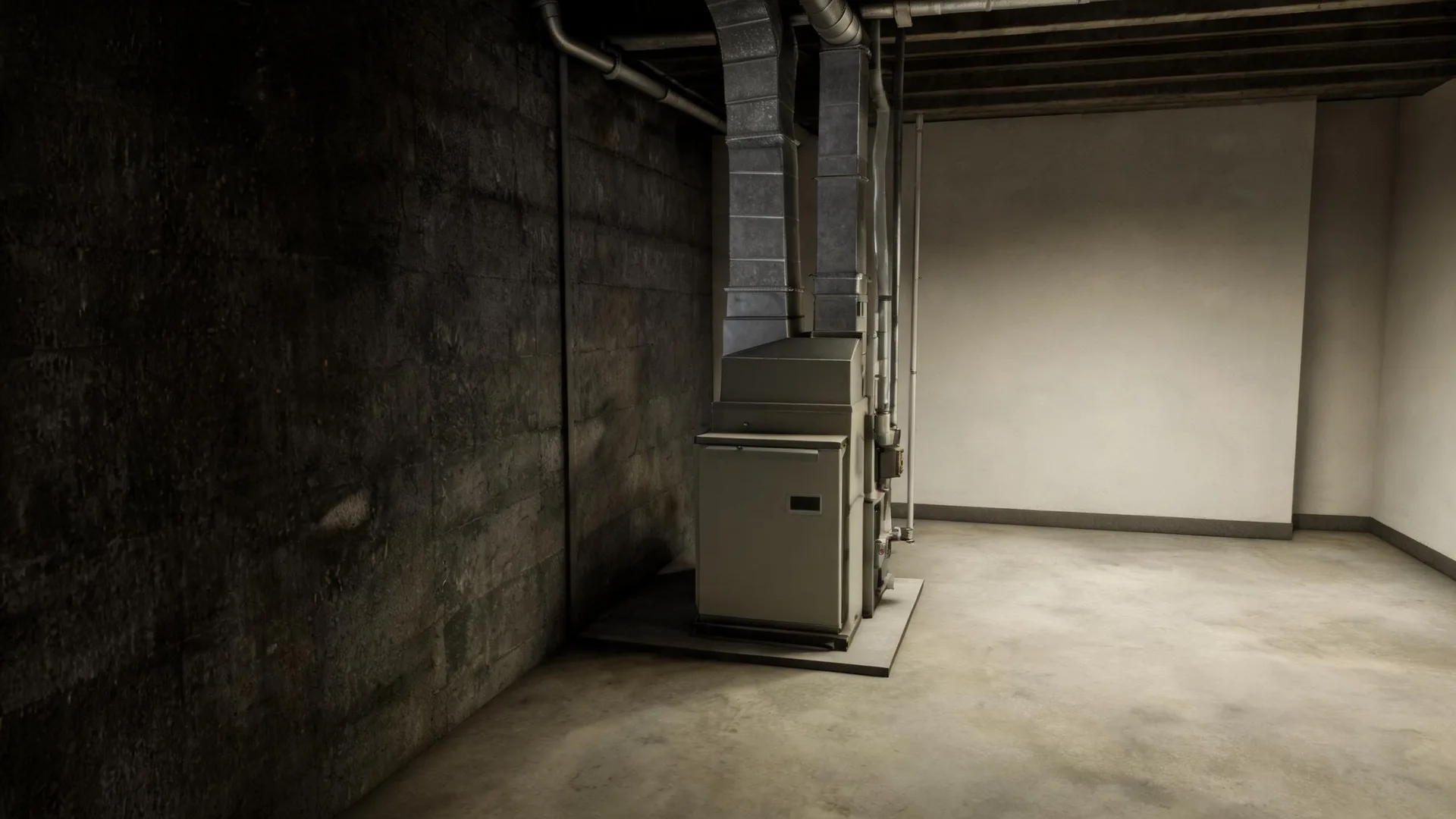
A contractor quoting a furnace repair in Norton County has to separate a component that failed suddenly from one that wore out gradually, and the answer changes what gets replaced. Homes in Norton County, KS run heat about eight months a year, from October through May. The burner, the heat exchanger, and the ignition system cycle through that load every year, and wear on those parts builds in proportion to how hard and how long the system runs. A cracked heat exchanger on an older furnace here is less likely to be a fluke than the same crack on equipment that sits idle most of the year. That distinction sets the repair scope.
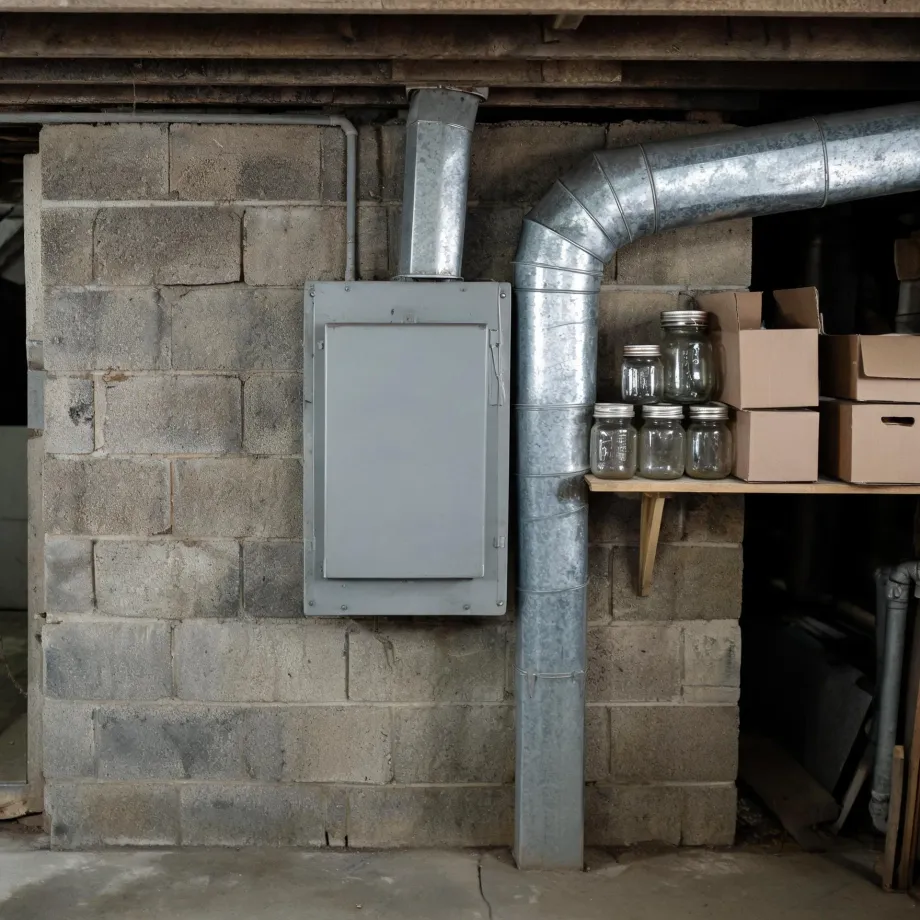
Ductwork in a house this old has usually been touched many times: sections added, joints taped and retaped, dampers adjusted for rooms that changed purpose. By the time a furnace starts underperforming, the question a contractor has to answer is whether the fault sits in the furnace itself or somewhere upstream in the distribution. Half the homes in Norton County, Kansas were built in 1957 or earlier (2020-2024 ACS 5-year). A contractor opening the furnace in a house like this will check the heat exchanger and the ignition assembly, but they will also pressure what is feeding and leaving that unit, because a clean combustion reading inside a dirty or collapsing duct run tells only part of the story.
The Parts of a Furnace a Contractor Checks First
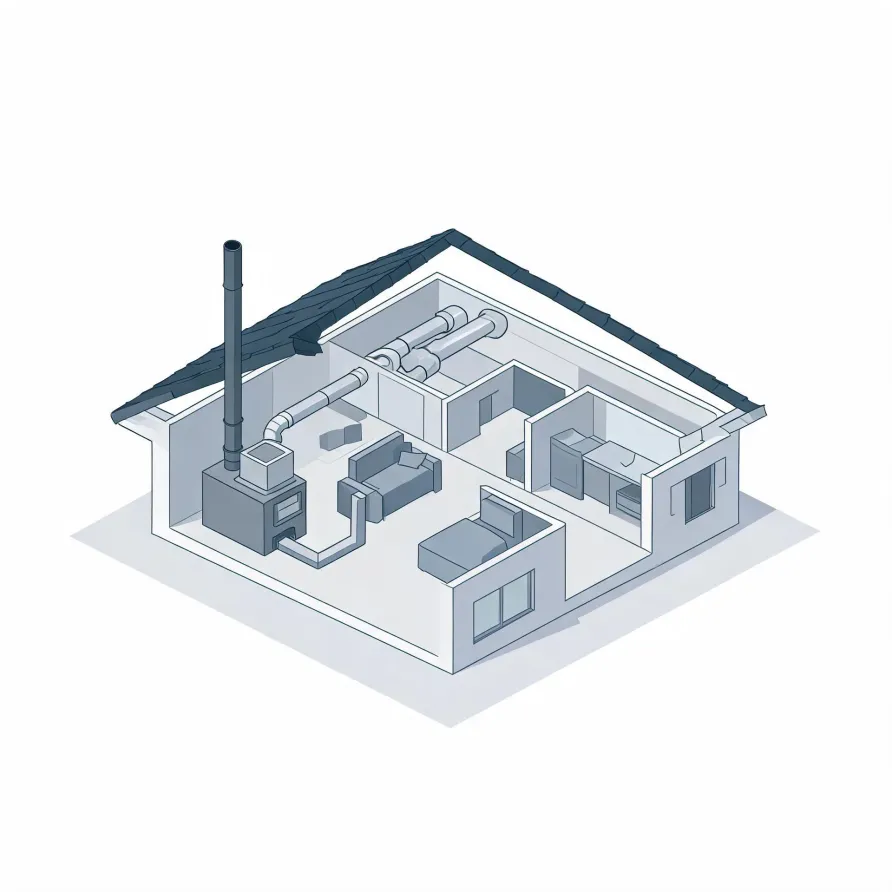
The heat exchanger sits at the core of the furnace cabinet in the basement or utility room, and it is the piece a contractor examines closely when a furnace runs but heats poorly or trips the high-limit switch. The burners feed it directly, and when they misfire or clog, the exchanger never gets to temperature.
The blower motor and its wheel sit below the exchanger and push conditioned air out through the supply plenum. The inducer motor at the top of the cabinet pulls combustion gases out before each cycle starts, and the control board ties all of it together, reading the sensors and telling each part when to run. Either motor, the board, or a failed ignitor or flame sensor will stop a furnace cold.
The drawing shows the general layout of a furnace system, and a licensed contractor determines which components apply and what condition they are in for your specific house.
Get matched in Norton CountyNorton County, Kansas, by the numbers
219 severe weather events were recorded in Norton County, Kansas between 2015 and 2024.
NOAA National Centers for Environmental Information, Storm Events Database, bulk CSV export, events 2015-01-01 through 2024-12-31.Half the homes in Norton County, Kansas were built in 1957 or earlier (2020-2024 ACS 5-year).
U.S. Census Bureau, 2020-2024 American Community Survey 5-Year EstimatesNorton County, Kansas holds 2,450 housing units (2020-2024 ACS 5-year).
U.S. Census Bureau, 2020-2024 American Community Survey 5-Year EstimatesOwners occupy 76.2% of the occupied homes in Norton County, Kansas (2020-2024 ACS 5-year).
U.S. Census Bureau, 2020-2024 American Community Survey 5-Year EstimatesFurnace Repair Rules and Codes for Norton County, Kansas4 sourced standards and regulations
What the repair visit looks like
Non-weatherized gas furnaces manufactured on or after November 19, 2015 must reach 80.0 percent AFUE.
Non-weatherized oil-fired furnaces manufactured on or after November 19, 2015 must reach 83.0 percent AFUE.
Mobile home gas furnaces manufactured on or after November 19, 2015 must reach 80.0 percent AFUE.
Non-weatherized gas furnaces manufactured on or after December 18, 2028 must reach 95.0 percent AFUE, up from the 80.0 percent minimum that applies to units manufactured before that date.
Severe Weather Events in Norton County
Extreme weather puts real stress on heating equipment, and furnaces that work hardest through difficult conditions are the ones most likely to need repair. How often that happens here shapes what local contractors see and what Norton County homeowners should expect from their systems.
219 severe weather events, 2015–2024. Source: NOAA National Centers for Environmental Information, Storm Events Database.