Tell us about the job
Takes about a minute. No obligation.
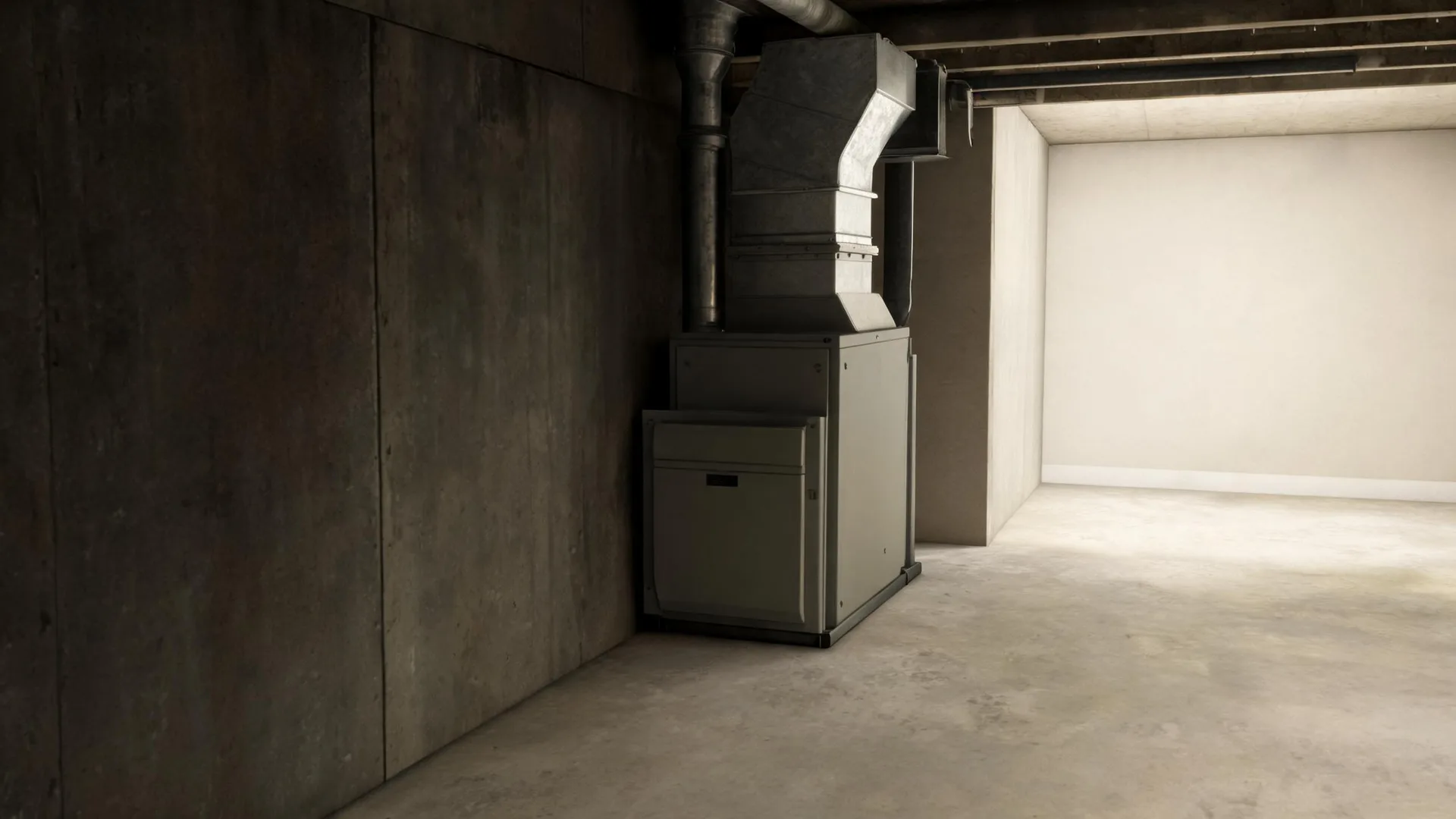
A furnace in Jewell County cycles its burner and ignition system hard. Homes in Jewell County, KS run heat about eight months a year, from October through May. That kind of sustained runtime loads the ignition components well before it shows up in the heat exchanger, so a contractor checking a failed start looks at the igniter and flame sensor first, not last. If those parts have been firing since October every year, they tell a clearer story about what failed and why than anything else opened on the job.
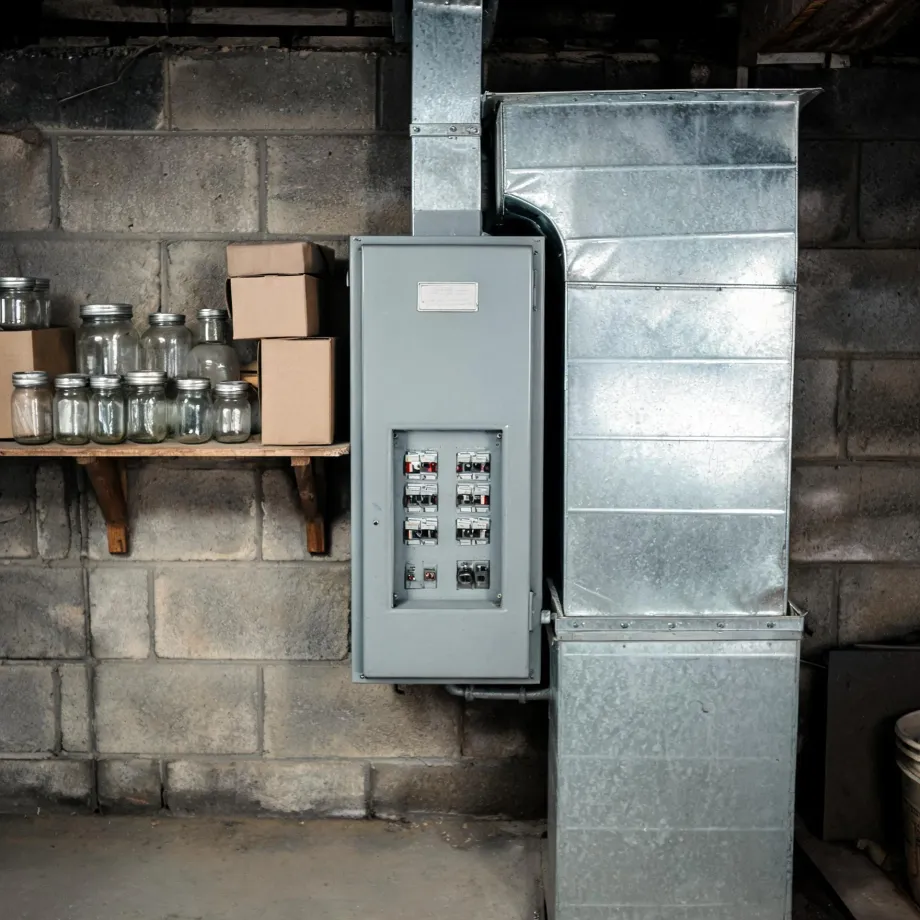
Furnace repairs in Jewell County regularly surface parts that have passed through more than one mechanical generation. Half the homes in Jewell County, Kansas were built in 1945 or earlier (2020-2024 ACS 5-year). A system installed or retrofitted into a house that old has often been adapted more than once, and what a contractor finds inside the opened unit determines whether the job is a straightforward part swap or a search for components that manufacturers stopped producing years back. Stock this old does not always hold surprises, but the gap between the original building and the equipment now running in it is wide enough that a technician prices the repair from what the opened furnace contains, not from the address.
The Parts of a Furnace a Contractor Checks First
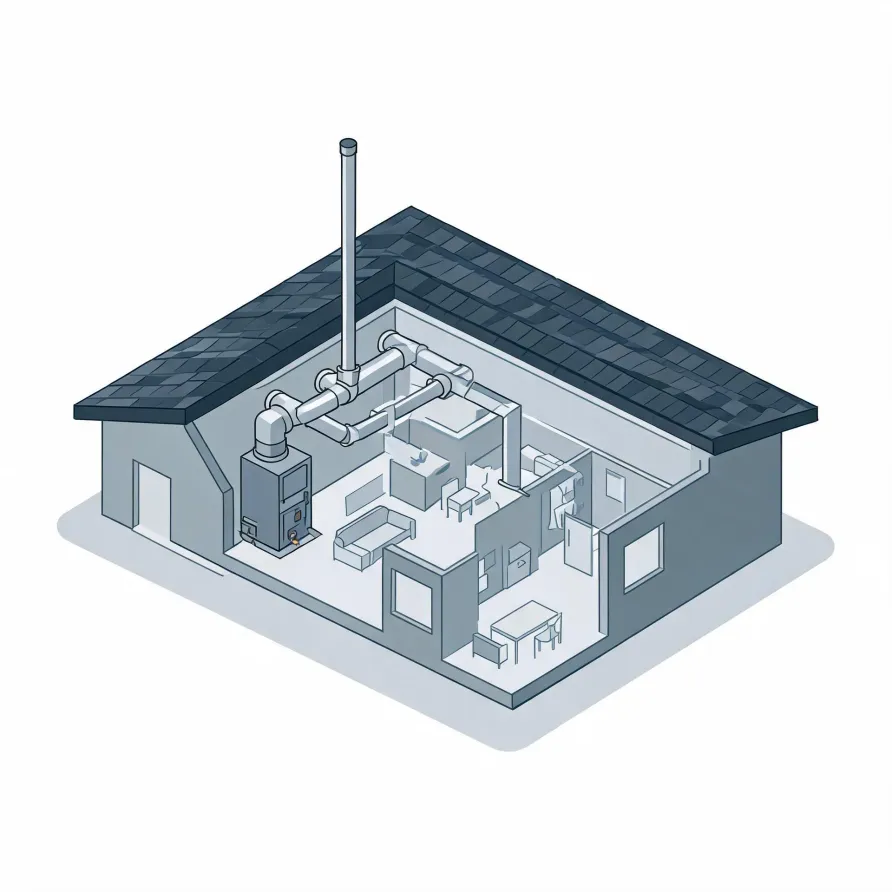
The furnace itself sits in a utility space, basement, or closet and is the heart of the system. Inside it, the heat exchanger is what a contractor looks at closely when something smells wrong or when carbon monoxide is a concern. The burners, which fire just beneath it, are the first stop when the unit runs but produces little heat.
The blower motor sits at the base of the furnace cabinet and pushes conditioned air into the supply side of the house. The flue pipe runs from the top of the unit to an outside vent, and a contractor checks it when combustion gases are not clearing properly. The thermostat on the wall is small but often the reason a furnace will not start at all.
The drawing shows a typical furnace layout, and a licensed contractor assesses which components are relevant to the specific system and house in front of them.
Get matched in Jewell CountyJewell County, by the numbers
134 severe weather events were recorded in Jewell County, Kansas between 2015 and 2024.
NOAA National Centers for Environmental Information, Storm Events Database, bulk CSV export, events 2015-01-01 through 2024-12-31.Half the homes in Jewell County, Kansas were built in 1945 or earlier (2020-2024 ACS 5-year).
U.S. Census Bureau, 2020-2024 American Community Survey 5-Year EstimatesJewell County, Kansas holds 1,761 housing units (2020-2024 ACS 5-year).
U.S. Census Bureau, 2020-2024 American Community Survey 5-Year EstimatesOwners occupy 74.1% of the occupied homes in Jewell County, Kansas (2020-2024 ACS 5-year).
U.S. Census Bureau, 2020-2024 American Community Survey 5-Year EstimatesCodes & Standards Governing Furnace Repair in Jewell County, Kansas4 sourced rules and standards
What HVAC Repair Looks Like in Jewell County
Non-weatherized gas furnaces manufactured on or after November 19, 2015 must reach 80.0 percent AFUE.
Non-weatherized oil-fired furnaces manufactured on or after November 19, 2015 must reach 83.0 percent AFUE.
Mobile home gas furnaces manufactured on or after November 19, 2015 must reach 80.0 percent AFUE.
Non-weatherized gas furnaces manufactured on or after December 18, 2028 must reach 95.0 percent AFUE, up from the 80.0 percent minimum that applies to units manufactured before that date.
Severe Weather Events in Jewell County
Kansas weather puts real stress on heating equipment, and that stress is not spread evenly across the state. How hard a furnace works, and how often it needs attention, reflects the conditions it runs in.
134 severe weather events, 2015–2024. Source: NOAA National Centers for Environmental Information, Storm Events Database.