Tell us about the job
Takes about a minute. No obligation.
A contractor diagnosing a furnace in Seward County starts with the burner assembly and the ignition system before anything else. Homes in Seward County, KS run heat about seven months a year, from October through April. That length of operation puts repeated thermal stress on the heat exchanger and cycles the igniter hundreds of times across the season. Cracks in the heat exchanger and igniter failure are what show up most often on a repair call here, not because the equipment is poor but because the burner has been doing real work since October and the idle months are short.
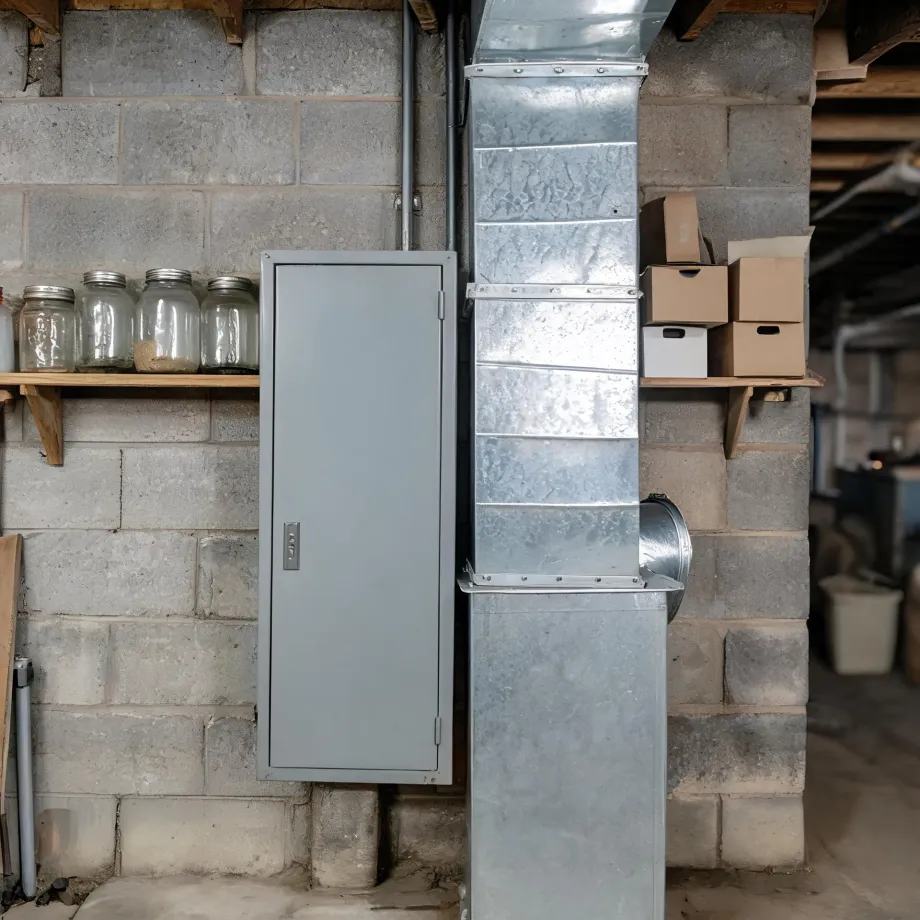
Furnaces in houses this old have typically been swapped out at least once, but the ductwork and the internal components a contractor finds when they open a unit often reflect the demands placed on them by every system that came before. Half the homes in Seward County, Kansas were built in 1973 or earlier (2020-2024 ACS 5-year). That span of use leaves heat exchangers cracked at the seams, burners corroded past cleaning, and control boards tied to parts runs that ended years before the current owner moved in. A contractor repairing a furnace here has to confirm whether replacement parts for what is actually inside the cabinet are still manufactured, because a discontinued component line turns a straightforward repair into a parts search that changes the scope of the job.
The Parts of a Furnace a Contractor Checks First
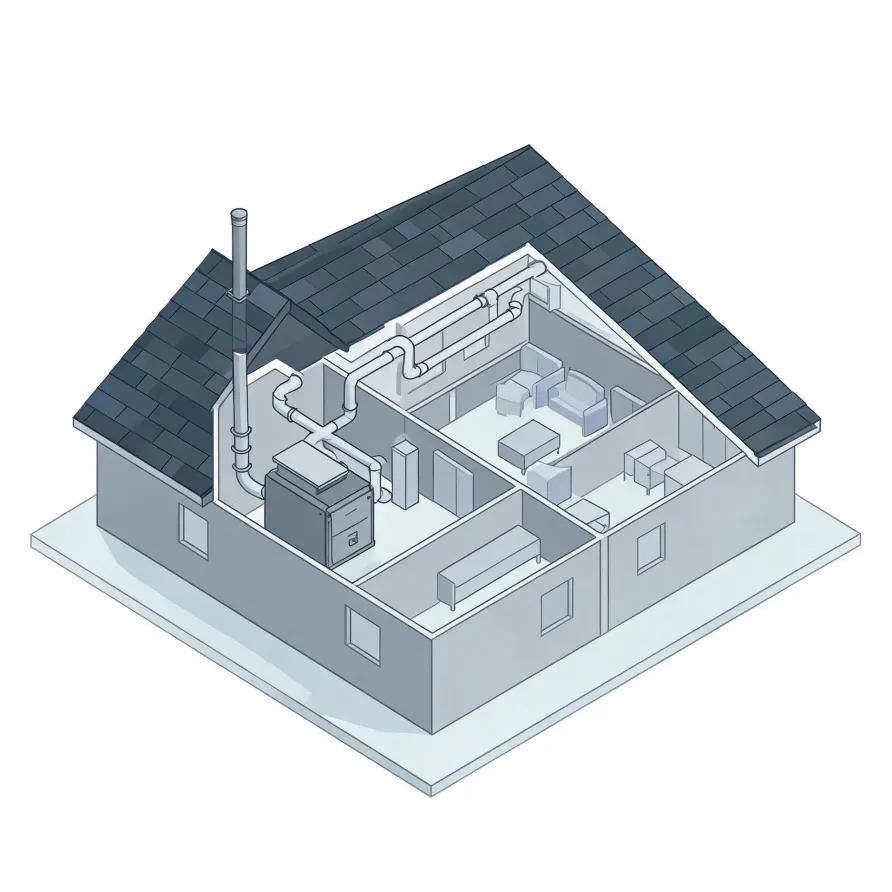
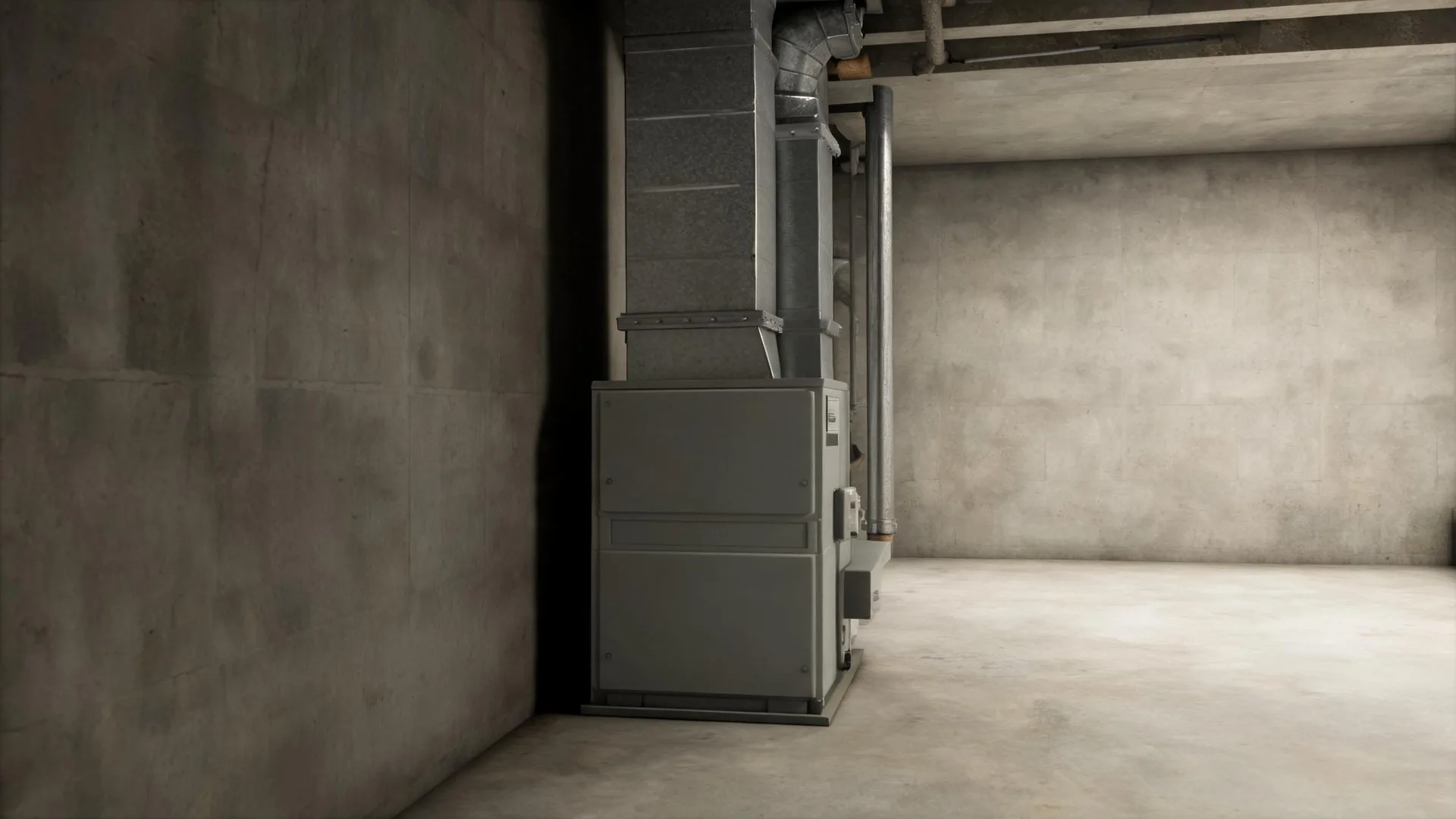
The heat exchanger sits at the core of the furnace cabinet in the basement or utility closet, and it is the piece that warms the air your blower pushes through the house. Cracks or corrosion here are serious finds. The burner assembly feeds directly into it, and a contractor will look at ignition, flame color, and whether the gas valve is opening cleanly.
The blower motor lives at the bottom of the cabinet and drives conditioned air into the supply plenum. The flue pipe exits the top or rear of the cabinet and vents combustion gases outside. A contractor checks the blower capacitor, the inducer motor that pulls gases toward the flue, and the limit switch that shuts the system down if it overheats.
The drawing shows a typical furnace layout, and a licensed contractor determines which components apply and what condition they are in for your specific system.
Get matched in Seward CountySeward County, by the record
215 severe weather events were recorded in Seward County, Kansas between 2015 and 2024.
NOAA National Centers for Environmental Information, Storm Events Database, bulk CSV export, events 2015-01-01 through 2024-12-31.Half the homes in Seward County, Kansas were built in 1973 or earlier (2020-2024 ACS 5-year).
U.S. Census Bureau, 2020-2024 American Community Survey 5-Year EstimatesSeward County, Kansas holds 8,308 housing units (2020-2024 ACS 5-year).
U.S. Census Bureau, 2020-2024 American Community Survey 5-Year EstimatesOwners occupy 61.8% of the occupied homes in Seward County, Kansas (2020-2024 ACS 5-year).
U.S. Census Bureau, 2020-2024 American Community Survey 5-Year EstimatesCodes & Standards Governing Furnace Repair in Seward County, Kansas4 sourced rules & standards
What HVAC Repair Looks Like in Seward County
Non-weatherized gas furnaces manufactured on or after November 19, 2015 must reach 80.0 percent AFUE.
Non-weatherized oil-fired furnaces manufactured on or after November 19, 2015 must reach 83.0 percent AFUE.
Mobile home gas furnaces manufactured on or after November 19, 2015 must reach 80.0 percent AFUE.
Non-weatherized gas furnaces manufactured on or after December 18, 2028 must reach 95.0 percent AFUE, up from the 80.0 percent minimum that applies to units manufactured before that date.
Severe Weather Events in Seward County
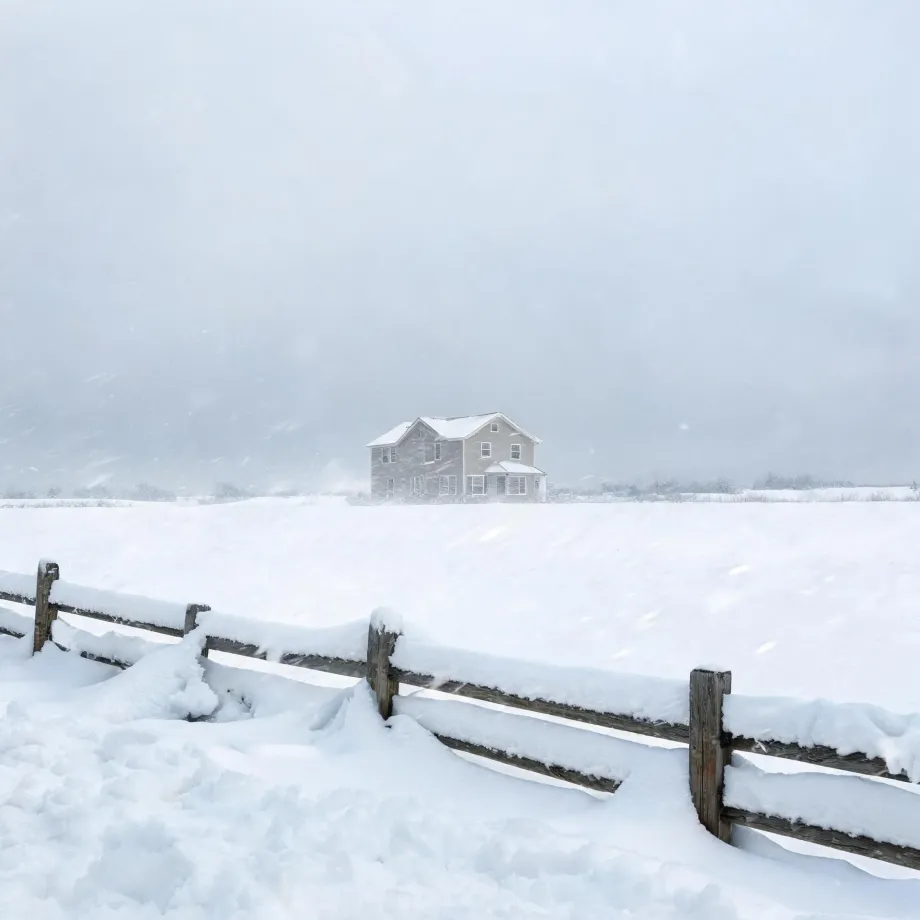
Kansas weather puts real stress on furnace equipment, and Seward County gets its share of the pressure that comes with hard plains conditions. A furnace that works through that kind of strain accumulates wear in ways that a mild-climate unit never does, which is why local repair history and local weather belong on the same page.
215 severe weather events, 2015–2024. Source: NOAA National Centers for Environmental Information, Storm Events Database.