Tell us about the job
Takes about a minute. No obligation.
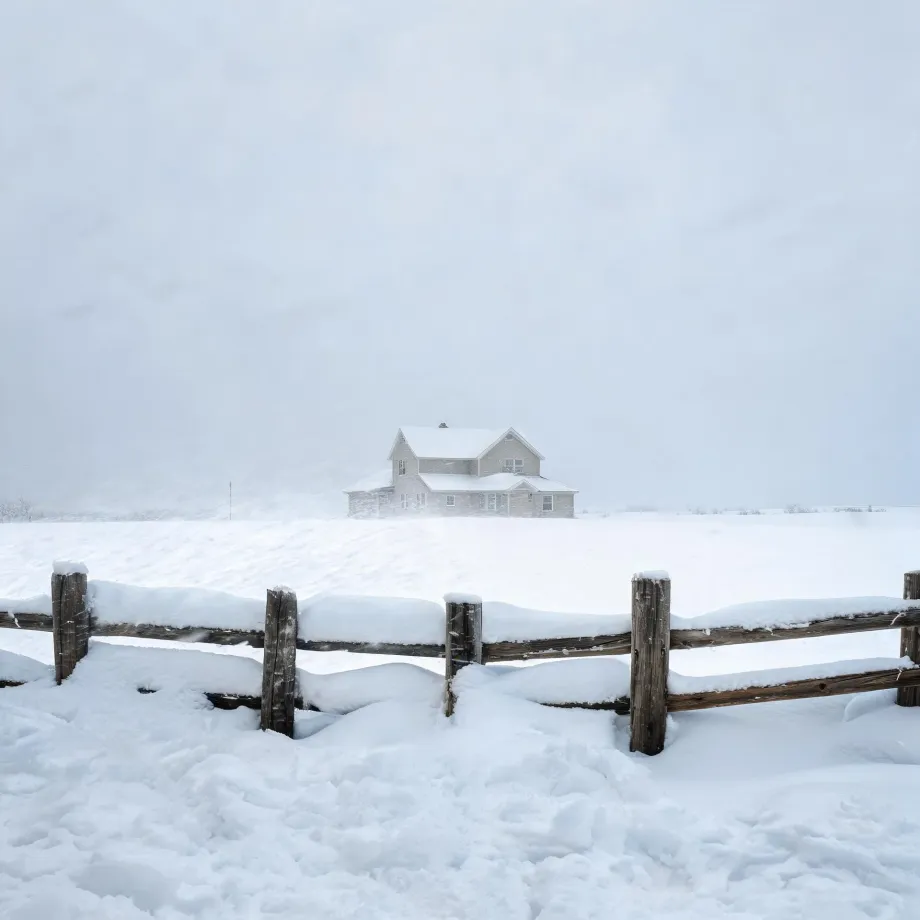
Sizing a furnace for a Seward County home is not a task where a contractor can afford to guess. Homes in Seward County, KS run heat about seven months a year, from October through April. The burner, heat exchanger, and ignition system cycle repeatedly across that span, and a unit that is slightly undersized runs longer and harder each time outdoor temperatures drop. That extra runtime does not announce itself until the heat exchanger cracks or the ignition system fails mid-winter. A contractor who skips a load calculation before quoting a replacement is leaving the next owner of that equipment to absorb the cost of the error.
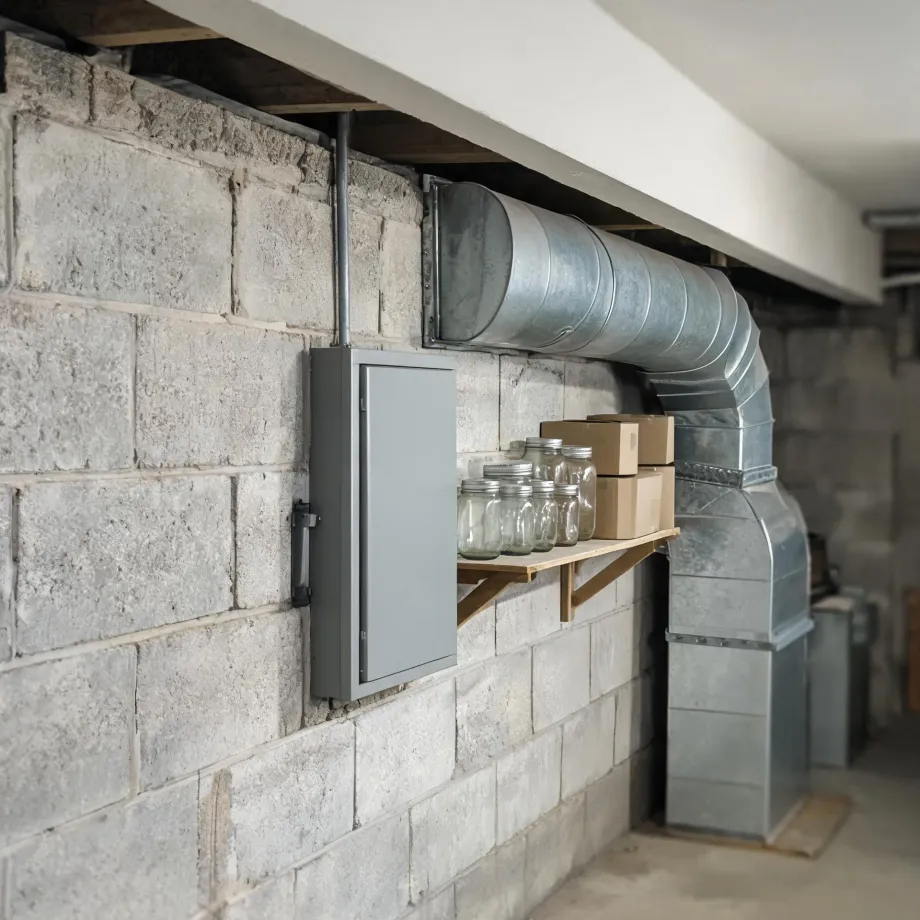
Ductwork laid down for a furnace that has long since been removed and replaced once or twice carries assumptions about airflow that may no longer match what a new unit needs. Half the homes in Seward County, Kansas were built in 1973 or earlier (2020-2024 ACS 5-year). A contractor sizing a furnace here has to confirm whether the existing trunk lines and branch runs will actually move the volume the new equipment is rated for, or whether corrections come first. That evaluation drives the quote more than the unit selection does.
What Gets Installed With a New Furnace
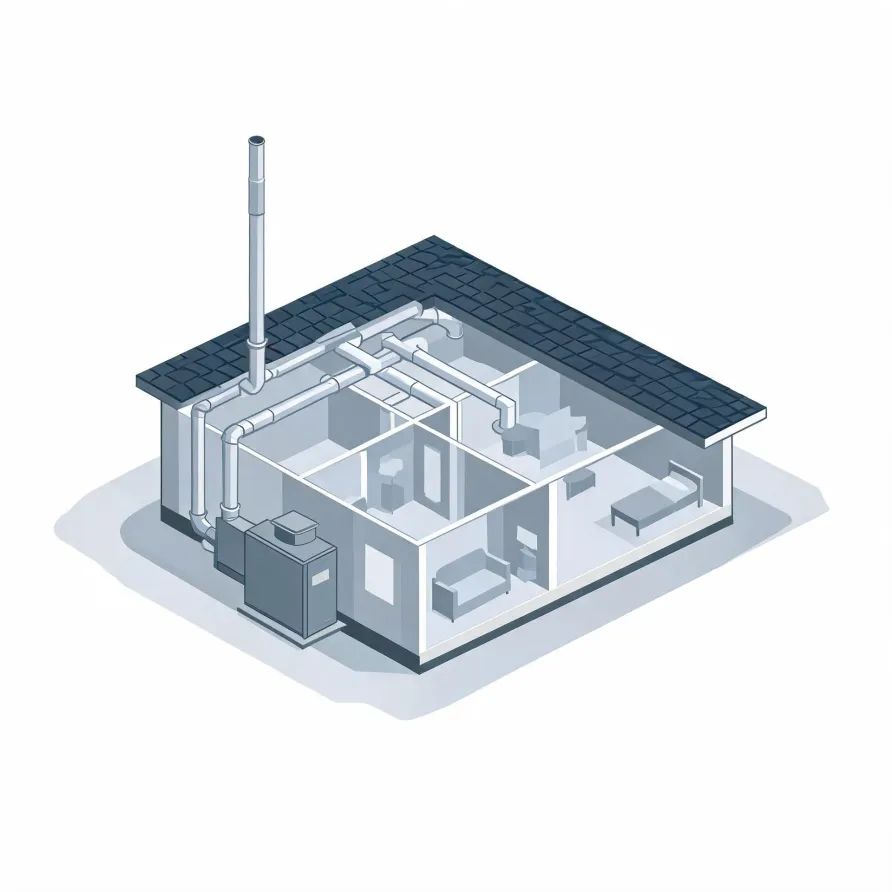
The furnace itself sits inside the home, most often in a basement, utility closet, or mechanical room. That cabinet holds the burner, the heat exchanger, and the blower, and it is the unit a contractor sets in place and connects to the rest of the system. The flue pipe runs from the furnace up and out through the wall or roof, carrying combustion gases out of the house.
The thermostat mounts on an interior wall and gives you direct control over when the furnace fires and at what temperature. A contractor also installs or ties into the gas line that feeds the burner, and fits the filter housing where the return air enters the unit before it moves through the system.
The drawing shows a typical layout, and a licensed contractor determines exactly what applies to your home.
Get matched in Seward CountySeward County, by the numbers
215 severe weather events were recorded in Seward County, Kansas between 2015 and 2024.
NOAA National Centers for Environmental Information, Storm Events Database, bulk CSV export, events 2015-01-01 through 2024-12-31.Half the homes in Seward County, Kansas were built in 1973 or earlier (2020-2024 ACS 5-year).
U.S. Census Bureau, 2020-2024 American Community Survey 5-Year EstimatesSeward County, Kansas holds 8,308 housing units (2020-2024 ACS 5-year).
U.S. Census Bureau, 2020-2024 American Community Survey 5-Year EstimatesOwners occupy 61.8% of the occupied homes in Seward County, Kansas (2020-2024 ACS 5-year).
U.S. Census Bureau, 2020-2024 American Community Survey 5-Year EstimatesCodes & Standards Behind Furnace Installation in Seward County, Kansas4 sourced rules and standards
What HVAC Installation Looks Like in Seward County
Non-weatherized gas furnaces manufactured on or after November 19, 2015 must reach 80.0 percent AFUE.
Non-weatherized oil-fired furnaces manufactured on or after November 19, 2015 must reach 83.0 percent AFUE.
Mobile home gas furnaces manufactured on or after November 19, 2015 must reach 80.0 percent AFUE.
Non-weatherized gas furnaces manufactured on or after December 18, 2028 must reach 95.0 percent AFUE, up from the 80.0 percent minimum that applies to units manufactured before that date.
Severe Weather Events in Seward County
Seward County weather puts real demands on heating equipment, and those demands compound over years of hard use. A furnace sized and installed for local conditions holds up differently than one that was not.
215 severe weather events, 2015–2024. Source: NOAA National Centers for Environmental Information, Storm Events Database.