Tell us about the job
Takes about a minute. No obligation.
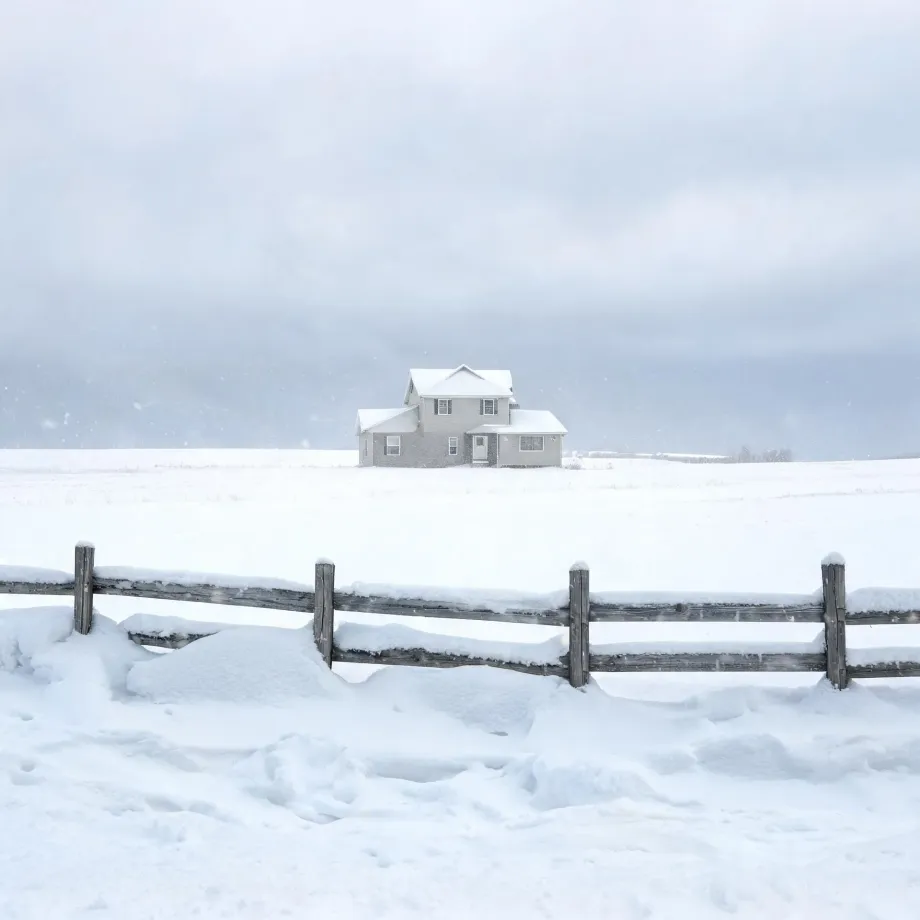
Sizing a furnace for a Barber County home is not a calculation a contractor can run generically and walk away from. Homes in Barber County, KS run heat about seven months a year, from October through April. The burner, heat exchanger, and ignition system carry load through the bulk of the calendar year, leaving little idle time to hide the stress that a loose fit between unit capacity and the home's actual heat loss will produce. A contractor has to establish that fit before anything else gets priced, because an undersized furnace working harder than it should will show wear on the heat exchanger long before a correctly matched unit would.
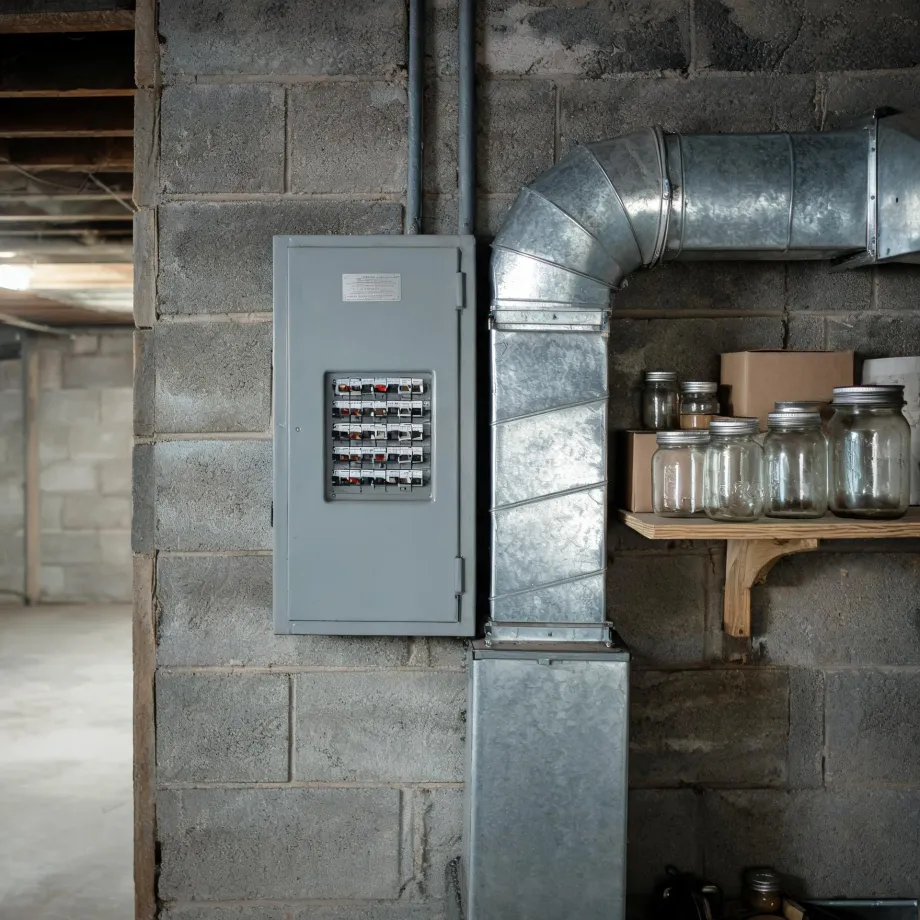
Existing ductwork is what decides how a furnace installation goes in much of Barber County. Half the homes in Barber County, Kansas were built in 1956 or earlier (2020-2024 ACS 5-year). That means the ducts in a typical house here were sized and routed for equipment that bore no resemblance to what a contractor is now asked to put in. Before a new furnace can be matched to the house, a contractor has to assess whether those ducts will actually carry its airflow, and whether the electrical service will support what the new unit draws. Those are the two questions the install turns on.
What Gets Installed With a New Furnace
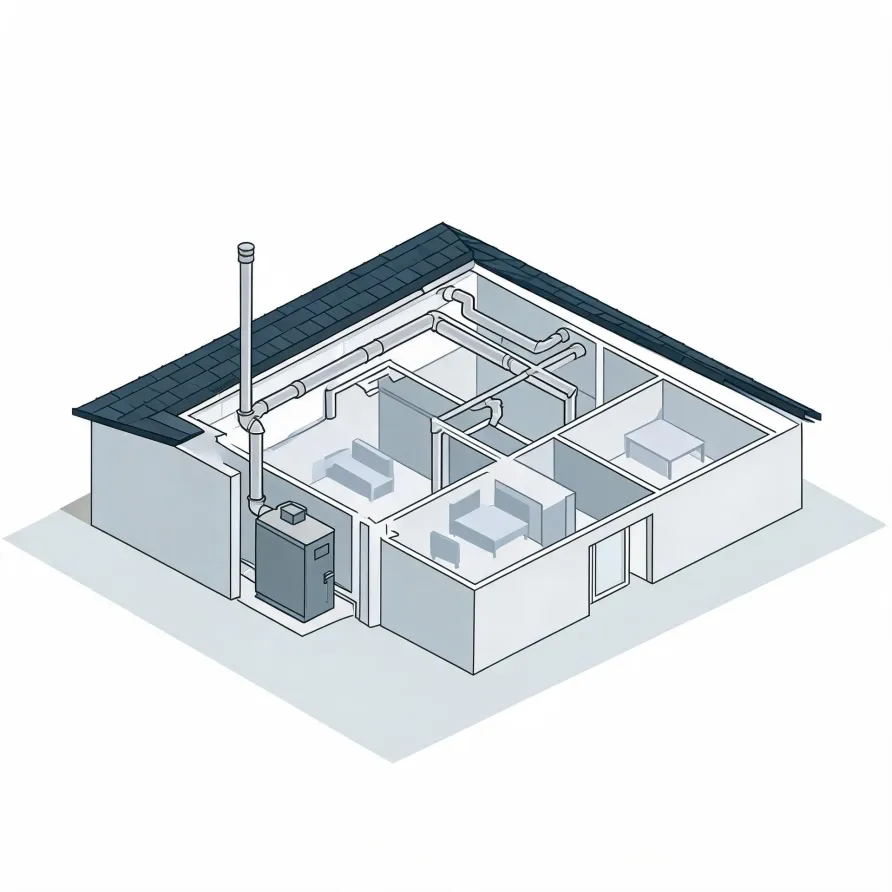
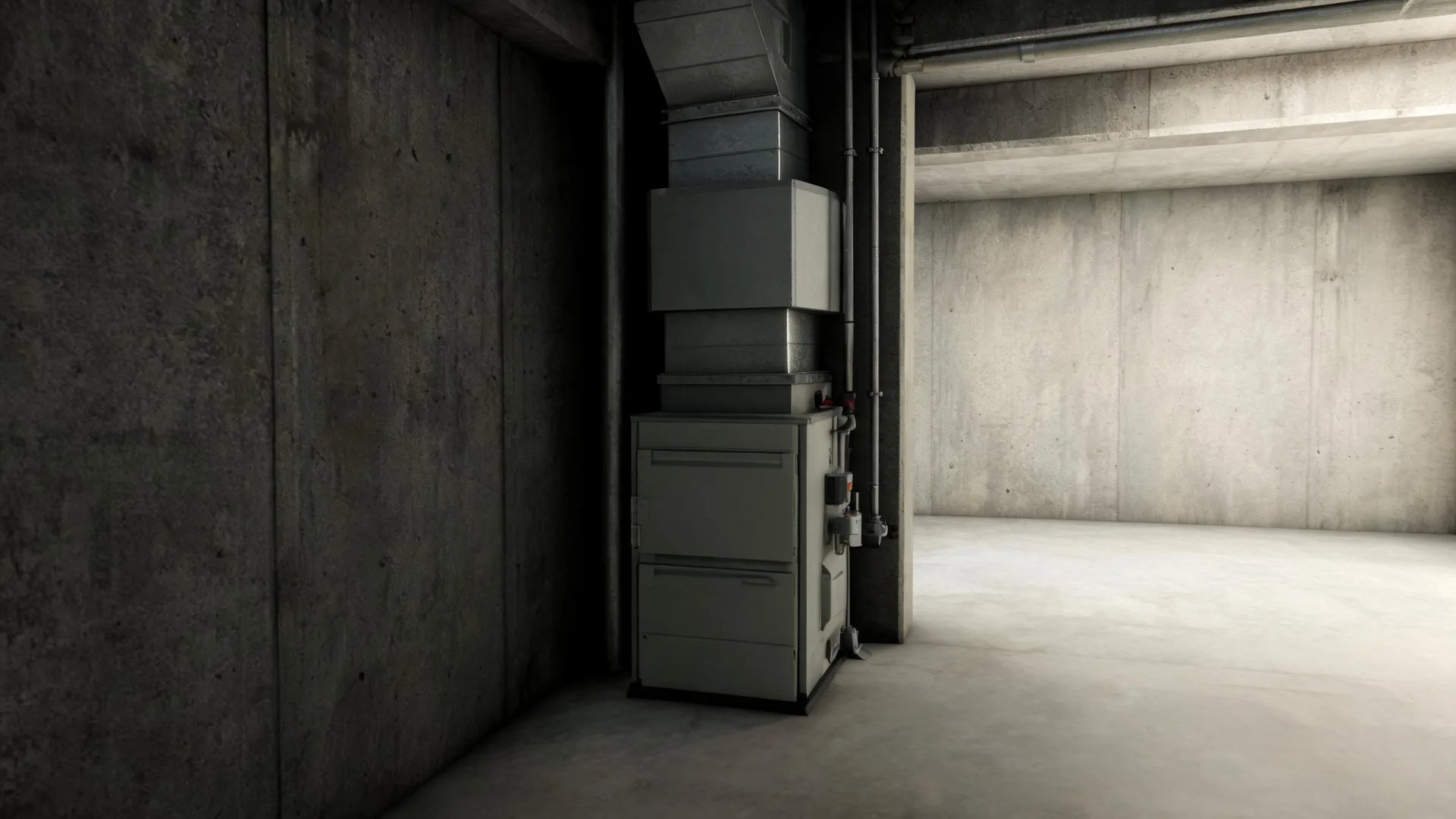
The furnace itself sits in the basement, utility room, or mechanical closet and is the unit that produces heat. A heat exchanger inside it transfers combustion heat to the air moving through your home. A burner assembly and a blower motor are part of the same cabinet, the burner creating the heat and the blower pushing conditioned air out into the supply side of your duct system.
The flue pipe runs from the furnace up and out of the house, carrying combustion gases away. A condensate drain line is added on high-efficiency models to remove moisture that forms during the heating process. The thermostat mounts on an interior wall and is the control point that tells the furnace when to fire and when to stop.
The drawing shows a typical layout, and a licensed contractor determines exactly what applies to your house and its existing setup.
Get matched in Barber CountyBarber County by the Numbers
178 severe weather events were recorded in Barber County, Kansas between 2015 and 2024.
NOAA National Centers for Environmental Information, Storm Events Database, bulk CSV export, events 2015-01-01 through 2024-12-31.Half the homes in Barber County, Kansas were built in 1956 or earlier (2020-2024 ACS 5-year).
U.S. Census Bureau, 2020-2024 American Community Survey 5-Year EstimatesBarber County, Kansas holds 2,480 housing units (2020-2024 ACS 5-year).
U.S. Census Bureau, 2020-2024 American Community Survey 5-Year EstimatesOwners occupy 81.0% of the occupied homes in Barber County, Kansas (2020-2024 ACS 5-year).
U.S. Census Bureau, 2020-2024 American Community Survey 5-Year EstimatesFurnace Installation Rules for Barber County, Kansas4 sourced standards and codes
What happens when the contractor shows up
Non-weatherized gas furnaces manufactured on or after November 19, 2015 must reach 80.0 percent AFUE.
Non-weatherized oil-fired furnaces manufactured on or after November 19, 2015 must reach 83.0 percent AFUE.
Mobile home gas furnaces manufactured on or after November 19, 2015 must reach 80.0 percent AFUE.
Non-weatherized gas furnaces manufactured on or after December 18, 2028 must reach 95.0 percent AFUE, up from the 80.0 percent minimum that applies to units manufactured before that date.
Severe Weather Events in Barber County
Weather conditions here put real demands on heating equipment, from how hard a furnace has to work to how long its components last. That load is local, and it shapes what a proper installation in this area needs to account for.
178 severe weather events, 2015–2024. Source: NOAA National Centers for Environmental Information, Storm Events Database.