Tell us about the job
Takes about a minute. No obligation.
Sizing a furnace for this house is where a contractor earns or loses the job. Homes in Kingman County, KS run heat about seven months a year, from October through April. The burner, heat exchanger, and ignition components run through the bulk of that stretch with no extended off-season to absorb the wear. A unit undersized for the actual load cycles more often than it should, and those extra starts compound against the heat exchanger first. A contractor who skips a proper load calculation before quoting hands the homeowner a system that degrades ahead of schedule.
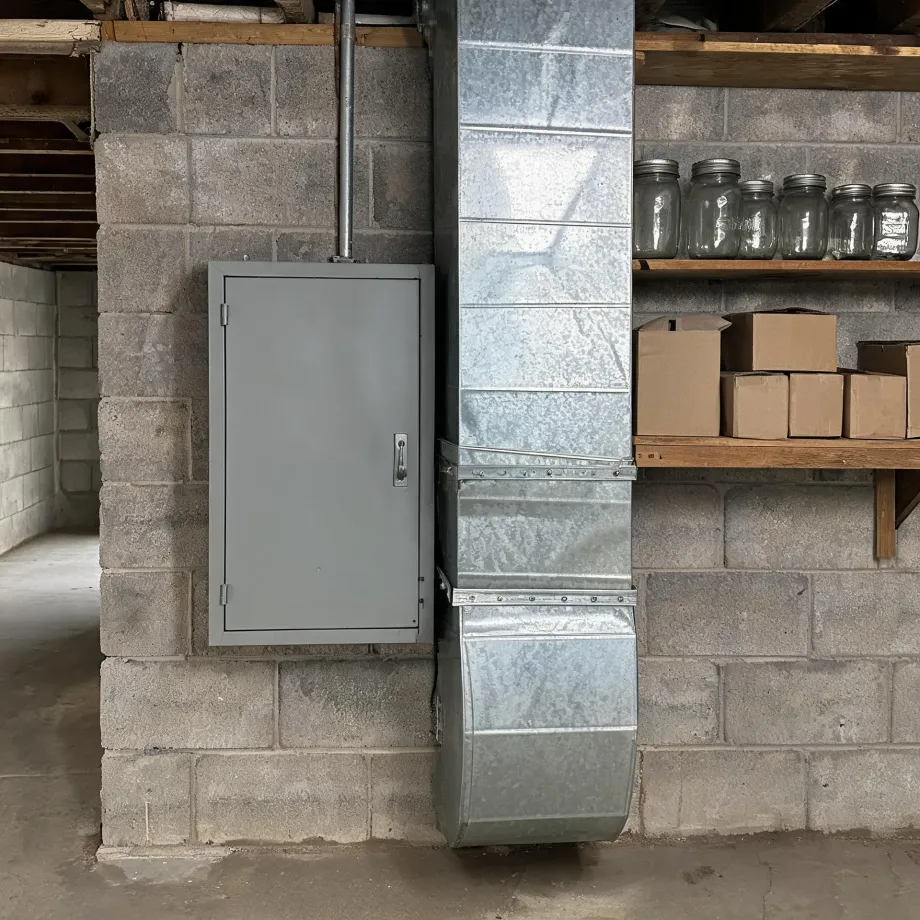
Existing ductwork in Kingman County homes does not always accommodate a modern furnace without adjustment. Half the homes in Kingman County, Kansas were built in 1956 or earlier (2020-2024 ACS 5-year). That generation of housing was ducted around equipment no longer manufactured, and the trunk lines, branches, and returns sized for it may restrict airflow in ways that only show up once a contractor measures them against what a new unit will actually push. The electrical service tells a similar story: what was wired for an older load may need an upgrade before the new equipment runs correctly. Both get assessed before installation begins.
What Gets Installed With a New Furnace
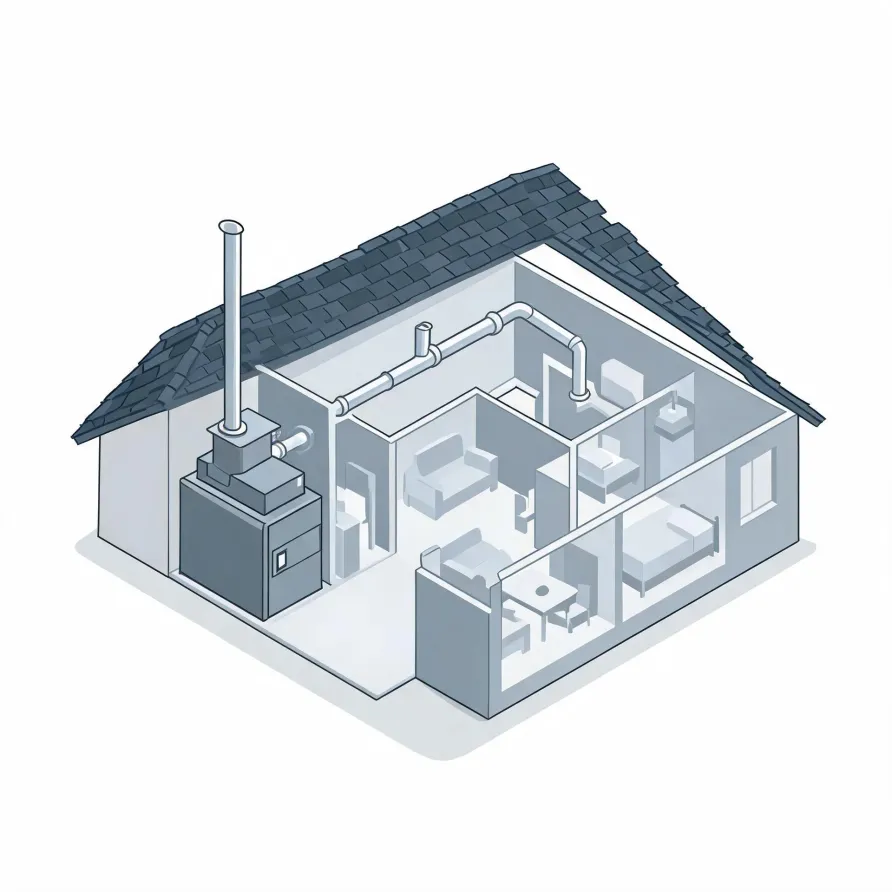
The furnace itself sits in a utility space, basement, or closet and is the unit that generates heat for the house. A burner assembly inside it produces the heat, and a heat exchanger transfers that heat to the air moving through the system. The blower motor, housed in the same cabinet, pushes that warmed air out into the supply side of the duct system.
The flue pipe runs from the furnace cabinet through the wall or up through the roof, carrying combustion exhaust out of the house. A gas line connects to the burner, and a thermostat mounts on an interior wall to serve as the control point for the whole system. The condensate drain line exits at the base of the cabinet on high-efficiency models.
The drawing shows a general layout of these components, and a licensed contractor determines exactly what applies to your house and its configuration.
Get matched in Kingman CountyKingman County by the Numbers
113 severe weather events were recorded in Kingman County, Kansas between 2015 and 2024.
NOAA National Centers for Environmental Information, Storm Events Database, bulk CSV export, events 2015-01-01 through 2024-12-31.Half the homes in Kingman County, Kansas were built in 1956 or earlier (2020-2024 ACS 5-year).
U.S. Census Bureau, 2020-2024 American Community Survey 5-Year EstimatesKingman County, Kansas holds 3,685 housing units (2020-2024 ACS 5-year).
U.S. Census Bureau, 2020-2024 American Community Survey 5-Year EstimatesOwners occupy 66.3% of the occupied homes in Kingman County, Kansas (2020-2024 ACS 5-year).
U.S. Census Bureau, 2020-2024 American Community Survey 5-Year EstimatesFurnace Installation Rules for Kingman County, Kansas4 sourced standards and codes
What the installation actually looks like
Non-weatherized gas furnaces manufactured on or after November 19, 2015 must reach 80.0 percent AFUE.
Non-weatherized oil-fired furnaces manufactured on or after November 19, 2015 must reach 83.0 percent AFUE.
Mobile home gas furnaces manufactured on or after November 19, 2015 must reach 80.0 percent AFUE.
Non-weatherized gas furnaces manufactured on or after December 18, 2028 must reach 95.0 percent AFUE, up from the 80.0 percent minimum that applies to units manufactured before that date.
Severe Weather Events in Kingman County
Kansas weather puts real load on heating equipment, and Kingman County conditions shape how hard a furnace has to work and how reliably it needs to do it. That makes local weather history relevant to any conversation about what to install and how to size it.
113 severe weather events, 2015–2024. Source: NOAA National Centers for Environmental Information, Storm Events Database.