Tell us about the job
Takes about a minute. No obligation.
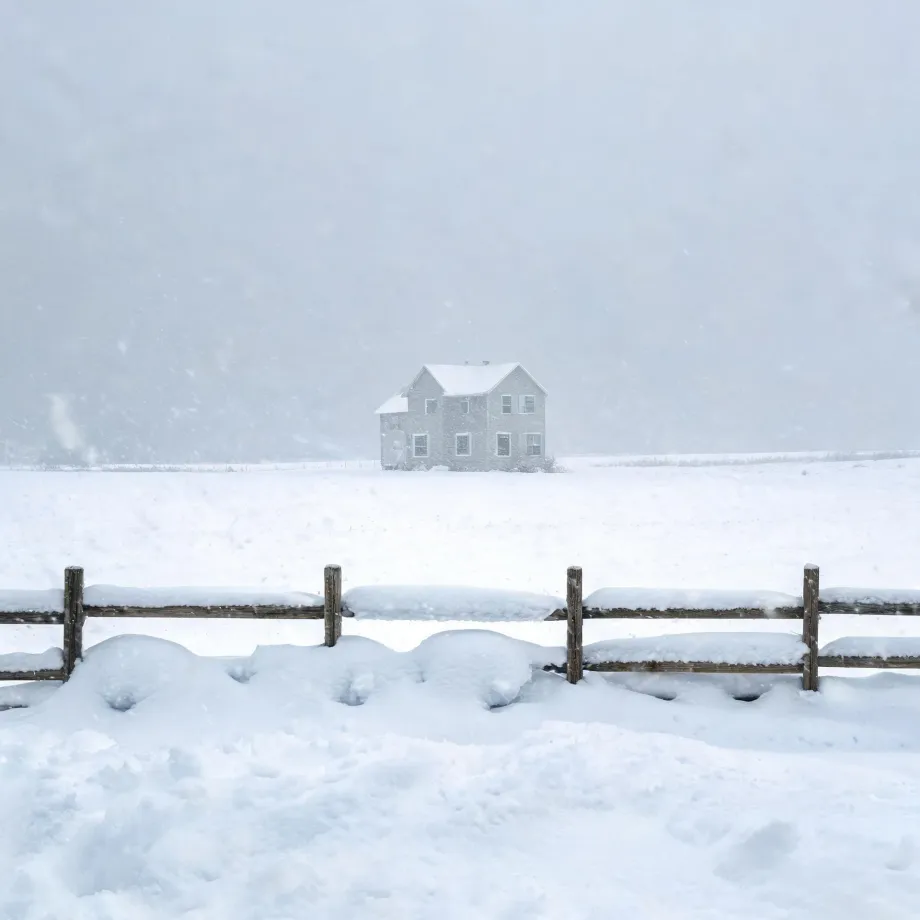
A furnace repair in Labette County starts with the components that cycle most: the burner, the heat exchanger, and the ignition system. Homes in Labette County, KS run heat about seven months a year, from October through April. The igniter, in particular, takes a stress load every single firing cycle, and a long heating season stacks those cycles into numbers that show up as cracks, carbon buildup, and eventual failure. A contractor diagnosing a no-heat call here checks those parts first, because they are where the accumulated runtime leaves its clearest evidence.
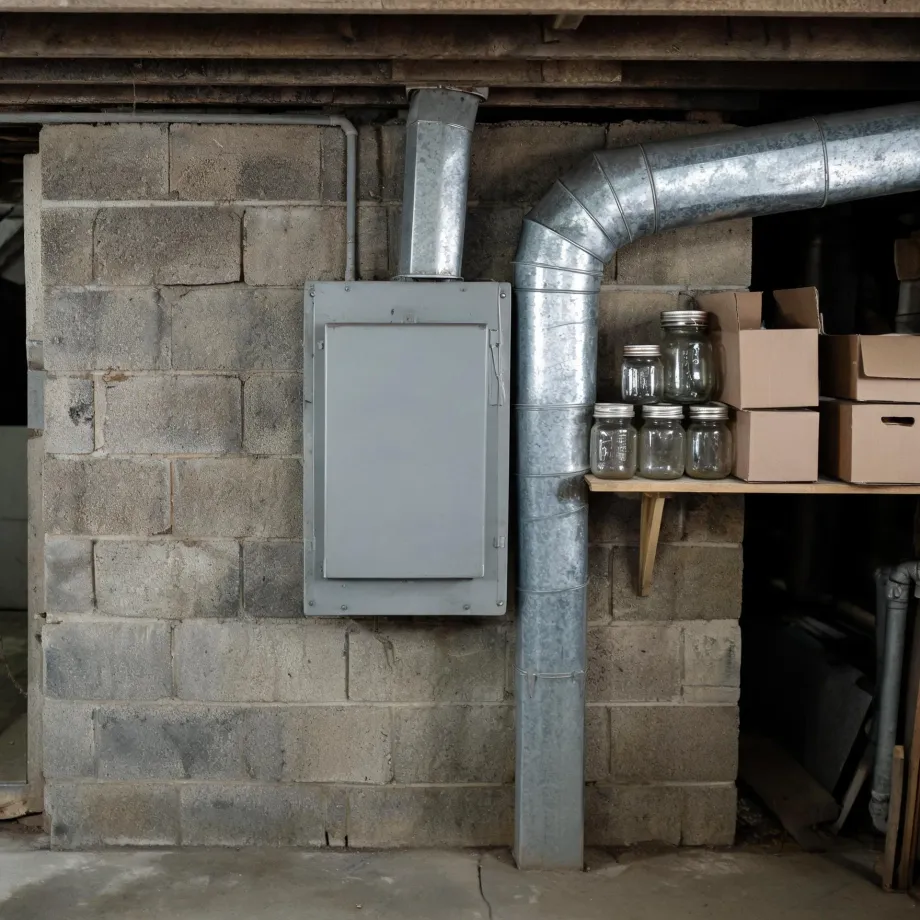
Furnaces that have been in place through multiple replacement cycles accumulate a repair history that shows up the moment a contractor opens the cabinet: cracked heat exchangers, burner assemblies built to tolerances that current replacement parts only approximate, and limit switches whose exact specifications are no longer in active production. Half the homes in Labette County, Kansas were built in 1958 or earlier (2020-2024 ACS 5-year). That depth of stock age is why parts availability shapes the repair scope here as much as the fault itself does. A contractor may locate the failed component quickly and still spend time sourcing a part that fits, because the fit a system of that vintage requires is narrower than what a standard parts run covers.
The Parts of a Furnace a Contractor Checks First
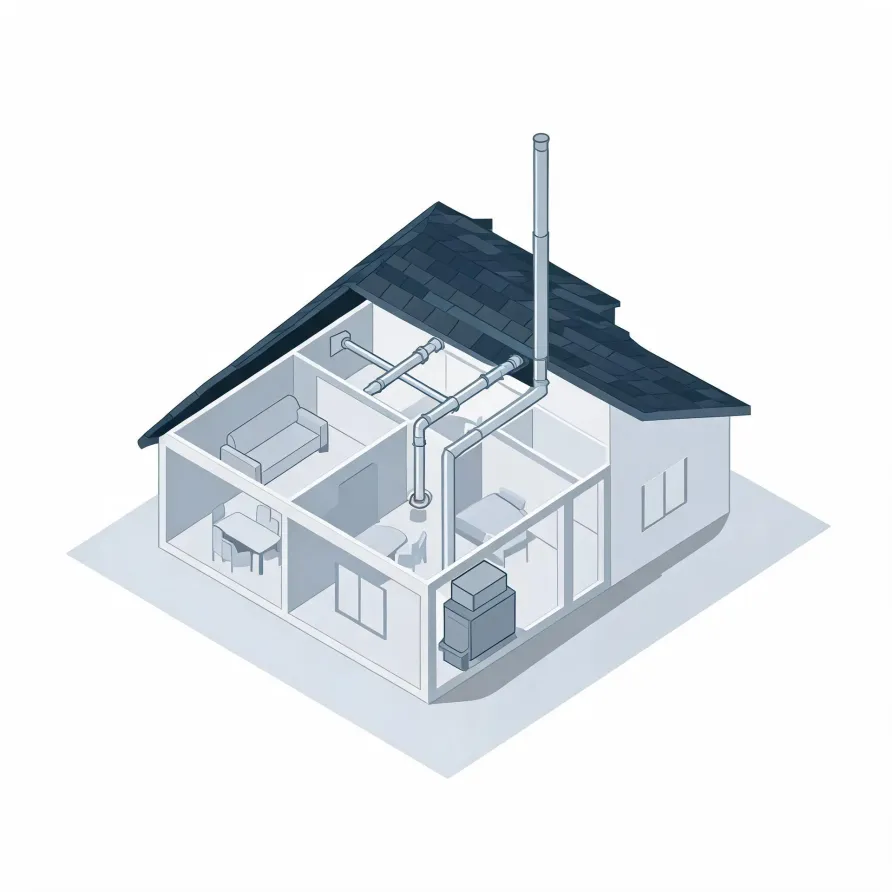
The heat exchanger sits at the core of the furnace cabinet in the basement or utility room, and it is the piece that warms the air moving through the system. Cracks or corrosion there show up as uneven heat or, in worse cases, combustion gases leaking into the living space. The burner assembly sits just below it and is usually the first place a contractor looks when ignition is the problem.
The blower motor and its fan wheel sit at the base of the cabinet and push conditioned air out through the supply side. The inducer motor sits at the top of the heat exchanger and pulls combustion gases out through the flue. The control board runs all of it, and a fault there can mimic failures in almost any other part.
The drawing shows a typical furnace layout, and a licensed contractor determines what applies to the specific equipment and configuration in your home.
Get matched in Labette CountyLabette County, by the numbers
104 severe weather events were recorded in Labette County, Kansas between 2015 and 2024.
NOAA National Centers for Environmental Information, Storm Events Database, bulk CSV export, events 2015-01-01 through 2024-12-31.Half the homes in Labette County, Kansas were built in 1958 or earlier (2020-2024 ACS 5-year).
U.S. Census Bureau, 2020-2024 American Community Survey 5-Year EstimatesLabette County, Kansas holds 9,510 housing units (2020-2024 ACS 5-year).
U.S. Census Bureau, 2020-2024 American Community Survey 5-Year EstimatesOwners occupy 74.0% of the occupied homes in Labette County, Kansas (2020-2024 ACS 5-year).
U.S. Census Bureau, 2020-2024 American Community Survey 5-Year EstimatesCodes & Standards Behind Furnace Repair in Labette County, Kansas4 sourced rules and standards
What HVAC Repair Looks Like in Labette County
Non-weatherized gas furnaces manufactured on or after November 19, 2015 must reach 80.0 percent AFUE.
Non-weatherized oil-fired furnaces manufactured on or after November 19, 2015 must reach 83.0 percent AFUE.
Mobile home gas furnaces manufactured on or after November 19, 2015 must reach 80.0 percent AFUE.
Non-weatherized gas furnaces manufactured on or after December 18, 2028 must reach 95.0 percent AFUE, up from the 80.0 percent minimum that applies to units manufactured before that date.
Severe Weather Events in Labette County
Extreme weather puts real strain on furnace components, from heat exchangers to ignition systems, as equipment runs harder and longer to hold indoor temperatures steady. How often that pressure hits depends on local conditions, which is why weather history in Labette County shapes what repair contractors see on the job.
104 severe weather events, 2015–2024. Source: NOAA National Centers for Environmental Information, Storm Events Database.