Tell us about the job
Takes about a minute. No obligation.
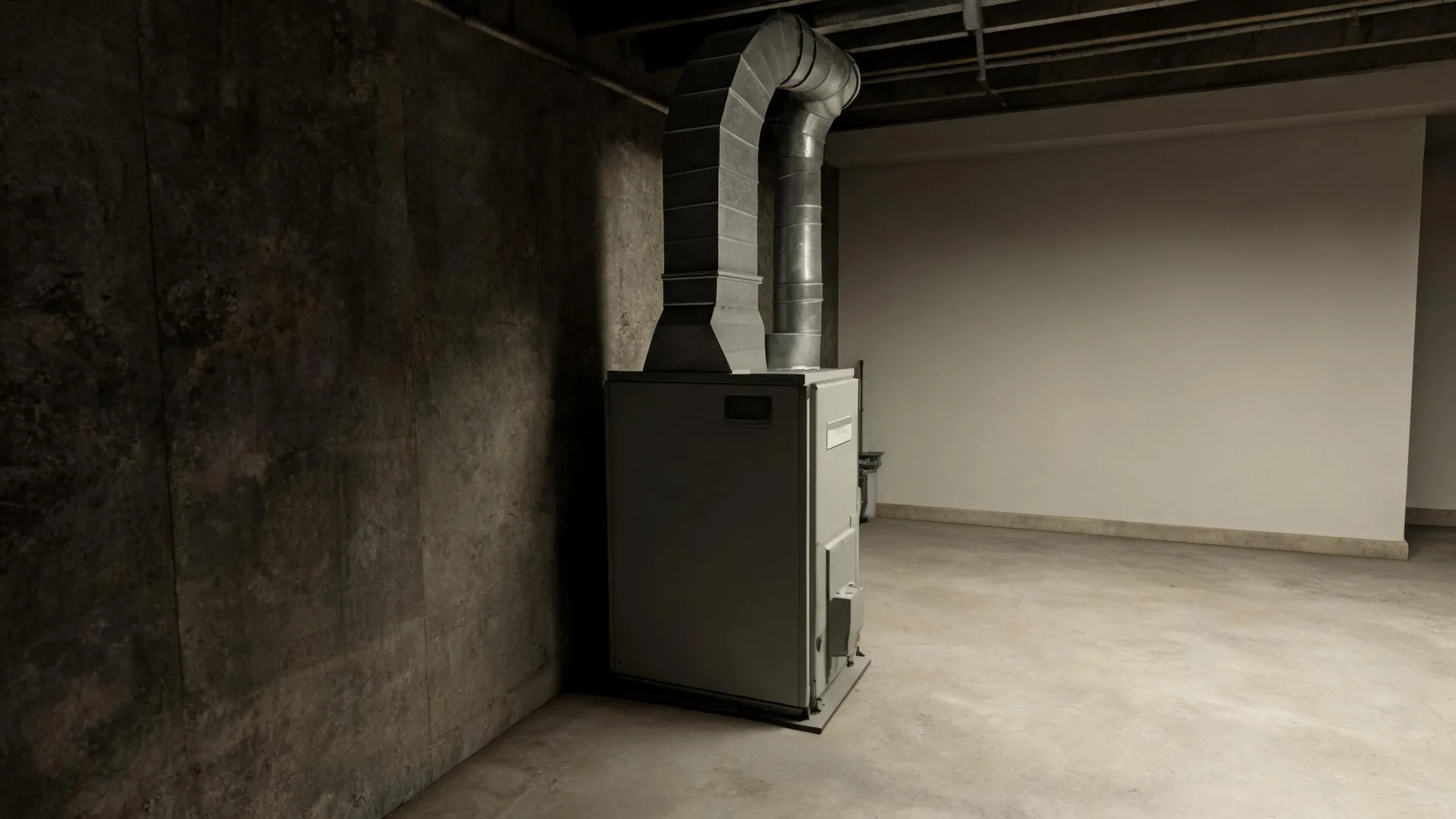
A contractor quoting furnace repair in Cherokee County starts at the burner assembly and heat exchanger before looking anywhere else. Homes in Cherokee County, KS run heat about seven months a year, from October through April. Cycling through that stretch of calendar accumulates stress on the igniter, the heat exchanger seams, and the burner ports in ways that only open inspection reveals. Cracks in the heat exchanger and carbon buildup on the burner are the failure modes a contractor finds most often here, and they show up because the system has had little idle time to mask early deterioration. The ignition system gets the same scrutiny.
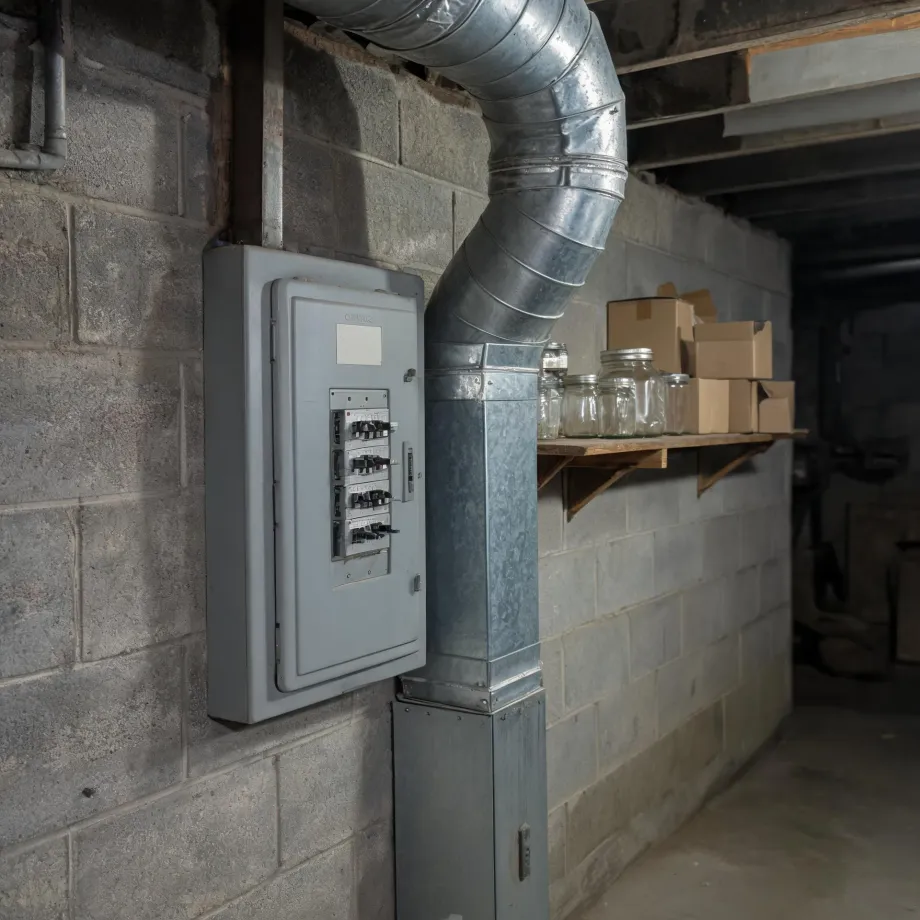
Half the homes in Cherokee County, Kansas were built in 1966 or earlier (2020-2024 ACS 5-year). A furnace running in a house that old has almost certainly been replaced at least once, and what a contractor opens is a system that was retrofitted into space and wiring arranged for something earlier. The repair question is not always what broke. It is whether the replacement parts a unit of that vintage requires are still manufactured, or whether what is available now fits what is there.
The Parts of a Furnace a Contractor Checks First
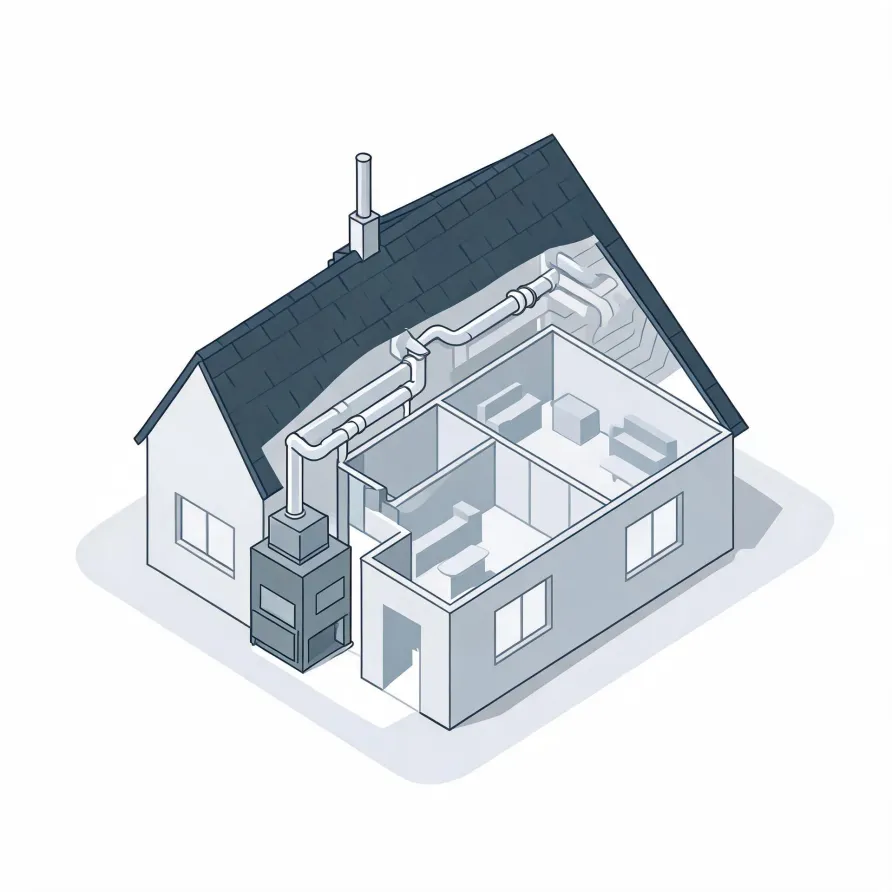
The heat exchanger sits at the core of the furnace cabinet in your mechanical room or utility space, and it is where a contractor looks early when a furnace is losing heat or behaving erratically. The burners fire just below it, and the blower motor behind them pushes conditioned air out through the supply side. Any of these three can be the source of a heating failure.
The draft inducer sits near the top of the cabinet and pulls combustion gases out through the flue. The igniter and flame sensor work as a pair: one starts the flame, the other confirms it stayed lit. The control board coordinates all of it, and when symptoms seem scattered or unpredictable, that board is often where a contractor's attention lands.
The drawing shows a typical furnace layout, and a licensed contractor determines which parts apply and what condition they are in for your specific system.
Get matched in Cherokee CountyCherokee County, Kansas, by the numbers
158 severe weather events were recorded in Cherokee County, Kansas between 2015 and 2024.
NOAA National Centers for Environmental Information, Storm Events Database, bulk CSV export, events 2015-01-01 through 2024-12-31.Half the homes in Cherokee County, Kansas were built in 1966 or earlier (2020-2024 ACS 5-year).
U.S. Census Bureau, 2020-2024 American Community Survey 5-Year EstimatesCherokee County, Kansas holds 9,129 housing units (2020-2024 ACS 5-year).
U.S. Census Bureau, 2020-2024 American Community Survey 5-Year EstimatesOwners occupy 75.5% of the occupied homes in Cherokee County, Kansas (2020-2024 ACS 5-year).
U.S. Census Bureau, 2020-2024 American Community Survey 5-Year EstimatesCodes & Standards Governing Furnace Repair in Cherokee County, Kansas4 sourced rules and standards
What HVAC Repair Looks Like in Cherokee County
Non-weatherized gas furnaces manufactured on or after November 19, 2015 must reach 80.0 percent AFUE.
Non-weatherized oil-fired furnaces manufactured on or after November 19, 2015 must reach 83.0 percent AFUE.
Mobile home gas furnaces manufactured on or after November 19, 2015 must reach 80.0 percent AFUE.
Non-weatherized gas furnaces manufactured on or after December 18, 2028 must reach 95.0 percent AFUE, up from the 80.0 percent minimum that applies to units manufactured before that date.
Severe Weather Events in Cherokee County
Extreme weather puts real stress on heating equipment, from hard startups after sudden cold snaps to sustained run cycles that expose worn parts. How much of that a furnace has handled over its life is a local fact, not a general one.
158 severe weather events, 2015–2024. Source: NOAA National Centers for Environmental Information, Storm Events Database.