Tell us about the job
Takes about a minute. No obligation.
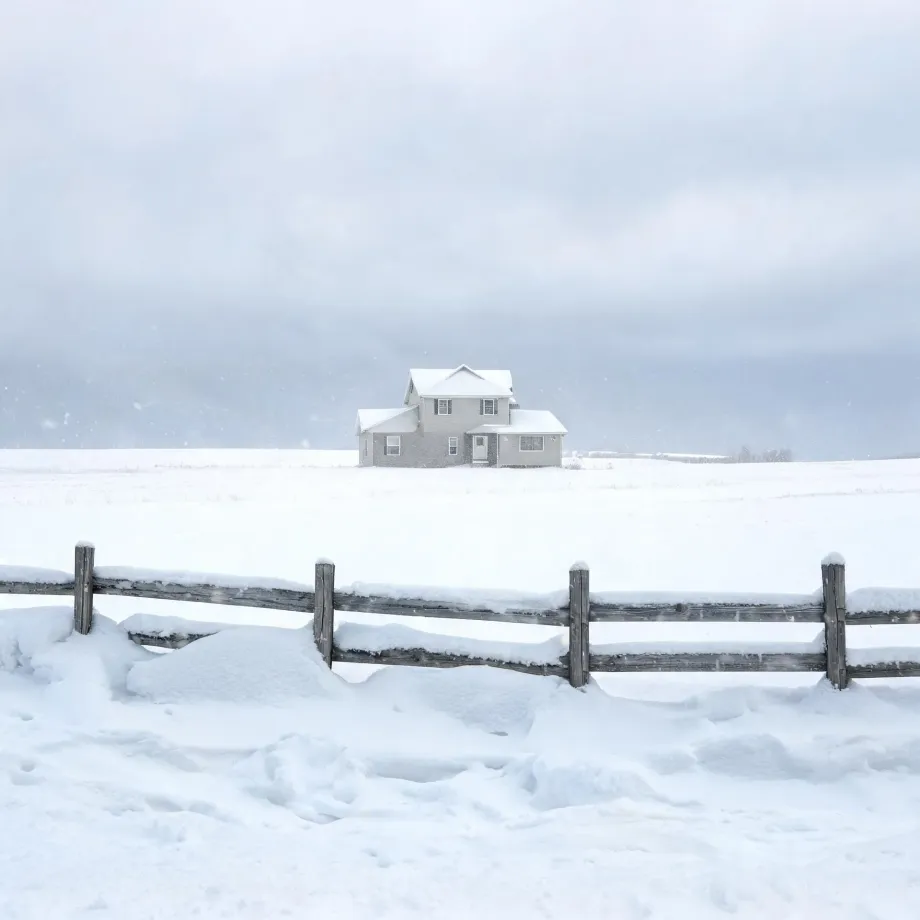
The burner and ignition system on a Morris County furnace cycle hard every heating season, and that cycling adds up. Homes in Morris County, KS run heat about seven months a year, from October through April. A contractor called out for a repair here checks the igniter, the flame sensor, and the heat exchanger early, because those are the parts that absorb the load when a furnace runs through a long, cold stretch. Ductwork seals and blower bearings follow. The parts that fail are rarely the ones that surprise anyone who has opened these systems before.
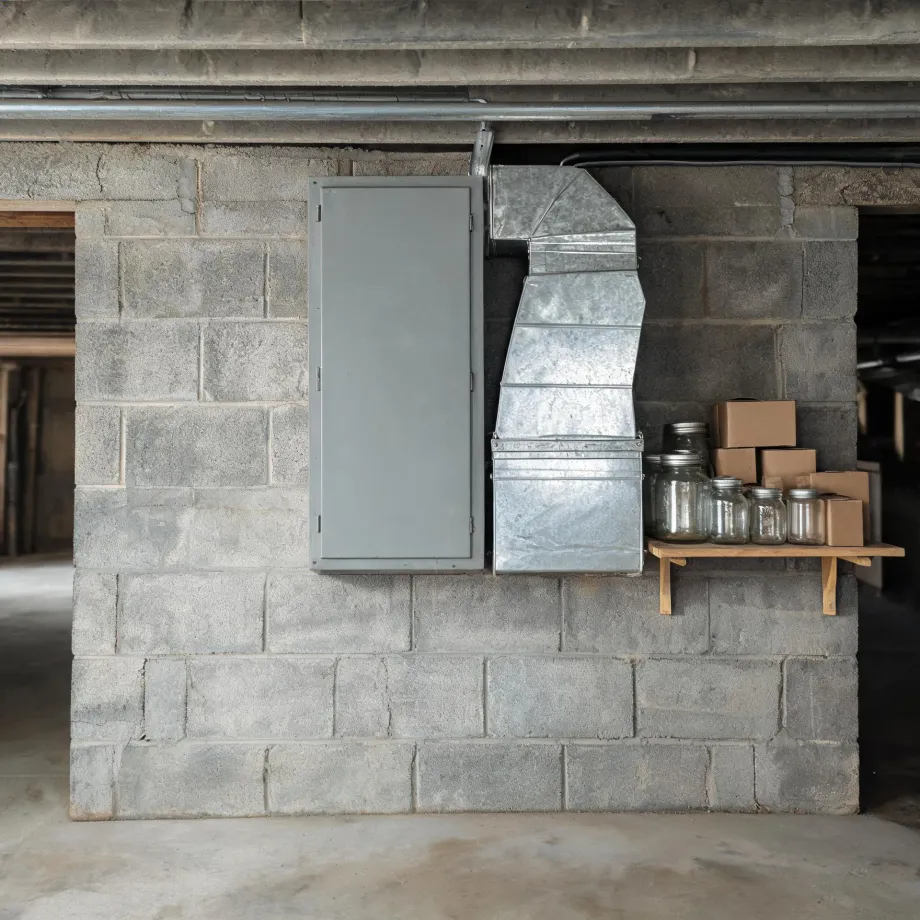
Ductwork and wiring routed through a house tell a contractor almost nothing about what they will find once a furnace is open. The diagnostic question that matters is whether the components inside the unit are still being manufactured. Half the homes in Morris County, Kansas were built in 1960 or earlier (2020-2024 ACS 5-year). A furnace running in stock that old has frequently been patched across successive service calls, and the parts it takes may have to be sourced rather than ordered. That changes the repair timeline and, often, what a contractor recommends as the practical path forward.
The Parts of a Furnace a Contractor Checks First
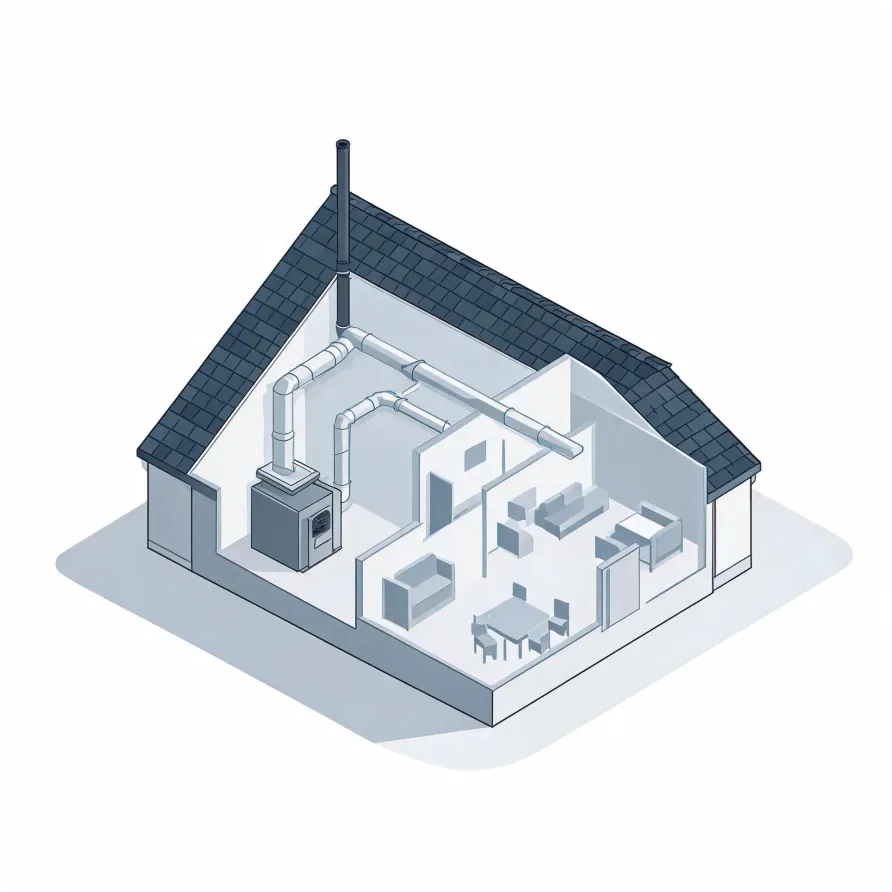
The heat exchanger sits at the center of the furnace cabinet and is where combustion happens. A crack or buildup there means the furnace either runs poorly or trips a safety shutoff. The burners feed directly into it, and a contractor reads the flame color and pattern to judge whether they are firing cleanly.
The blower motor and its fan wheel sit below the heat exchanger and push conditioned air into the supply ducts. The inducer motor, mounted near the flue outlet, pulls combustion gases out before the burner cycle begins. Both motors have bearings, capacitors, and control connections that a contractor tests when either one is sluggish or silent.
The drawing shows the general layout of a furnace system, and a licensed contractor determines which components apply to the specific equipment and setup in your house.
Get matched in Morris CountyMorris County, Kansas, by the numbers
75 severe weather events were recorded in Morris County, Kansas between 2015 and 2024.
NOAA National Centers for Environmental Information, Storm Events Database, bulk CSV export, events 2015-01-01 through 2024-12-31.Half the homes in Morris County, Kansas were built in 1960 or earlier (2020-2024 ACS 5-year).
U.S. Census Bureau, 2020-2024 American Community Survey 5-Year EstimatesMorris County, Kansas holds 2,995 housing units (2020-2024 ACS 5-year).
U.S. Census Bureau, 2020-2024 American Community Survey 5-Year EstimatesOwners occupy 80.1% of the occupied homes in Morris County, Kansas (2020-2024 ACS 5-year).
U.S. Census Bureau, 2020-2024 American Community Survey 5-Year EstimatesCodes & Standards Governing Furnace Repair in Morris County, Kansas4 sourced rules and standards
What happens when the contractor shows up
Non-weatherized gas furnaces manufactured on or after November 19, 2015 must reach 80.0 percent AFUE.
Non-weatherized oil-fired furnaces manufactured on or after November 19, 2015 must reach 83.0 percent AFUE.
Mobile home gas furnaces manufactured on or after November 19, 2015 must reach 80.0 percent AFUE.
Non-weatherized gas furnaces manufactured on or after December 18, 2028 must reach 95.0 percent AFUE, up from the 80.0 percent minimum that applies to units manufactured before that date.
Severe Weather Events in Morris County
Hard weather puts stress on heating equipment: rapid pressure swings, temperature extremes, and power fluctuations all shorten the life of components and push systems toward failure. How often that happens in Morris County shapes how much repair work furnaces here actually face.
75 severe weather events, 2015–2024. Source: NOAA National Centers for Environmental Information, Storm Events Database.