Furnace leaking water in Salina, KS

Step 1 of 3: Equipment

Why is my furnace leaking water?

Water pooling near your furnace or dripping from it is unsettling, especially when the unit is running fine otherwise. It usually shows up on the floor nearby, or you notice rust or staining around the base of the cabinet. In Salina, where gas furnaces run hard through the cold months, this is a common call once temperatures drop and the furnace is working for hours at a stretch.

It's almost always condensation or a clogged drain line, not a leak in the furnace itself

Most furnaces built in the last couple decades are high-efficiency condensing units, and they produce water as part of normal operation. That water is supposed to drain out through a plastic tube into a floor drain or condensate pump. When that line clogs with sludge or algae, or the pump fails, the water backs up and finds the nearest low point, often the floor under the furnace. A cracked PVC fitting or a tipped condensate trap causes the same thing. Less often, a high-efficiency furnace that's venting incorrectly produces excess condensation inside the flue. Either way, the water is coming from inside the system, and it won't stop on its own until the blockage or part causing it is found and cleared.

A smiling man in a navy long-sleeve shirt sits at a wooden table in a kitchen and dining area, with a ceramic mug, a potted plant, and a sliding glass door behind him.
A smiling bearded man in a green henley shirt stands at a kitchen island with a gray mug, looking off to the side, with a dining area and shelves blurred behind him.
A smiling bearded man in a navy sweater sits at a white kitchen island with a ceramic mug, with open shelves, potted plants and a range hood behind him.
A smiling man in a dark olive long-sleeve shirt sits in a kitchen beside a counter with a dark mug, with a dining table, sideboard and hallway visible in the blurred background.
A closed dark laptop and a ceramic mug of coffee on a wooden dining table, with wooden chairs, a dark kitchen cabinet with cutting boards and a potted plant, and a leafy plant by a window in the background.

Left alone, that water finds more than the floor

A puddle under the cabinet is the obvious part. What you don't see as easily is what that water does on the way down. It can rust out the heat exchanger, soak the insulation around the blower, or seep into the ductwork underneath. If your furnace sits near drywall or a finished wall in the basement, the water travels there too. By the time you see staining, it has usually been happening for a while.

You don't need to figure out whether it's the condensate line, the drain trap, or the pressure switch leaking before someone looks at it. That's the part people put off, calling around Salina for someone who works on furnaces, explaining the same leak three times to three different shops, waiting on callbacks that don't come. Send this in once and that search is done. Someone licensed for this gets in touch, and the furnace gets looked at instead of just watched.

A living room corner with a beige sofa and cushion, a round wooden coffee table holding a pale ceramic vase of eucalyptus stems and a wooden bowl, and a curtained window with a potted plant above a latticed radiator cover in the background.
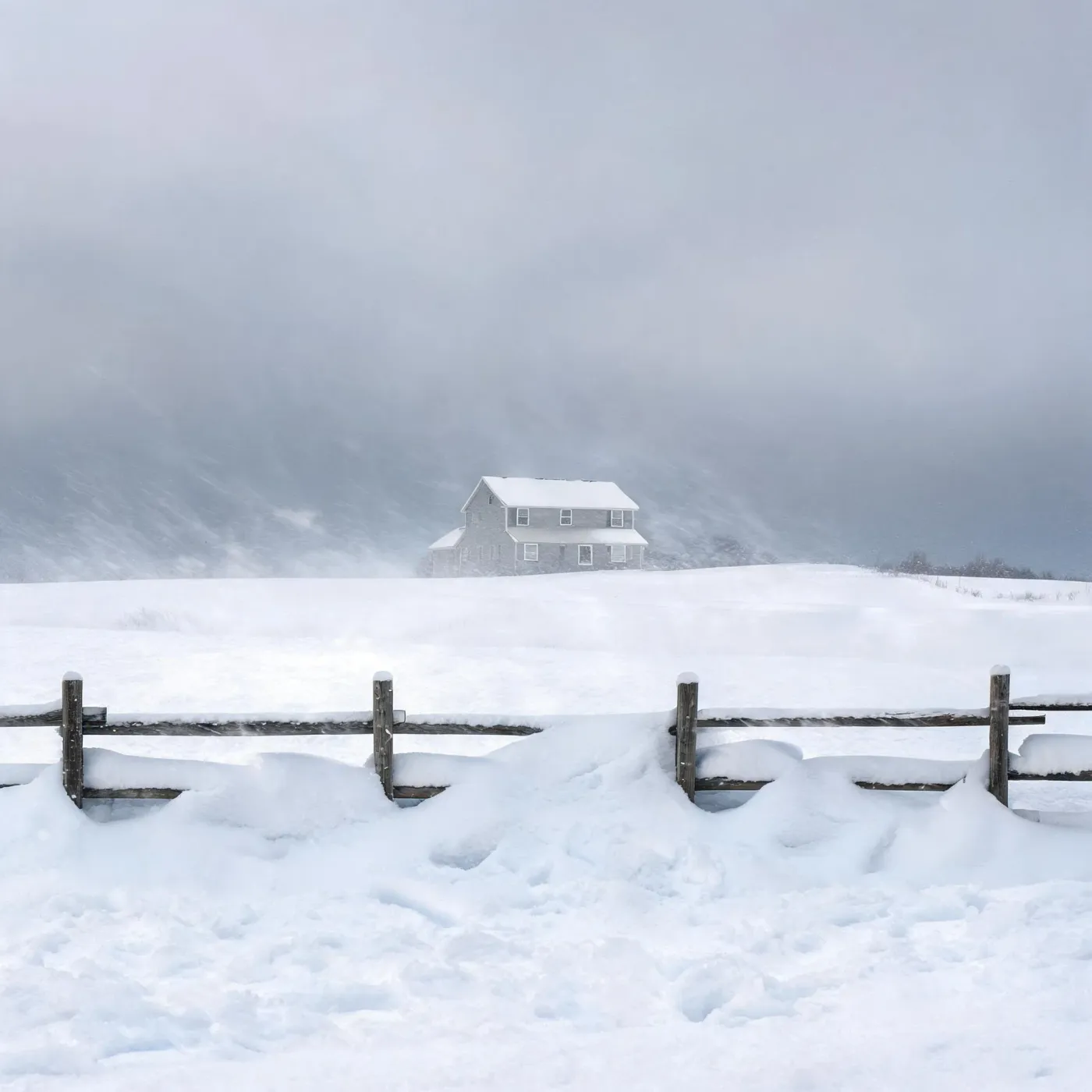
A two-story light-colored house stands on a snow-covered rise under a gray sky during blowing snow, with a partially buried wooden post-and-rail fence in the foreground.

Winter nights in Saline County average 22°F, cold enough that your furnace runs for long stretches without shutting off, sometimes most of the night. If the leak is condensation from a high-efficiency furnace, that kind of steady run time means more condensate moving through the drain line, and more chances for it to back up if the line is clogged or sloped wrong. On a high-efficiency unit, the puddle tends to show up on nights like these rather than milder ones. If your furnace is the older standard kind, a cold night like this makes a cracked heat exchanger worse, since more moisture condenses inside it the longer the burner runs. Source: NOAA climate data for Saline County, KS

NOAA nClimDiv 1991-2020

Is that water stain spreading under the furnace?

Check the drywall or baseboard near the cabinet. A water stain that's growing, not just sitting there, means the leak is ongoing and not a one-time drip. You might notice the carpet or subfloor nearby staying damp days after you last saw water. Some homeowners catch a musty smell before they see anything, especially if the furnace sits in a closet or small utility room with little airflow. If the furnace is in the basement, look for water tracking toward a drain or pooling in a low spot you wouldn't normally check. A furnace that cycles on and off more than usual, or shuts off on its own, can be a sign the leak has reached a part it shouldn't.

A gray high-efficiency furnace in a basement with white PVC vent pipes, sheet-metal ductwork, copper and black piping, a condensate pump, and insulated walls above a concrete floor.

A high-efficiency furnace drains the way it should

The white PVC lines carry condensate out to the drain or the pump on the floor beside the unit. That pump kicks on, empties into the line, and the water never touches the cabinet or the slab around it.

A beige residential furnace stands on a concrete basement floor beside galvanized sheet-metal ductwork, a round flue pipe, copper gas piping, and a PVC condensate line, with a wood-paneled wall at right.

An older furnace with rust creeping up the panel

This one vents through round metal flue pipe instead of PVC, so any water on the floor isn't condensate draining as designed. Surface grime and light rust on the panels after years of use are normal. Standing water at the base, next to the gas and iron piping, is not.

A smiling man in a dark blue T-shirt sits on a light gray sofa in a living room with a wooden shelf and window behind him, with a laptop edge visible in the foreground.
A bearded man in a plaid flannel shirt stands indoors looking out a frost-covered window, with a steaming dark blue mug on the wooden sill and snow-covered trees outside.

Why does a furnace leak more here in Salina than somewhere milder?

  • Winter nights average 22°F

    Overnight lows averaging 22°F keep your furnace firing for hours at a stretch, and a high-efficiency unit makes condensate the whole time it runs.

  • Heat runs October through April

    Heat stays on here from October through April, so a slow drain or a cracked line has seven months to keep dripping before anyone notices real damage.

  • 62.8% of homes heat with gas

    Most homes in Saline County heat with gas, and gas furnaces are the ones that produce condensate in the first place, so this leak is common around here.

NOAA nClimDiv 1991-2020 · ACS 2020-2024

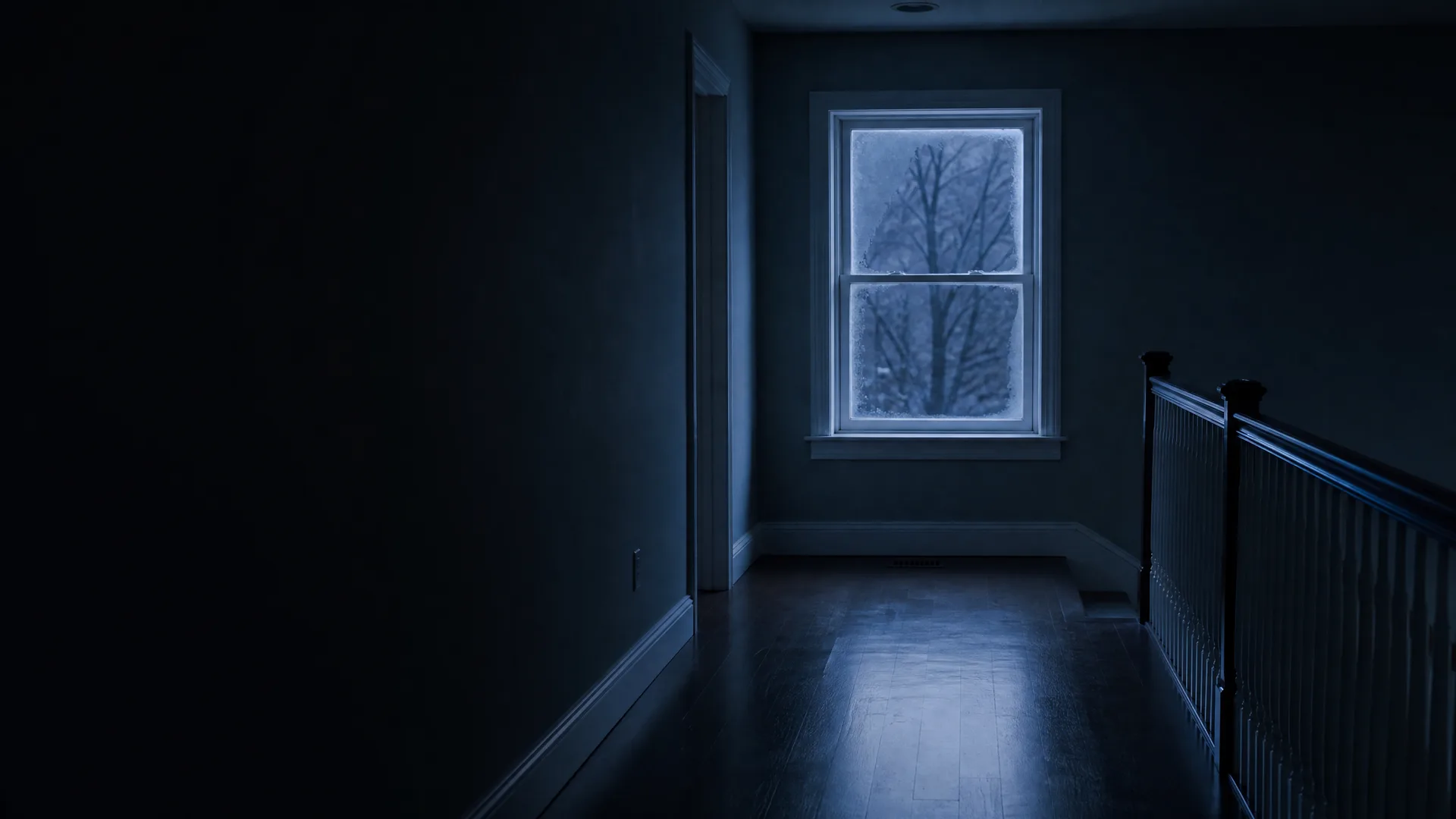
A dark interior hallway with a dark wood floor, a floor vent, a doorway on the left, and a stair railing on the right, lit only by a tall double-hung window showing bare tree branches outside.

It's a little after 2 a.m. in January, and the house is quiet except for the air moving through the vents. You're up for a glass of water, and in the upstairs hallway your sock catches something wet on the floor near the register. The vent itself is silent, not even moving air. Outside the hallway window, frost has crept up from the corner, and the glass throws back a dim blue light from the streetlamp. Saline County nights like this sit around 22 degrees, and the furnace has been running most of the evening to keep up. You crouch down and feel the damp spot again, then look toward the stairs.

Hand off the furnace problem

A leaking furnace does not wait for a convenient week. You have already checked the stain, maybe traced the line to the pump, maybe just found water near the cabinet and stopped there. Either way, the next step is the same: someone licensed needs to open that cabinet and find out whether it is a clogged drain line, a cracked heat exchanger, or a pump that quit. Left alone through a cold stretch, that water keeps finding drywall, subfloor, or the blower components it shouldn't touch. Finding that contractor yourself means searching, calling a few numbers, explaining the same leak and the same cabinet three or four times, then sitting with quotes you have no easy way to compare. Send the request instead and that work is off your plate. You still have a furnace to fix, but you are not the one tracking down who can fix it.

You can catch a condensate leak early and lose an afternoon tracing a line or checking a pump.

Leave it a few weeks and you can lose the heat exchanger, the subfloor underneath, or the drywall it dripped through.

A gray furnace with two access panels stands on a concrete basement floor beside sheet-metal ductwork, with pipes, flexible conduit and an electrical box on the concrete wall to the left.
Before you get your furnace repair
A gray high-efficiency furnace stands on a concrete basement floor beside galvanized sheet-metal ductwork, white PVC vent pipes, copper and black piping, and unfinished wood stud framing.
After you get your furnace repair

A drain line clears itself

Sometimes the leak is a clog that a contractor flushes out in one visit. The furnace dries out, the stain stops spreading, and that's the end of it.

I'm done searching

A cracked heat exchanger doesn't

If the water traces back to a crack instead of a clogged line, the furnace needs more than a cleared drain. That's a repair you want caught before another cold night running on it.

I'm done searching

Call It In Now or Let It Ride

Call a contractor now

  • A tech can pressure-test the drain line and heat exchanger the same visit, so you know within the hour which one it is.
  • Catching a cracked heat exchanger early can mean a repair instead of a full furnace swap.
  • You skip the work of searching for a licensed contractor, calling around, and explaining the leak over and over to get a quote.
  • If it's just a clogged condensate line, a flush and a check of the pump often ends it in one visit.
  • The furnace keeps running while this gets sorted, instead of you shutting it off and sitting cold some January night.

Wait and watch it

  • The stain on the drywall or subfloor keeps spreading for as long as the leak runs, and you won't know how far until you open the wall.
  • A slow drip from a cracked heat exchanger can let carbon monoxide into the air the furnace is heating, with no smell to warn you.
  • Overnight lows near 22°F mean long run times, so a small leak now adds up to a lot more water by February than it would in October.
  • You still end up calling a contractor eventually, just after the subfloor or insulation around the blower has already soaked through.
  • Letting it sit costs you the chance to catch a cheap fix, like a clog, before it turns into something the heat exchanger pays for.
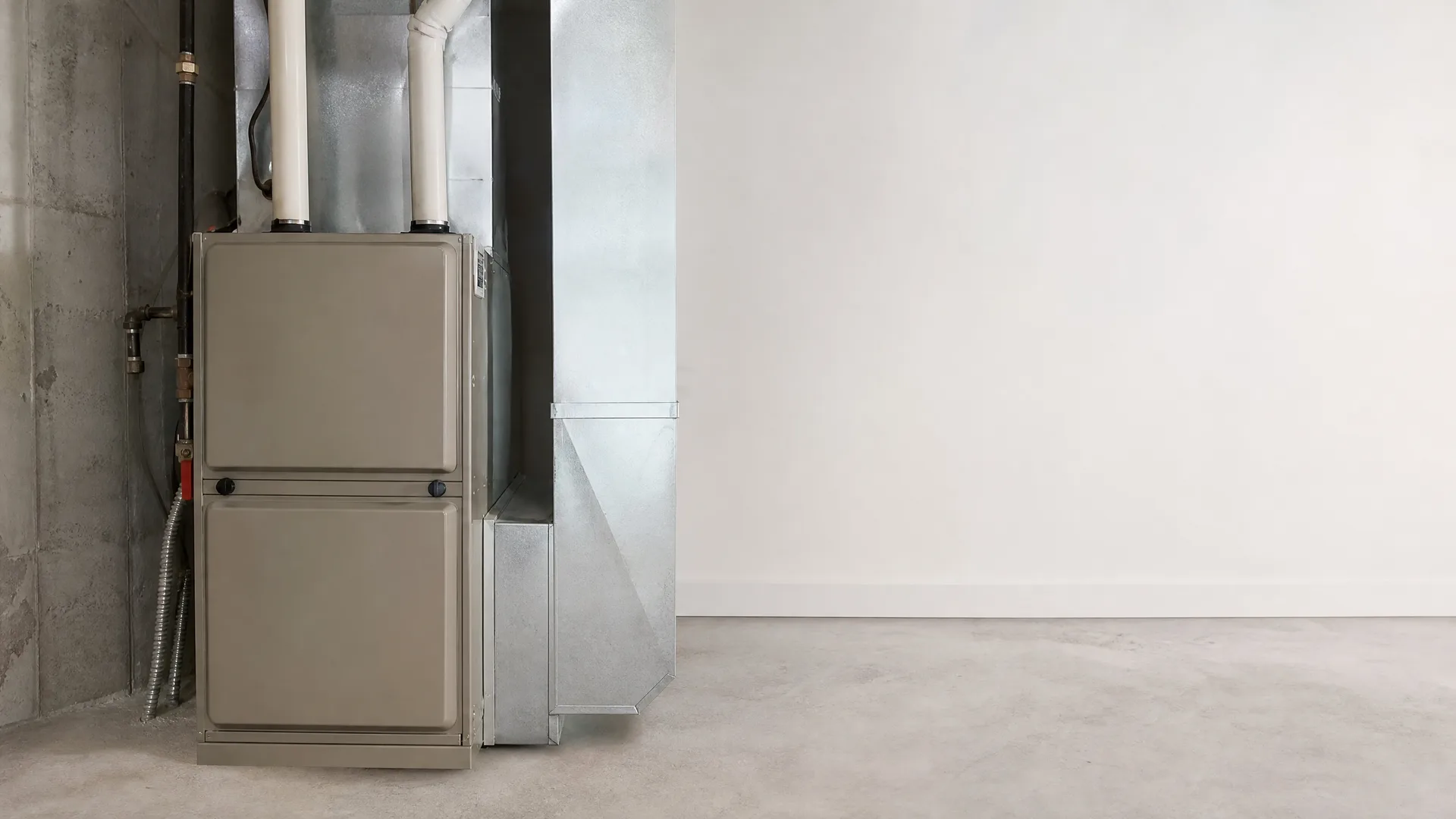
A beige high-efficiency furnace with two white PVC pipes stands beside sheet-metal ductwork and a concrete wall in an empty basement with a bare light-colored wall and concrete floor.

Dealing with it yourself first

You could start by pulling the furnace filter, checking the condensate line for a kink, and watching the pump to see if it cycles. That tells you something, but not everything. A clear line and a working pump don't rule out a cracked heat exchanger, and there's no way to pressure-test that part yourself. You end up with a guess instead of an answer, and the stain on the floor keeps spreading while you decide what to try next.

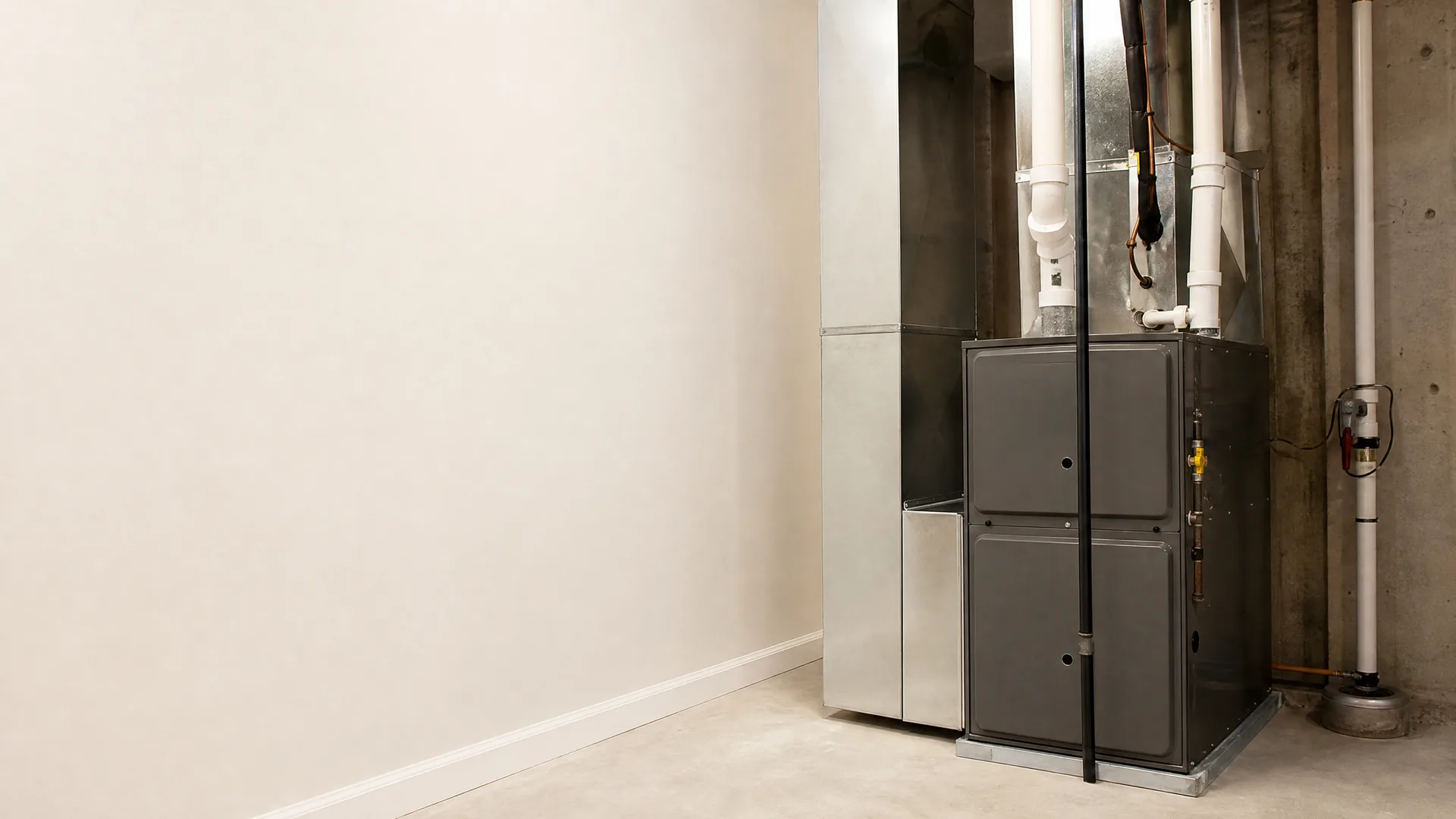
A gray furnace with sheet-metal ductwork and white PVC vent pipes stands in the corner of a finished basement room with a blank beige wall and concrete floor.

Having someone else sort it

A licensed contractor brings a way to check the heat exchanger and the drain line in the same visit, so you're not guessing which one it is. You skip calling around Salina for someone available, explaining the leak twice, and comparing quotes before you've even gotten a diagnosis. Once you send the form, finding that person stops being your job. You still wait for the repair, but you're not the one tracking down who can do it.

A furnace leaking water almost always comes down to one of two things: a condensate line or pump that isn't clearing the way it should, or a heat exchanger that's cracked and needs more than a flush. The only way to know which one you're dealing with is to have someone look at the line, the pump, and the exchanger itself. Past that, where you stand is simple. You could spend the next few days searching for a contractor in Salina, calling around to see who answers, explaining the stain under the cabinet and the drip near the base to each one, then sitting with a stack of quotes trying to tell them apart. Or you could send the details once and let someone sort through who's available and qualified to take the call. The water isn't going to fix itself either way, but finding the person to stop it doesn't have to be the hard part.

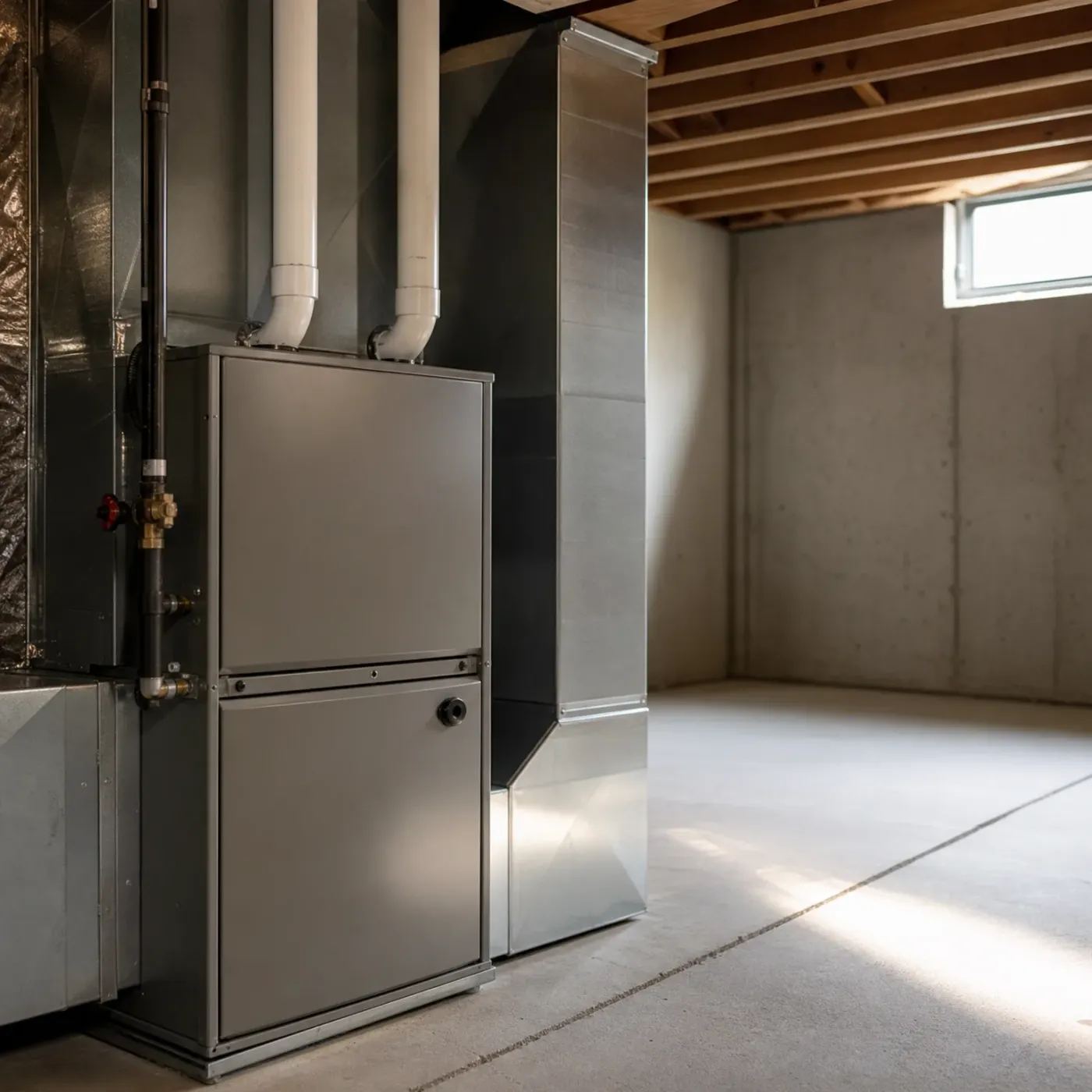
A gray furnace with PVC vent pipes and sheet-metal ductwork stands against a wall in an unfinished basement with concrete floor and walls, exposed wood joists, and a small window.

Finding a pro stops being your job

Hand it over

Describe your furnace job once, to one pro.

Asking costs nothing, and the choice to hire stays yours.