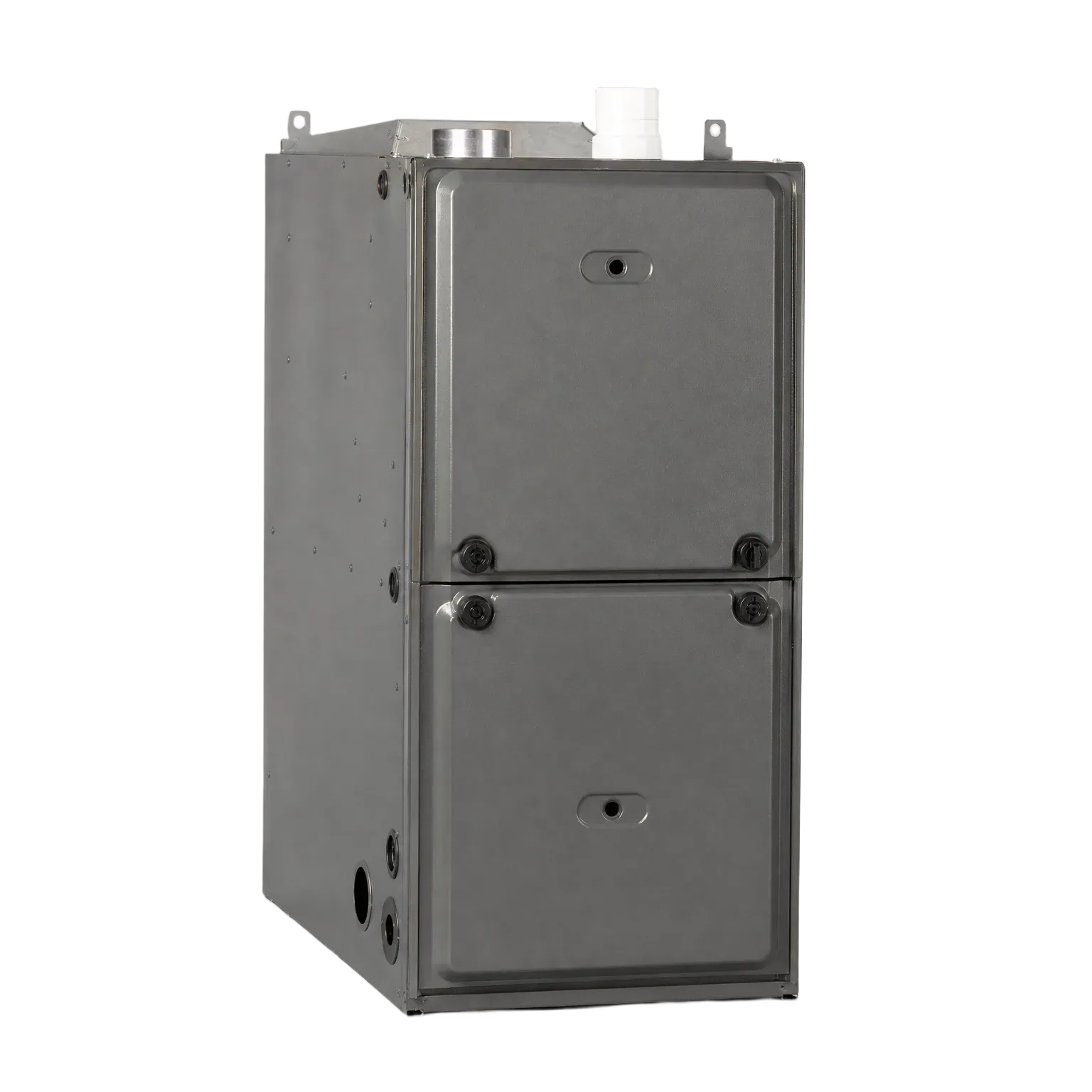
A gray high-efficiency furnace with two white PVC vent pipes stands beside galvanized sheet-metal ductwork in a dim basement with exposed joists and a concrete floor.

It's off your list after this

Furnace keeps shutting off in Manhattan, KS

A furnace that shuts off partway through a cycle is telling you something specific, whether it's the flame sensor, a clogged filter choking airflow, or the pressure switch refusing to cooperate. On a cold night in Riley County that's not a question worth sitting with. Send the details below and a local contractor who knows this equipment takes it from there.

Hand it off

A furnace that shuts off a few minutes into a cycle is almost always a safety switch doing its job. Furnaces are built to stop themselves rather than keep running into a problem, and a few things trigger that: a dirty flame sensor that can't confirm the flame is lit, a clogged filter that starves the system of airflow and overheats the heat exchanger, or a pressure switch that won't close because the vent is blocked or the inducer motor is weak. Each one shuts the burners down as a protection, not a malfunction in itself. In Riley County winters, where the furnace runs for hours at a stretch on cold nights, that kind of short-cycling means the house loses ground on heat the whole time it's happening. It also tends to get worse, not better, since a sensor or switch on its way out usually fails a little more each cycle. Narrowing down which part is behind it takes someone who can test the flame sensor, check static pressure, and look at the venting directly.

Why does a furnace shutting off matter so much here?

  • Winter nights average 21°F

    Nights average 21°F here in winter, so a furnace that quits partway through a cycle doesn't give the house time to recover before it cools again.

  • Heat runs October through April

    Heat runs October through April in Riley County, about seven months of the year, so a safety switch tripping isn't a one-off problem you can wait out.

  • 50.3% of homes heat with gas

    Just over half of homes here heat with gas, which means the flame sensor and pressure switch behind most short-cycling problems are parts a local furnace tech sees often.

NOAA nClimDiv 1991-2020 · ACS 2020-2024

It shuts off a few times a day

A furnace that trips once or twice and then runs fine through the rest of the cycle is usually dealing with something minor, like a flame sensor building up a light film of residue. It still catches, still heats the house, just not every single try. That pattern can hold for days before it gets worse, or it can jump to shutting off every cycle within a week. Either way it's worth having someone look at the flame sensor and the filter before a cold snap turns a minor annoyance into a house with no heat at 2 a.m.

It shuts off every time now

If every cycle ends the same way, a minute or two of heat and then silence, the switch causing it has stopped tolerating whatever the problem is at all. That's usually airflow or a pressure switch that won't stay closed. With nights in the low 20s in Riley County, a furnace stuck in this pattern isn't getting the house warm between attempts, it's just cycling cold air through the ducts. This is the point where it stops being something to watch and becomes something to get fixed before the next cold night.

An older gas furnace with a louvered front panel stands on a concrete basement floor beside large sheet-metal ductwork, a metal flue pipe, copper piping and wood framing.
Before you get your furnace repair
A beige high-efficiency furnace stands on a concrete basement floor beside sheet-metal ductwork, with white PVC vent pipes, flexible conduit and copper and steel piping running up a concrete wall to an electrical box.
After you get your furnace repair

A furnace doesn't just quit. It goes through a sequence, and something in that sequence is failing a check. The igniter lights the burners, then the flame sensor has to confirm fire is really there before the control board lets gas keep flowing. That sensor is a thin rod sitting in the flame, reading current only fire produces. A little carbon buildup on it and the board stops seeing a signal, so it shuts the gas off even though the burners are lit. Before any of that, the pressure switch has to confirm the draft inducer is pulling properly, and if it's stuck or out of position, gas never gets the green light. Airflow matters too. A clogged filter traps heat in the cabinet, and the limit switch trips to protect the heat exchanger from that heat buildup. Most control boards will tell you which of these happened through a small window with a flashing light, and the pattern of flashes points to the exact switch that tripped.

How the shutdown actually happens

  • The flame sensor is a thin metal rod sitting right in the burner flame, and it works by reading a tiny electrical current only fire can create.
  • A film of carbon or oxidation on that rod breaks the current enough that the control board reads it as no flame, even with fire burning right next to it.
  • The pressure switch checks for suction from the draft inducer before gas is allowed to flow, and a stuck or misaligned switch will shut the burners down mid cycle.
  • A clogged filter starves the blower of airflow, heat builds up in the cabinet, and the limit switch cuts the burners to keep the heat exchanger from overheating.
  • Most furnaces give a fault by flashing a light behind a small window on the control board, and the number of flashes points to which switch tripped.
  • The sequence runs igniter, then flame sensor confirmation, then blower, and a failure at any step stops the cycle before the next one starts.
A woman with shoulder-length brown hair wearing a beige knit cardigan sits in a gray upholstered armchair near a window, looking off to the side with a slight smile, with bookshelves blurred in the background.
A woman with her hair in a bun holds a sleeping young child against her chest, both wrapped in a textured beige knit blanket on a sofa in a dimly lit room with a lamp, framed picture, and bookshelf behind them.

Hand off the search today

A licensed pro who repairs furnaces in Riley County gets your request.

Asking costs nothing, and the choice to hire stays yours.

What the pressure switch checks

The pressure switch sits near the inducer motor and watches for suction in the vent pipe before it lets gas flow. No draft, no ignition, and if the draft drops partway through a cycle the furnace cuts off rather than push exhaust where it shouldn't go. A vent pipe blocked by ice or a bird's nest will do this, and so will a cracked gasket on the inducer housing that lets the switch lose its reading even though the draft is fine. Cold doesn't help. When the pipe runs through an unheated space, condensation inside it can freeze and narrow the opening enough to trip the switch on the coldest nights of the year.

Short cycling wears parts faster

Every start draws more current through the igniter and puts more stress on the heat exchanger than a cycle that runs its full course. A furnace that shuts off and restarts a dozen times a day is doing that a dozen times, and parts built for a few hundred starts a season see that number climb fast. The hot-cold swing also flexes the heat exchanger more than steady heat does, and repeated flexing is how small cracks start. Catching the cause early, whatever it turns out to be, costs less in parts than letting a furnace run this way through a full Riley County winter.

Winter nights average 21°F

At 21°F, a furnace that shuts off partway through a cycle doesn't just leave the house a little cool. It gives the rooms time to lose heat faster than a short burner run can put back, so the drop is noticeable by the next cycle, not just by morning.

NOAA nClimDiv 1991-2020

A gray high-efficiency furnace with white PVC vent pipes stands in an unfinished basement beside sheet-metal ductwork, gas piping, and insulated stud walls on a concrete floor.

Running a full cycle

This is what a furnace looks like when nothing is wrong. It fires, the burners stay lit, the blower pushes air through the cabinet and out the ducts, and the cycle ends on its own when the house hits temperature. No short-cycling, no restarts.

A beige sheet-metal furnace with a louvered upper panel stands on a concrete basement floor, connected to galvanized ductwork, white PVC vent pipes, and a metal gas line with an electrical box.

Cutting off partway through

Same kind of unit, but something is telling it to stop early. The louvered panel and ductwork look ordinary from the outside. Inside, a safety switch, a dirty sensor, or a draft problem is ending the cycle before the house gets warm.

Call for Repair or Wait It Out

Call it in now

  • A flame sensor coated enough to cause shutdowns usually needs a light cleaning, and a furnace already down won't wait any better next week.
  • If the pressure switch is failing, that's a part replacement, and running the furnace on a bad switch risks a shutdown on the coldest night of the week.
  • A tech who works on furnaces all winter in Riley County has likely seen the same model and fault code before and knows where to look first.
  • Once the furnace is diagnosed, the fix is usually quick, often the same visit, since most of these parts are small and common.
  • Leaving it alone past a day or two means more cold nights at 21°F with no backup plan if it stops firing altogether.

Wait and watch

  • If it shut off once and has run full cycles since, it may have been a single piece of debris or dust on the sensor that cleared itself.
  • A furnace that only trips when the thermostat is set high or the filter is new might settle down once airflow evens out.
  • Watching for a pattern, like it only happening at the start of a cycle or only at night, gives a tech more to go on when you do call.
  • Waiting risks the flame sensor fouling further or the pressure switch wearing out completely, turning a simple fix into a bigger one.
  • A furnace that won't restart at all, or trips the breaker, isn't one to wait on since that points to something more than residue on a sensor.
  1. The thermostat calls for heat and opens the gas valve.

  2. The igniter glows hot enough to light the burners.

  3. The flame sensor confirms fire within seconds.

  4. No current detected, so the control board cuts gas flow.

A gray high-efficiency furnace with white PVC vent pipes stands beside galvanized sheet-metal ductwork in a basement with a concrete floor, with a wooden staircase and railing at left.
A furnace like this fires, holds its flame and runs the ducts full of warm air until the thermostat is satisfied, with nothing tripping it early.
An older gas furnace with louvered panels sits on a concrete pad in a basement, connected to sheet-metal ductwork and PVC and metal pipes, with a water heater and wooden stair framing in the background.
This is the same layout mid-failure: the gas line and shutoff are doing their job, but the burner isn't staying lit long enough to heat the house.

What a Shutting-Off Furnace Means

  • A furnace that shuts off mid-cycle is tripping a safety switch, most often the flame sensor, a clogged filter, or the pressure switch.
  • A flame sensor coated with carbon reads as no flame to the control board, which cuts gas even though the burners are lit.
  • A clogged filter starves the blower of airflow, and the furnace overheats and shuts itself down before the house warms up.
  • A failing pressure switch can't confirm draft through the vent pipe, so the control board won't let gas flow for the rest of the cycle.
  • Shutting off once or twice a cycle points to a minor issue, while repeated shutdowns with no heat points to a part that needs replacing.
  • At 21°F overnight in Riley County, a short cycle doesn't give the house time to recover before the next drop in temperature.

A furnace that cuts off partway through a cycle is not malfunctioning at random. It is stopping itself because a safety switch read something it did not like, and three parts cause most of it. The flame sensor can be coated enough that it no longer reads the flame, so the control board shuts the gas even though the burners are lit. The filter can be dirty enough that the blower cannot move air, so the furnace overheats and shuts down to protect itself. The pressure switch can fail to confirm draft through the vent pipe, so the board refuses to let gas flow again until that reading changes. Each of these has a different fix, and the pattern of the shutdowns points to which one it is. A furnace that trips once and then finishes the cycle is usually the flame sensor. One that won't stay lit at all, or won't fire a second time, is more likely the pressure switch or a part that has actually failed rather than just gotten dirty. None of this is something to watch and wait on. Riley County nights average 21°F in winter, and a house that loses heat mid-cycle does not get it back before the next drop. The furnace needs to run a full cycle, start to finish, for the house to hold temperature overnight. Until it does, the shutdowns will keep happening on the same pattern.


A gray-haired man in a dark sweater sits on a light gray sofa in a living room, looking toward a sunlit window with trees outside.
A gray-haired man in a dark blue sweater sits on a light gray sofa in a sunlit living room, looking off to the side, with a potted plant, shelving unit, and large glass doors behind him.
A bearded man with graying hair in a dark green sweater sits on a sofa in a living room, looking off to the side, with a sliding glass door and a dim kitchen doorway behind him.
A gray-haired man in a dark knit sweater sits on a light gray sofa in a living room, looking toward a sunlit window, with houseplants, a lamp, and framed art in the background.

Furnace Repair

Stop chasing a furnace pro

The pro who gets in touch is licensed in Kansas and works in Riley County.

A black-framed smartphone standing upright against a plain light gray background, its screen filled with solid green.
Step 1 of 3: Equipment