Tell us about the job
Takes about a minute. No obligation.
Sizing a furnace for Smith County starts with understanding what the burner and heat exchanger are actually asked to carry. Homes in Smith County, KS run heat about eight months a year, from October through May. A burner cycling through that much of the calendar accumulates wear that a marginal install cannot hide. The heat exchanger runs hot, cools, and runs hot again, season after season, and the failure modes from that thermal cycling show up at the ignition system and the exchanger seams first. A contractor quoting a replacement here calculates the load before specifying equipment, because undersizing shortens the life of every component that fires.
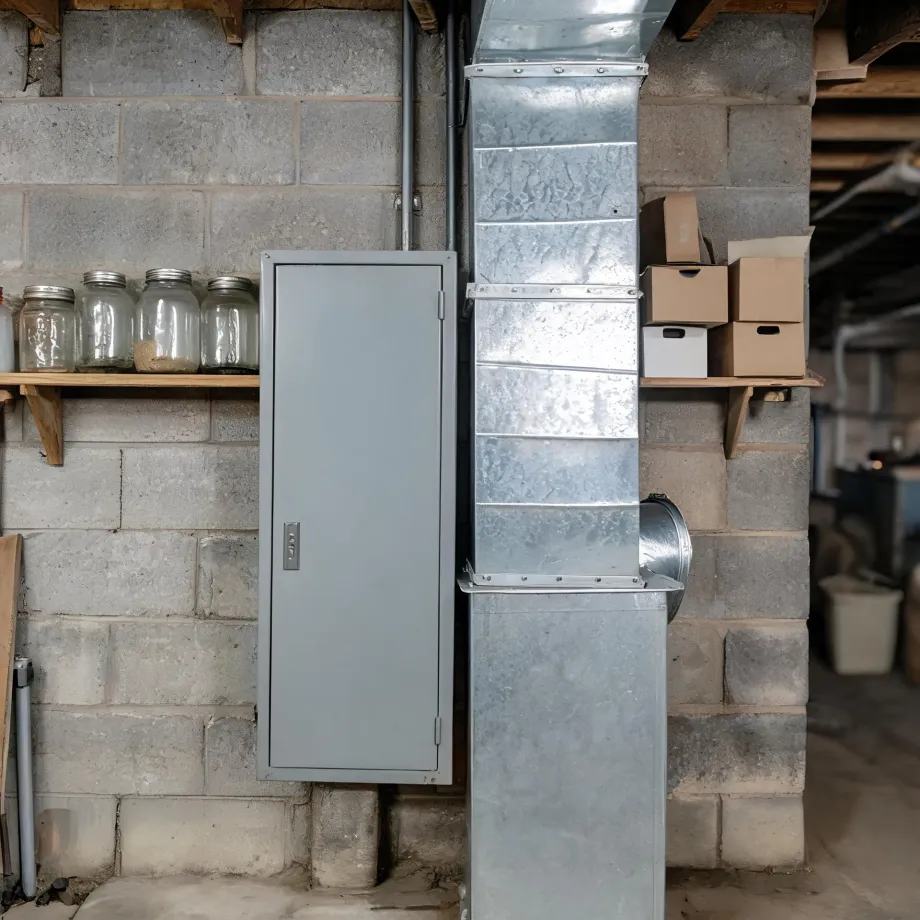
Ductwork in a house this old was laid out for a different system than whatever a contractor is bringing in today. Half the homes in Smith County, Kansas were built in 1954 or earlier (2020-2024 ACS 5-year). That gap between what the ducts were built to carry and what a new furnace actually pushes through them is where an installation gets complicated or stays simple. A contractor has to assess the existing trunk lines and branch runs before anything else gets priced, because undersized or poorly routed ductwork forces a new unit to work against the house rather than with it. The electrical service gets the same look, since the load a modern furnace draws does not always match what the panel was set up for.
What Gets Installed With a New Furnace
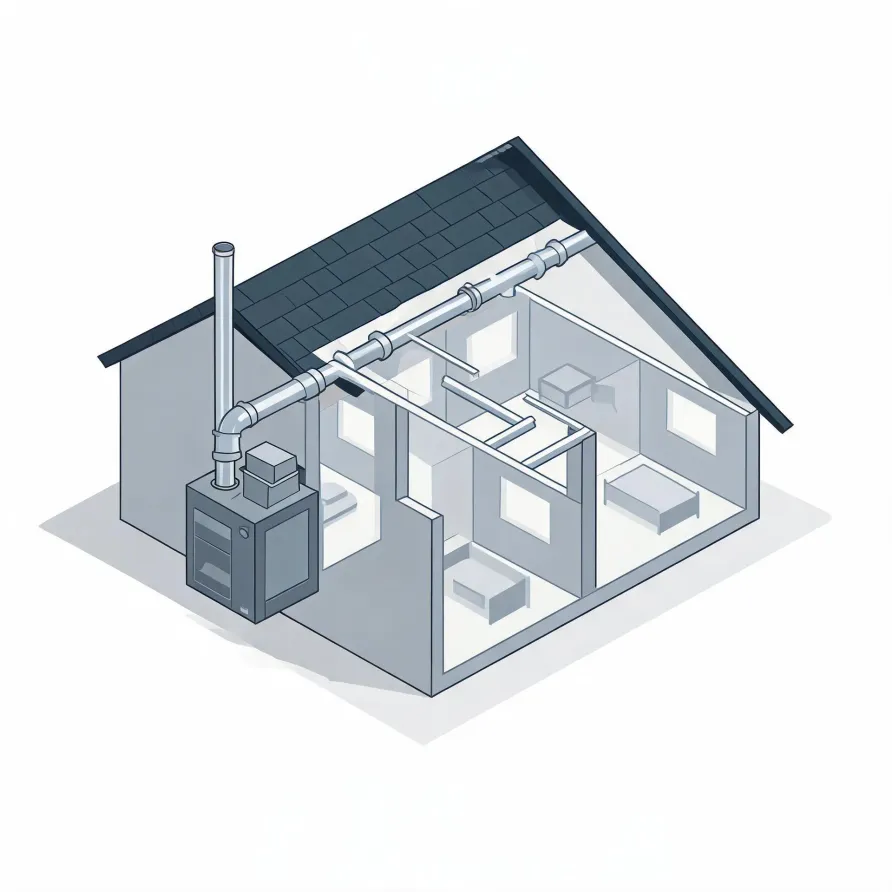
The furnace itself sits in a mechanical room, basement, or utility closet and is the heart of what a contractor puts in. Attached to it is the flue or vent pipe, which runs to an exterior wall or roof to carry combustion gases out of the house. The air handler, whether built into the furnace cabinet or mounted beside it, draws return air in and pushes conditioned air out.
The thermostat goes on an interior wall where it reads the ambient temperature and signals the furnace to fire or rest. A contractor also installs the condensate drain line if the unit is high-efficiency, running it to a floor drain or utility sink. The gas supply line and shut-off valve connect at the furnace cabinet itself.
The drawing shows a typical layout, and a licensed contractor determines exactly what applies to your home's configuration.
Get matched in Smith CountySmith County, Kansas, by the numbers
123 severe weather events were recorded in Smith County, Kansas between 2015 and 2024.
NOAA National Centers for Environmental Information, Storm Events Database, bulk CSV export, events 2015-01-01 through 2024-12-31.Half the homes in Smith County, Kansas were built in 1954 or earlier (2020-2024 ACS 5-year).
U.S. Census Bureau, 2020-2024 American Community Survey 5-Year EstimatesSmith County, Kansas holds 2,024 housing units (2020-2024 ACS 5-year).
U.S. Census Bureau, 2020-2024 American Community Survey 5-Year EstimatesOwners occupy 84.8% of the occupied homes in Smith County, Kansas (2020-2024 ACS 5-year).
U.S. Census Bureau, 2020-2024 American Community Survey 5-Year EstimatesFurnace Installation Rules That Apply in Smith County, Kansas4 sourced standards and codes
What the Installation Actually Looks Like
Non-weatherized gas furnaces manufactured on or after November 19, 2015 must reach 80.0 percent AFUE.
Non-weatherized oil-fired furnaces manufactured on or after November 19, 2015 must reach 83.0 percent AFUE.
Mobile home gas furnaces manufactured on or after November 19, 2015 must reach 80.0 percent AFUE.
Non-weatherized gas furnaces manufactured on or after December 18, 2028 must reach 95.0 percent AFUE, up from the 80.0 percent minimum that applies to units manufactured before that date.
Severe Weather Events in Smith County
Kansas weather puts real load on heating equipment, and Smith County is no exception to that pressure. A furnace sized and installed for local conditions holds up better than one that was not.
123 severe weather events, 2015–2024. Source: NOAA National Centers for Environmental Information, Storm Events Database.