Tell us about the job
Takes about a minute. No obligation.
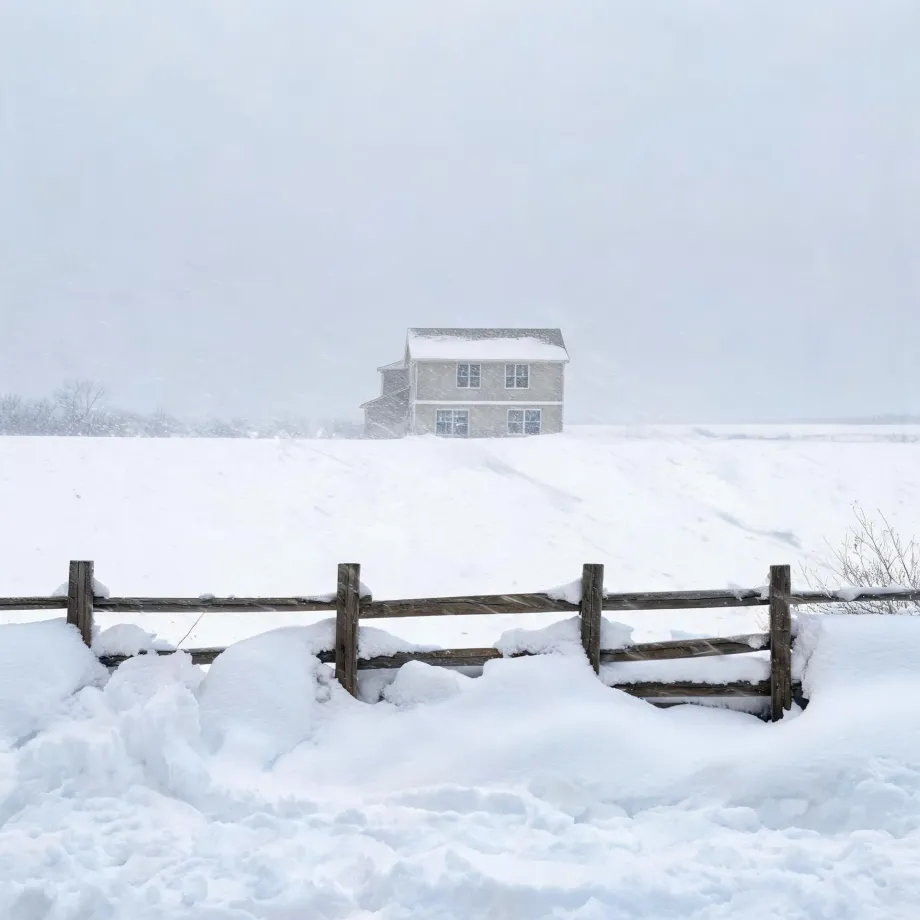
Sizing a furnace for this county is not an exercise you do with a catalog and a guess. A contractor has to calculate the actual load the house puts on the equipment before they can quote honestly. Homes in Bourbon County, KS run heat about seven months a year, from October through April. The burner, the heat exchanger, and the ignition system all cycle hard through those months, and a unit that was undersized or loosely installed accumulates wear faster than one that was matched correctly to the house. The installer's work at commissioning decides how much of that load each component carries.
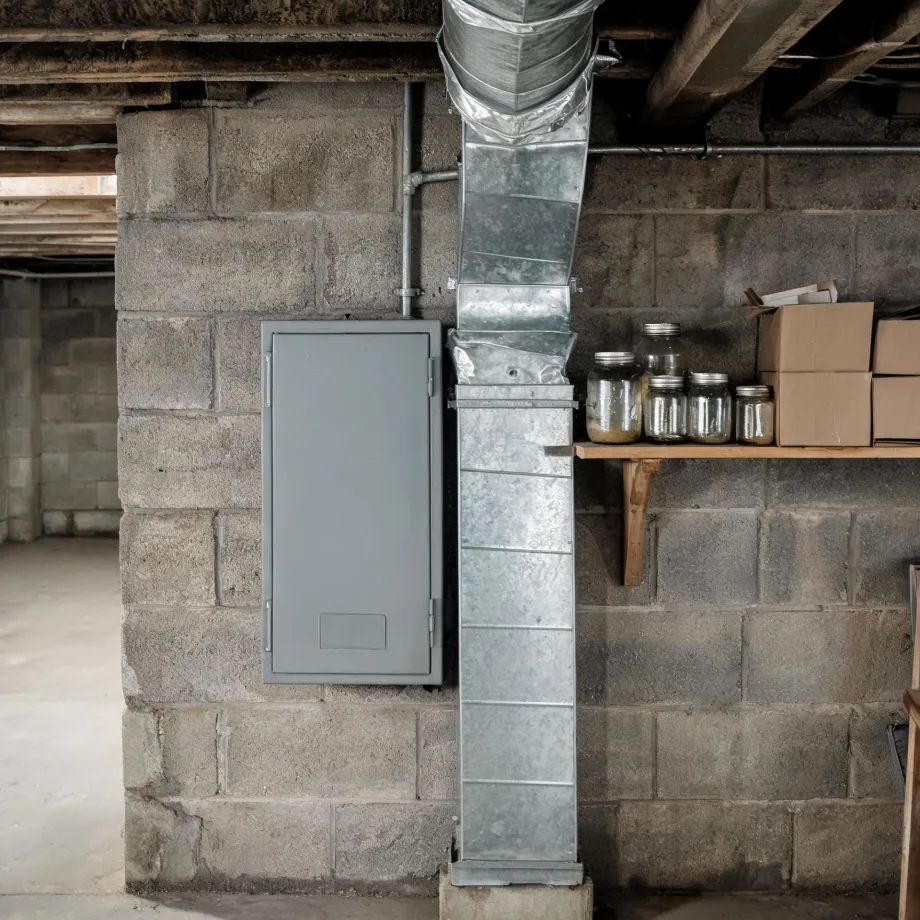
Ductwork put in for equipment that has since been replaced at least once is common in Bourbon County's housing stock, and that gap is what a furnace installation turns on. Half the homes in Bourbon County, Kansas were built in 1957 or earlier (2020-2024 ACS 5-year). Duct runs sized for an older system may be the wrong diameter, the wrong layout, or leaking in ways that a new furnace will expose the first time it cycles. The electrical panel is the second question: service capacity that was enough for what the house originally ran is not necessarily enough for what gets installed now. A contractor has to measure both before the equipment question means anything.
What Gets Installed With a New Furnace
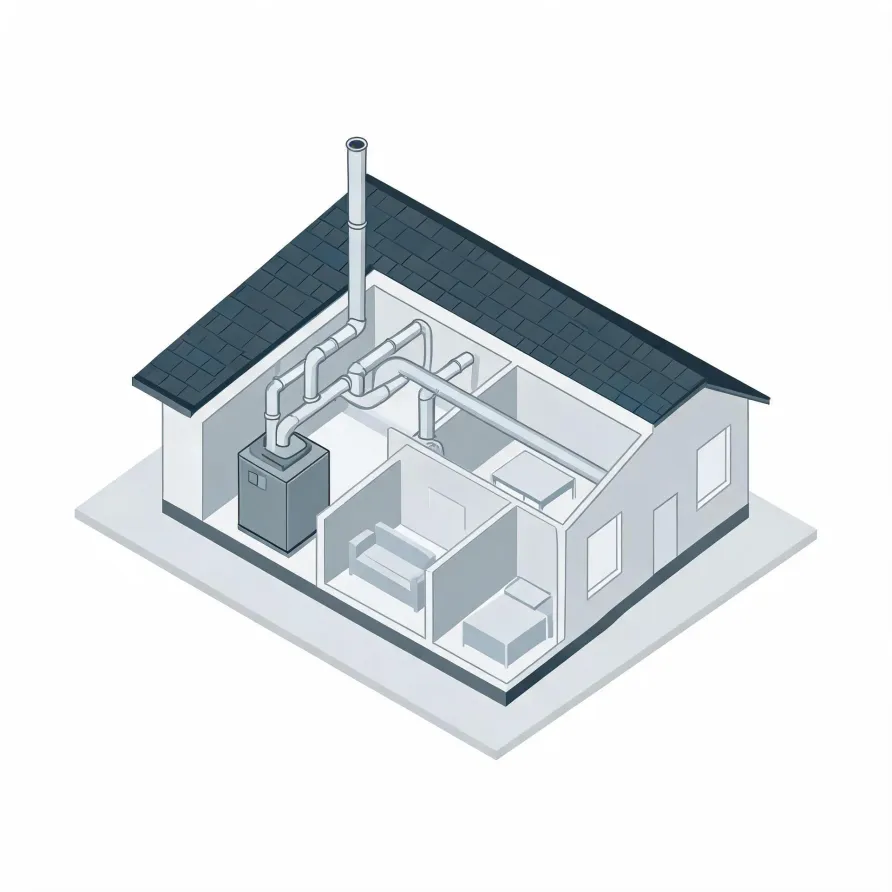
The furnace itself sits in the basement, utility room, or crawlspace and is the piece a homeowner is buying first. Inside it, a burner assembly produces heat and a heat exchanger transfers that heat to the air moving through. A blower motor and fan push that conditioned air out into the home.
The flue pipe runs from the furnace to an exterior wall or roofline and carries combustion gases out of the house. Alongside that, a thermostat mounts on an interior wall and serves as the control point that tells the furnace when to fire and when to stop.
The drawing shows a typical layout, and a licensed contractor determines exactly what applies to your house.
Get matched in Bourbon CountyBourbon County, Kansas, by the numbers
73 severe weather events were recorded in Bourbon County, Kansas between 2015 and 2024.
NOAA National Centers for Environmental Information, Storm Events Database, bulk CSV export, events 2015-01-01 through 2024-12-31.Half the homes in Bourbon County, Kansas were built in 1957 or earlier (2020-2024 ACS 5-year).
U.S. Census Bureau, 2020-2024 American Community Survey 5-Year EstimatesBourbon County, Kansas holds 6,756 housing units (2020-2024 ACS 5-year).
U.S. Census Bureau, 2020-2024 American Community Survey 5-Year EstimatesOwners occupy 74.0% of the occupied homes in Bourbon County, Kansas (2020-2024 ACS 5-year).
U.S. Census Bureau, 2020-2024 American Community Survey 5-Year EstimatesFurnace Installation Rules on the Books for Bourbon County, Kansas4 codes, standards & laws
What Happens During a Furnace Installation in Bourbon County
Non-weatherized gas furnaces manufactured on or after November 19, 2015 must reach 80.0 percent AFUE.
Non-weatherized oil-fired furnaces manufactured on or after November 19, 2015 must reach 83.0 percent AFUE.
Mobile home gas furnaces manufactured on or after November 19, 2015 must reach 80.0 percent AFUE.
Non-weatherized gas furnaces manufactured on or after December 18, 2028 must reach 95.0 percent AFUE, up from the 80.0 percent minimum that applies to units manufactured before that date.
Severe Weather Events in Bourbon County
Weather in this part of Kansas puts real demands on heating equipment. What a furnace faces over its lifespan is a local question, and the record below reflects the conditions it has to handle.
73 severe weather events, 2015–2024. Source: NOAA National Centers for Environmental Information, Storm Events Database.