
Why your furnace whistles in Kansas

Step 1 of 3: Equipment

A whistle usually means air is being forced through a space too small for it. Most often that's a dirty filter choking off airflow, so the blower pulls harder and the gap around the filter or at a loose duct joint starts to sing. It can also come from a closed or blocked vent somewhere in the house, or a return duct that's too small for the furnace pushing air through it. In a gas furnace, high-pitched noise sometimes comes from the burner assembly itself rather than the ducts. None of this is something to leave alone through a Kansas winter. A whistle means the furnace is working harder than it should, and that strain tends to end with a part failing, often on the coldest night of the year when you need the heat most. Worth having someone look at where the sound is actually coming from before that happens.

A beige high-efficiency furnace with white PVC vent pipes stands beside galvanized sheet-metal ductwork in a basement with a concrete floor, exposed wood studs, and metal piping along the wall.

Normal airflow, no noise

A furnace that's drawing air the way it should runs quiet. The blower moves air through a clean filter and open ducts without a fight. No whine at the return, no high note at a duct seam. If yours sounds like this most of the time, the whistle you're hearing is new, and worth a look.


An older beige furnace with a louvered vent panel stands on a concrete basement floor beside galvanized sheet-metal ductwork, a metal flue pipe and vertical pipes along a concrete wall.

Air squeezing through a tight spot

This is where the whistle comes from. A filter packed with dust, a duct joint that's worked loose, a supply vent half closed in a back bedroom. The blower keeps pushing the same amount of air through a smaller opening, and that's the sound you hear every time it kicks on.

A closed silver laptop and a ceramic mug of dark coffee sit on a wooden table in front of two chair backs, with a kitchen counter, tiled backsplash, wooden cutting boards, a vase of greenery and a potted plant by a window behind.

A whistle you keep hearing is a furnace working harder than it should

Run that way through a Kansas winter and the blower motor logs a lot of extra hours pulling air through a gap it shouldn't have to. Your gas furnace still heats the house, so it's easy to let the sound become background noise. But a strained blower wears, and a cracked duct joint is losing heated air into the attic or crawlspace the whole time, air you already paid to warm.

Finding out which one it is means someone actually looking at your filter, your ducts, and the furnace itself. Most people in that spot start calling contractors, waiting on callbacks, and describing the same whistle three or four times before anyone shows up. Send the form here and that part is done. You're not left sorting through names or explaining the noise again to the next voice on the phone.

Interior corner of a room with a window and sheer curtain at left, a gray upholstered sofa with a cushion at right, and a round wooden table holding stacked books and a round vase with an olive branch.
A gas furnace with two gray access panels stands against a plain wall in a basement, connected to sheet-metal ductwork, white PVC vent pipes, and a yellow gas line.

Where the sound starts

The whistle almost always comes from one of two places: around the filter slot or at a seam in the ductwork near the furnace. Air takes the path of least resistance. When the filter is clogged, the blower pulls harder, and if the filter frame doesn't seal tight against the cabinet, air gets forced through that narrow gap instead. That's the pitch you're hearing, not the furnace itself failing.

A gray high-efficiency furnace in a basement corner with white PVC vent pipes, copper and black gas piping, and sheet-metal ductwork beside a plain white wall and wooden stair framing.

Why it carries through the house

Kansas winters push a furnace to run long stretches at a time, and sheet metal ductwork carries sound well. A whistle at the furnace cabinet can travel through the trunk line and show up loudest at a register two rooms away, which is why homeowners sometimes think the noise is coming from a vent that has nothing wrong with it. Checking the filter and the cabinet seams first saves a lot of guesswork chasing the sound to the wrong spot.

Is this something you just live with until spring

You notice it most in the evening, when the house is quiet and the furnace kicks on. A thin, steady whistle from somewhere near the floor vent or the hallway where the ductwork runs. It stops when the furnace cycles off, then starts again twenty minutes later. Some nights it's louder than others, depending on how hard the blower is working against the cold outside. Left alone, a dirty filter behind that sound keeps choking off airflow, and the blower motor keeps straining to push air through a gap too small for it. That's wear it wasn't built to take on, night after night, for the rest of a Kansas winter.

A smiling bearded man in a dark green hooded jacket and blue t-shirt sits on a couch in a living room with shelves, a potted plant, and a bowl of popcorn on a wooden table.
A smiling man in a green long-sleeved shirt sits on a beige sofa in a living room, with a bowl of popcorn in the foreground, a large potted plant and shelving behind him.
A smiling man in a dark blue T-shirt sits on a couch in a dimly lit living room with a bowl of popcorn and a remote on a wooden table, a lit floor lamp and bookshelves behind him, and windows showing greenery.
A smiling bearded man in a dark green long-sleeved shirt sits on a leather couch in a living room, with a bowl of popcorn and a remote control on a wooden table in the foreground.
A gray high-efficiency furnace with two PVC vent pipes stands in an unfinished basement beside sheet-metal ductwork, a framed and plastic-covered wall, and a bare concrete wall with vertical pipes.
A furnace set up right moves air without straining, so the ductwork and gas line stay quiet under a clean filter.
A gray furnace cabinet in a basement, connected to galvanized sheet-metal ductwork and white PVC pipes, against a concrete wall with exposed metal piping and insulation overhead.
A furnace left to pull air through a gap keeps running, but something in that path is working harder than it should.
  1. Blower motor switches on and pulls air into the return.

  2. Air hits a clogged filter or gap it can't pass through easily.

  3. Air speeds up squeezing through that narrow opening.

  4. Fast air moving through a tight gap starts to vibrate.

A gray metal furnace with two white PVC vent pipes stands on a concrete floor beside galvanized sheet-metal ductwork in a basement or utility space with wood framing.
Before you get your furnace repair
A gray furnace cabinet in a basement with sheet-metal ductwork, white PVC vent pipes, and black gas piping against a concrete wall and wood-framed partition on a bare concrete floor.
After you get your furnace repair

Hand off the furnace problem

You've read what's making that sound. Finding out who can actually fix it is a different job, and it's the one that eats your evening. Searching up furnace repair companies near you, calling three or four, explaining the whistle and where it's loudest and how long it's been doing it, then waiting on quotes and trying to tell which one knows what they're talking about. That's the part worth handing off. Kansas winters don't let up once they start, and a furnace pulling air through a gap it shouldn't isn't getting quieter on its own. Send the request once and the search is done. You're not left sorting through a list of names or repeating the same story to the next person who picks up. Someone qualified gets your situation and takes it from there, and that's the part of this that was never going to be the interesting part anyway.

A beige high-efficiency furnace stands on a concrete basement floor beside sheet-metal ductwork, with white PVC vent pipes and a gas line running along an insulated wood-framed wall.

Running the way it should

This is a furnace moving air the way it was built to. The filter is clean, the duct joints are sealed, and the blower isn't straining to pull air through anything. Gas line and flue run to the outside without a fight anywhere in between. No whistle, because nothing is being squeezed.

An older metal furnace with a louvered front panel stands against a concrete basement wall, connected to sheet-metal ductwork and a flue pipe, with copper and steel pipes running alongside.

Working against something

This is the same job getting harder. Dust has built up on the cabinet, and somewhere in that path, air is being forced through a gap it shouldn't have to cross. The furnace still puts out heat, so it keeps running this way, pulling harder than it needs to every time it kicks on.

Winter nights average 23°F statewide

Winter nights here average 23°F, so your furnace isn't cycling on for a few minutes and resting. It's running long stretches to hold the house, and that's exactly the kind of steady pull that turns a tight gap at the filter or a duct seam into a whistle you notice by evening.

NOAA nClimDiv 1991-2020 county normals weighted by homes

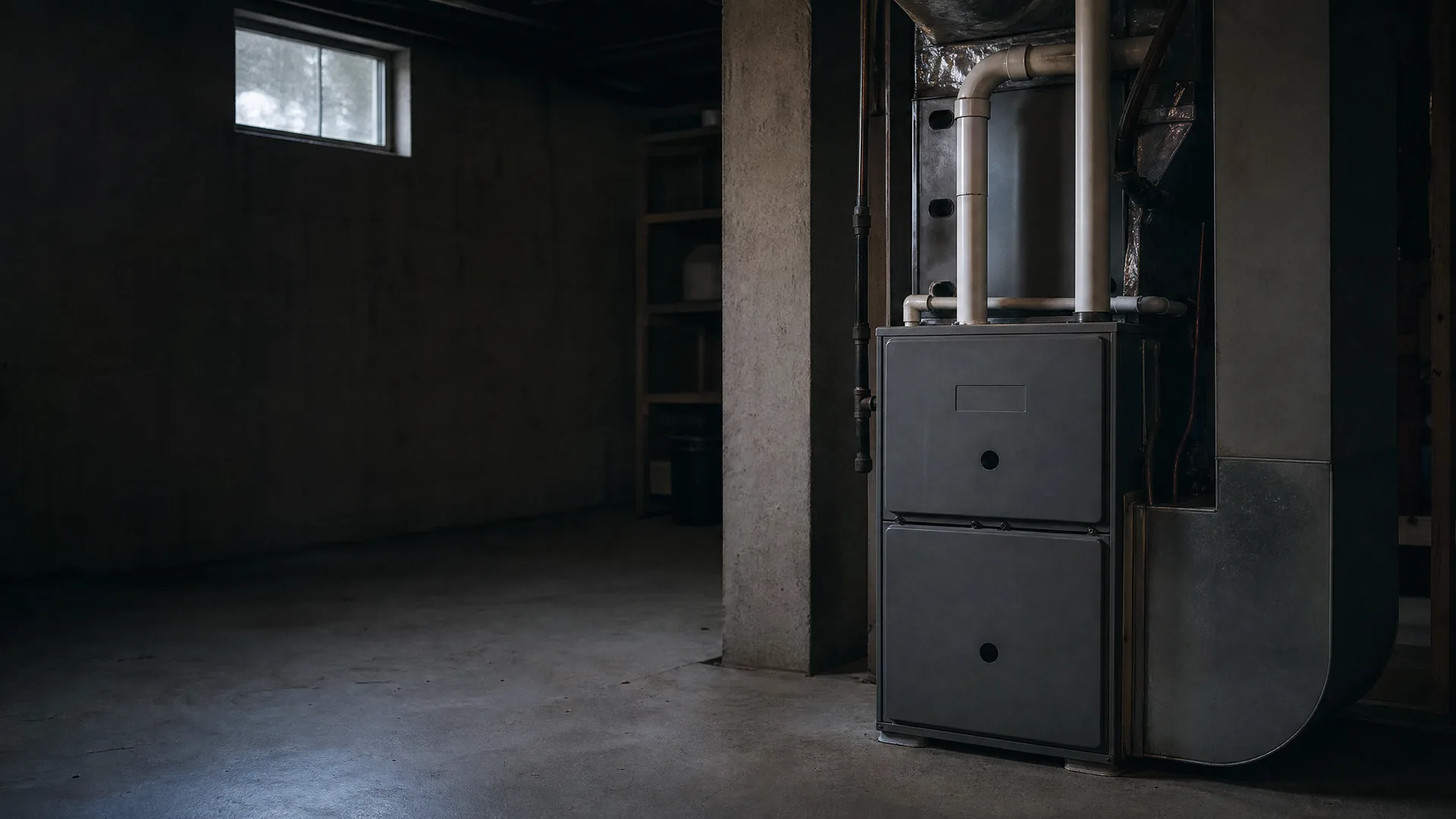
A gray high-efficiency furnace with white PVC vent pipes and attached ductwork stands beside a concrete support column in a dim, empty basement with bare concrete walls and floor and a small window.

It's gone down to the low 20s tonight, the kind of cold that keeps the furnace running long after dinner. You're down in the basement checking the thermostat wire and the furnace isn't firing. No hum, no flame, nothing. The air near it just sits still, a little dust hanging where the blower usually stirs it up. A few hours ago it was whistling every time it kicked on. Now it's not running at all. You flip the switch on the side, wait, nothing changes. Upstairs the house is starting to feel it, that first edge of cold coming into the rooms once the air stops moving through the vents.

Live With The Whistle Or Fix It

Leave it alone

  • The whistle doesn't go away on its own, since the gap it's moving through doesn't close up by itself.
  • The blower keeps working harder every time it runs, and in a Kansas winter that's most hours of most days.
  • A filter left clogged keeps choking airflow until the furnace shuts itself down on a high-limit switch some cold night.
  • You're still paying to heat the house either way, so the only thing silence buys you is not knowing what's straining.
  • A loose duct joint that's whistling is also leaking warm air into the attic or crawlspace instead of the house.
  • Whatever's pulling the air that hard now is the same thing a technician would have fixed cheaper before it got worse.

Get it looked at

  • A technician can tell in minutes whether it's the filter, a duct seam, or something at the blower itself.
  • Fixing the actual gap stops the whistle at the source instead of masking it with a new filter and hoping.
  • Once air moves the way it's supposed to, the blower motor stops logging those extra strained hours every night.
  • Sealing a duct joint keeps the heat your furnace makes inside the house instead of in the walls or attic.
  • You stop running the furnace wondering if that sound means something is about to fail at 2 a.m.
  • It gets done before the next cold snap, not after something gives out mid-January.
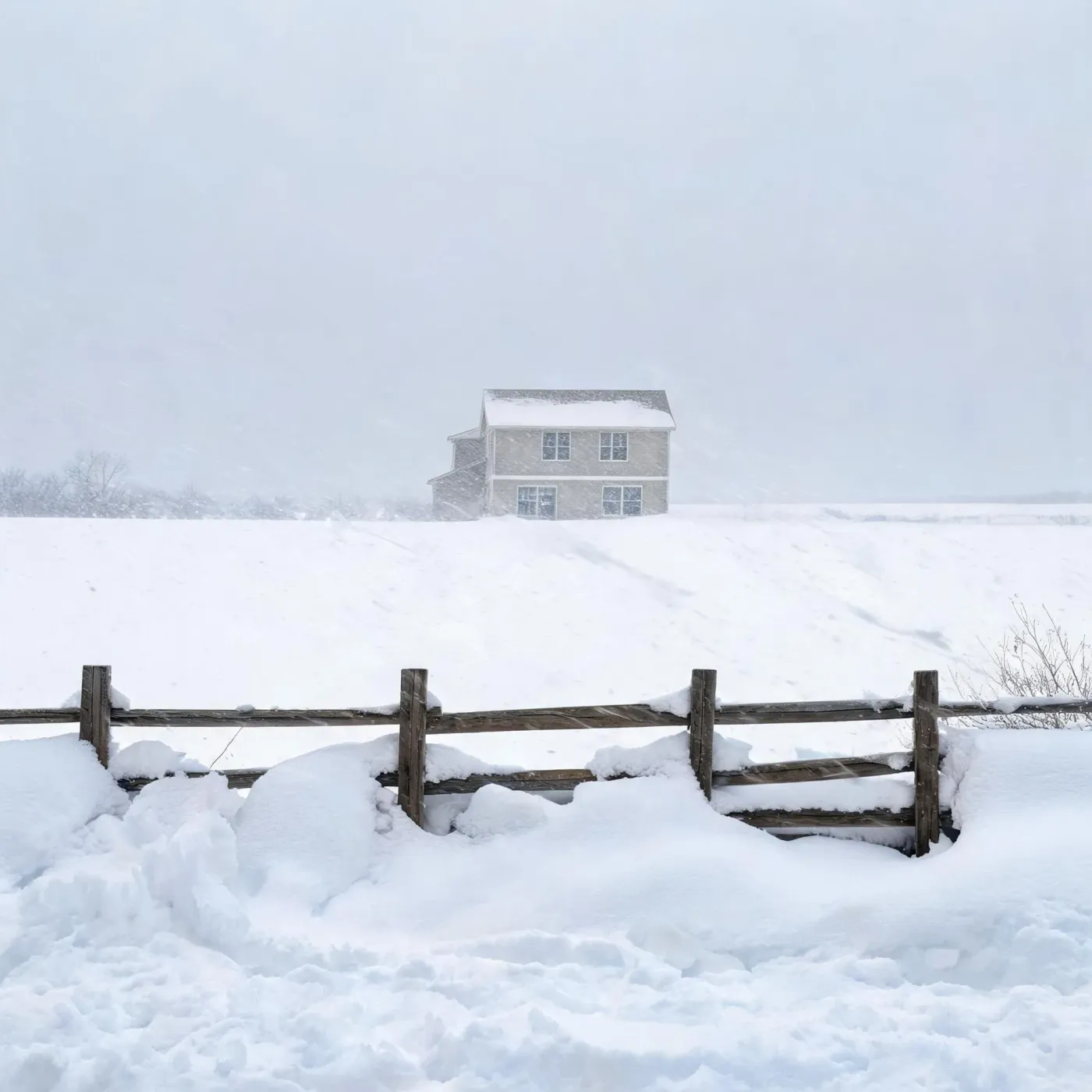
A two-story house with a snow-covered roof stands on a snow-covered field in falling snow, with a partly buried wooden rail fence in the foreground and a pale hazy sky behind.

Winter nights average 23°F statewide, and that number comes from the National Weather Service. At that temperature your furnace isn't cycling a few minutes an hour, it's running long stretches to keep the house even close to comfortable. A dirty filter or a loose duct joint that might only whistle now and then in milder weather gets pushed hard, for hours at a stretch, night after night. That's why the sound seems to show up or get worse once the real cold sets in. The gap doesn't change. The air moving through it does, for longer, more often, because 23°F isn't a cold snap here, it's an ordinary January night.

NOAA nClimDiv 1991-2020 county normals weighted by homes

A woman in a dark gray sweater reclines on a light sofa with eyes closed and a slight smile, under a textured gray blanket with an open book resting on her lap, with a lit table lamp and plant in the background.
A smiling bearded man in a navy crewneck sweater sits at a dinner table with a glass of red wine, plates and glasses in the foreground, in a dimly lit room with a lamp and framed picture behind him.

What the whistle comes down to

  • A whistle means your furnace is pulling air through a gap too small for it, usually a dirty filter or a loose duct seam.
  • Left alone, the blower keeps straining through every long run, and Kansas winters mean a lot of those runs.
  • The sound tells you where to look, but closing the gap and clearing the airflow is a repair job, not a filter swap alone.
  • Finding a contractor on your own means searching, calling around, and explaining the whistle and where it's loudest more than once.
  • Sending the form once replaces all of that, and a licensed contractor near you takes it from there.
  • Nothing about the whistle fixes itself before spring, so the sooner it's checked, the fewer hours the blower spends working harder than it should.

Your furnace is telling you something simple. Air is moving through a space smaller than it should, usually a clogged filter or a seam that's worked loose, and the sound is the blower straining against it. That strain doesn't rest on its own. Kansas winters keep the furnace running long stretches most evenings, and every one of those runs is the blower working harder than it has to.

Knowing where the sound starts is only half of it. Closing the gap, whether that's a filter that needs replacing or a duct joint that needs sealing, is work a contractor does, not something that clears up on its own by spring. Left alone, the whistle stays, and so does the extra load on the blower motor.

What usually slows this down isn't the repair itself, it's getting to someone who can do it. That means searching for furnace repair companies, calling a few, explaining where the whistle is loudest and when it started, then doing it again with the next one while you compare what each one quotes. Sending the form once is what replaces all of that. A licensed contractor serving your area takes it from there, and the back and forth of finding them stops being something you have to manage. The whistle itself won't wait for warmer weather to fix itself, so the sooner the gap gets found and closed, the fewer nights the blower spends pulling air through something it shouldn't have to.

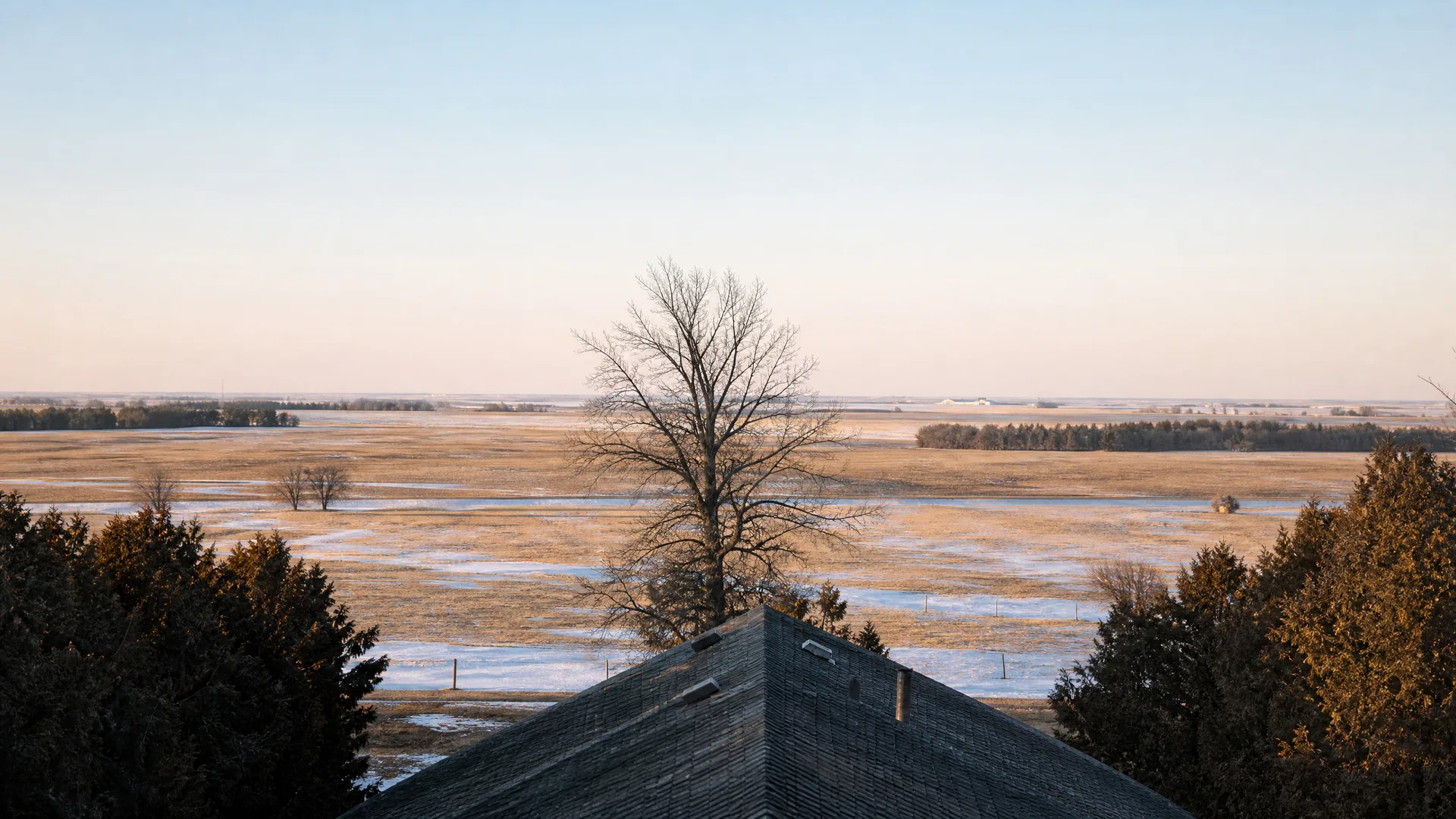
Elevated view over a flat field with patches of snow, a bare deciduous tree at center, evergreen trees at both sides, and the shingled ridge of a roof in the foreground under a pale sky.

Done looking for a furnace pro

Skip the search

You're not committing to anything by asking.

A furnace that whistles all winter is still pulling air through that same tight gap every time it runs. Sending the request once means you're done tracking down who can look at it, and the long cold nights ahead don't have to wear the blower down any further.