

Kansas Furnace Pros

Is a high-efficiency furnace worth it in Leavenworth, KS

Send the form and stop researching installers for the new furnace.

Send my request

For most homes in Leavenworth, a high-efficiency furnace is worth the cost. Winters here are cold enough that your furnace runs for months at a stretch, and a high-efficiency model burns less gas to put out the same heat as a standard one. The difference comes from a second heat exchanger that pulls more warmth out of the exhaust before it leaves the house, instead of sending it up the flue. That gain matters more here than in a place with mild winters, because the furnace is working harder and longer to keep the house warm. The tradeoff is the install itself. A high-efficiency furnace vents through PVC pipe out a sidewall rather than up a metal flue, so the installer has to run new venting and, often, a condensate drain for the moisture it produces. If your house already has that setup, the switch is simpler. If not, it's still usually worth doing given how long your winters run.

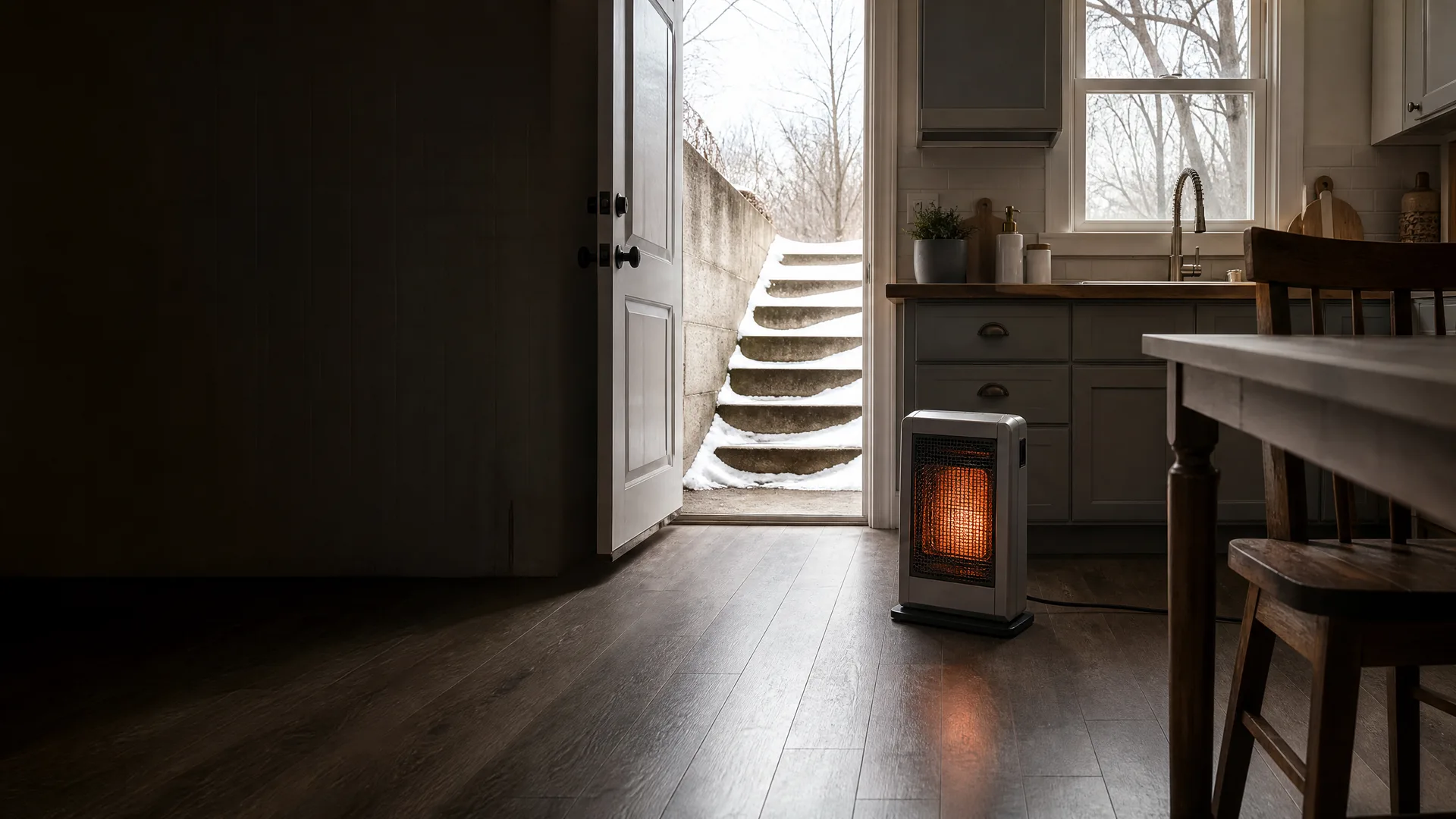
A portable electric space heater with glowing orange elements sits on a dark wood floor near an open exterior door that reveals snow-dusted concrete steps, with a kitchen counter, sink, window and wooden table to the right.

You're standing at the kitchen table with coffee, and the space heater is going because the kitchen hasn't caught up yet. It's one of those late-winter mornings where the cold just sits in the house, the kind Leavenworth County gets plenty of before spring finally shows up. The basement door is open behind you. You can hear the furnace running down there, has been for a while now, and it still hasn't pushed enough heat up through the vents to make the space heater unnecessary. You've got a hand around the mug mostly for the warmth of it. Somewhere under the house, the furnace keeps cycling, working harder than it should have to just to hold this room at a temperature you'd call comfortable.

Standard Furnace or High-Efficiency

Standard efficiency

  • A standard furnace runs around 80 percent efficiency, so about 20 cents of every dollar of gas goes out the flue instead of into your house.
  • It vents through a metal flue pipe, which usually means it can go back in the same spot the old one did.
  • The upfront cost is lower, which matters if the furnace failed in the middle of a cold snap and you need it running fast.
  • It has fewer parts that can fail, since there's no second heat exchanger or condensate system to maintain.
  • Over a long Leavenworth winter, the gas bill runs higher than a high-efficiency furnace heating the same house.

High efficiency

  • A high-efficiency furnace runs 90 percent or higher, pulling more heat out of the same amount of gas before it vents.
  • It vents through PVC pipe out a sidewall instead of a metal flue, which sometimes means new venting has to be run.
  • It costs more to install, and that difference is the trade-off against what it saves on gas over the months it runs.
  • It produces condensate that has to drain somewhere, which adds a condensate line and sometimes a pump.
  • Over months of steady use each winter, the lower gas use adds up to real savings compared to a standard furnace in the same house.
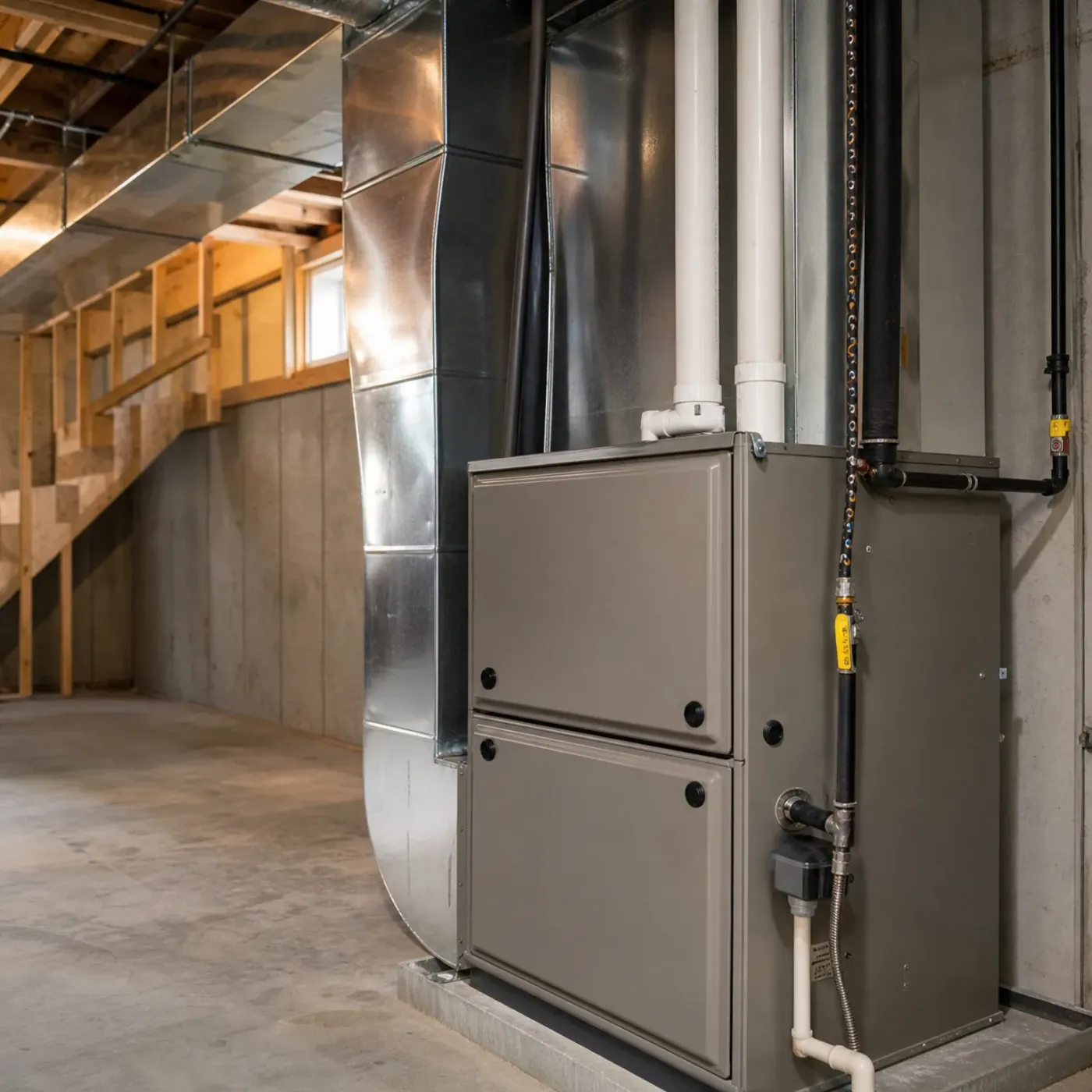
A gray high-efficiency furnace stands on a concrete basement floor beside sheet-metal ductwork, with white PVC vent pipes and a black flexible line running up to exposed wood floor joists, next to a wood-framed post against a concrete wall.

Running the way it should

This is a high-efficiency furnace doing its job, venting through PVC pipe instead of a metal flue. It pulls combustion air from outside, burns the gas twice over to pull more heat from it, and sends the exhaust out cool enough for plastic pipe to handle. The gas lines and ductwork tie in clean, and there's nothing laboring to keep the house warm.


A beige metal furnace with a louvered front panel stands on a concrete floor against a concrete wall, connected to galvanized sheet-metal ductwork and a metal pipe.

Working harder than it should

This older furnace vents through a round metal flue, a sign it's a standard-efficiency unit losing a good share of its heat up the pipe. The black iron gas line and the worn look of the cabinet point to a furnace that's been running long winters in Leavenworth County for years. It still heats the house, but it burns more gas to do it.

How cold does it actually get in Leavenworth, and how long does your furnace run?

  • Winter nights average 23°F

    Overnight lows average 23°F through December, January and February. That's cold enough that your furnace is running most of the night, not cycling on for a few minutes here and there.

  • Heat runs October through April

    Heat runs October through April in Leavenworth County. That's seven months of gas use, which is most of the year your furnace is doing real work.

  • 60.2% of homes heat with gas

    60.2% of homes in the county heat with gas. If yours is one of them, the efficiency rating on your furnace decides how much of that gas actually turns into heat.

NOAA nClimDiv 1991-2020 · ACS 2020-2024

A gray high-efficiency furnace in a basement with PVC vent pipes, sheet-metal ductwork, copper and insulated pipes, a water heater at left, and an unfinished wood-stud wall at right.
A high-efficiency furnace like this one runs most of the winter without much strain, even on the coldest Leavenworth nights.
An older beige furnace with louvered front panels stands on a concrete basement floor beside galvanized ductwork, metal and plastic pipes, exposed wood framing, and a cylindrical water heater at right.
An older standard furnace like this one has to work harder in the same cold, and it's losing more heat out the flue the whole time.
A gray-haired man in a blue quarter-zip sweater sits in an armchair with his eyes closed, beside a large window with bare trees outside and a potted plant and lamp nearby.
A woman in a cream knit sweater sits in an armchair with her eyes closed and head tilted back, beside a window showing orange autumn foliage and a wooden side table with a mug.
A gray high-efficiency furnace in an unfinished basement, connected to large galvanized sheet-metal ductwork, PVC vent pipes, a gas line and flexible conduit, with concrete walls, wood framing and a staircase in the background.

Stop chasing a furnace pro

A licensed installer who works in Leavenworth County gets your project.

One request ends the search for a furnace installer.

Find a local pro

It costs nothing to send, and you don't have to hire anyone.

Why does a high-efficiency furnace need PVC pipe instead of a metal flue?

You've probably noticed the two white pipes running out through the siding on a high-efficiency furnace instead of the old metal flue through the roof. It looks like a downgrade, PVC instead of metal, but it's there because the furnace itself works differently. If you're weighing a high-efficiency unit for your house, it helps to know why that pipe changed and what it means for where the furnace can go.

The exhaust is cool enough for plastic pipe, not metal

A standard furnace sends exhaust up the flue hot, so it needs metal pipe to handle the heat. A high-efficiency furnace pulls so much more heat out of the gas before the exhaust leaves that the exhaust comes out cool, usually under 100 degrees. PVC pipe can handle that without any trouble, and it's cheaper and easier to run than metal. That's also why the vent doesn't need to go straight up through the roof anymore. It can run sideways through a wall, which is why you'll see those two white pipes on the side of the house instead of a flue on the roof. One pipe vents the exhaust, the other pulls in outside air for the burner.

  1. Gas burns inside a primary heat exchanger first

  2. Hot exhaust passes into a second heat exchanger

  3. A condensate drain carries off the cooled exhaust water

  4. An inducer motor pushes the cool exhaust out through PVC

An older gas furnace with two white PVC vent pipes stands on a concrete basement floor beside galvanized sheet-metal ductwork, flexible conduit, and piping along a wall.
Before you get your furnace installation
A gray high-efficiency furnace with white PVC venting pipes stands on blocks in a basement next to sheet-metal ductwork, with exposed wood framing on the left and a concrete wall and floor.
After you get your furnace installation

Where This Leaves You

  • A high-efficiency furnace is worth the cost for most Leavenworth homes given how many months it runs each winter.
  • The gas savings come from venting that loses less heat, not from a bigger or faster furnace.
  • PVC venting through the wall and a condensate drain are the two visible differences from a standard furnace.
  • Overnight lows near 23°F for three months straight mean the furnace runs long hours, not short cycles.
  • A standard furnace sends about 20 cents of every gas dollar out the flue instead of into the house.
  • The choice comes down to how long you plan to stay and how your current furnace is holding up.

A furnace in Leavenworth isn't idling most of the year. It's working through December, January and February nights near 23°F, and that's the whole case for paying more up front. A standard furnace does the job, but it loses about 20 cents of every gas dollar out the flue while it does it. A high-efficiency furnace keeps more of that heat in the house, and it does it through a second heat exchanger, a condensate drain, and PVC pipe venting through the wall instead of a metal flue through the roof. None of that changes how warm your house gets. It changes what you burn to get there.

Whether it pencils out for you depends on two things nobody else can answer. How long you plan to stay in the house, since the gas savings add up year over year and mean less if you're selling soon. And how your current furnace is doing right now, since a furnace that's already struggling is a different decision than one that's just old. If you're planning to be in the house for years and your winters look like the last few, the math favors high-efficiency. If you're weighing a patch job against a replacement on a furnace that's on its last legs, that's a narrower question, and it's worth getting a straight answer on what's actually failing before you decide which way to go.

A man in a gray sweater reclines in a brown leather armchair with his eyes closed, beside a wooden side table holding a mug, a folded newspaper and a potted plant, with a bookshelf and sunlit window behind him.
A man with greying hair and a dark sweater leans back on an armchair with his eyes closed and a slight smile, in a living room with a bookshelf, plant, folded newspaper and mug on a wooden table.
A man in a gray fleece jacket sits reclined in a leather chair with his eyes closed, in a room with bookshelves, a table lamp, a window, and a desk holding a folded newspaper and a dark mug.
A bearded man in a gray fleece pullover sits with eyes closed in a brown leather armchair in a living room, with a floor lamp, bookshelf, potted plants, a side table holding newspapers and a dark mug, and a bright window behind him.

Furnace Installation

Send one request and you're done looking

One installer gets your project, so there's no bidding war over it.

A smartphone with a blank green screen stands upright against a plain light gray background.
Step 1 of 3: Equipment