Profile view of a bearded man wearing a black baseball cap and a dark gray T-shirt against a plain light background.

How to restart a furnace after a Kansas power outage

Step 1 of 3: Equipment

Most gas furnaces will not turn back on by themselves once power comes back after an outage. The thermostat usually needs a nudge, and the furnace itself has a safety switch that can trip during a sudden power loss and stay tripped until someone resets it. Start at the thermostat: check that it still shows your normal heat setting and hasn't reset to a default. If the furnace still won't fire, check the switch on the furnace itself, which looks like a light switch and is usually mounted on or near the unit, and make sure it's in the on position. Some furnaces also have a reset button on the control board, often small and red. If you've checked the thermostat and the switch and the furnace still stays quiet, something else likely tripped during the outage, a limit switch, a flame sensor, or the control board itself, and that's a repair job, not a reset.

A bearded man in a plaid flannel shirt stands in a kitchen looking out a window toward snow-covered shrubs, with a steaming mug on the windowsill and potted plants on a shelf behind him.
A smiling man with dark curly hair in a navy t-shirt sits on a gray couch indoors, with a large-leafed plant and a window in the background.

When power comes back, the furnace's control board starts over from scratch. It checks the pressure switch and the limit switch before it lets the inducer motor spin up. That motor has to prove it's actually pulling air through the vent before the igniter gets the go-ahead to glow. If the thermostat screen is dark, look at its batteries first. An outage can drain them or knock the display out even after the power's been restored, and it has nothing to do with the furnace itself. Bumping the thermostat a few degrees above room temperature gives the system a fresh call for heat rather than waiting on the old setting to catch up. Somewhere on the blower door there's usually a reset button, often red, and it needs a real press, held for a second, not a quick flip. If the furnace tries to light three times in a row and can't, the control board shuts itself down. At that point it needs a full power cycle before it will try again.

What Happens When Power Returns

  • The furnace's control board runs through a startup sequence every time it gets power, checking the pressure switch and the limit switch before it calls for ignition.
  • If the thermostat screen is blank after the outage, check its own batteries before assuming the furnace is the problem.
  • The inducer motor has to prove it's pulling air through the vent before the igniter is allowed to glow.
  • A reset button on the furnace's blower door, often red, feeds power to the whole unit and needs a firm press, not a flip.
  • Setting the thermostat a few degrees above room temperature forces a fresh call for heat instead of waiting on the old setting to trigger one.
  • If the furnace tries to light three times and gives up, the control board has locked itself out and needs a full power cycle to try again.
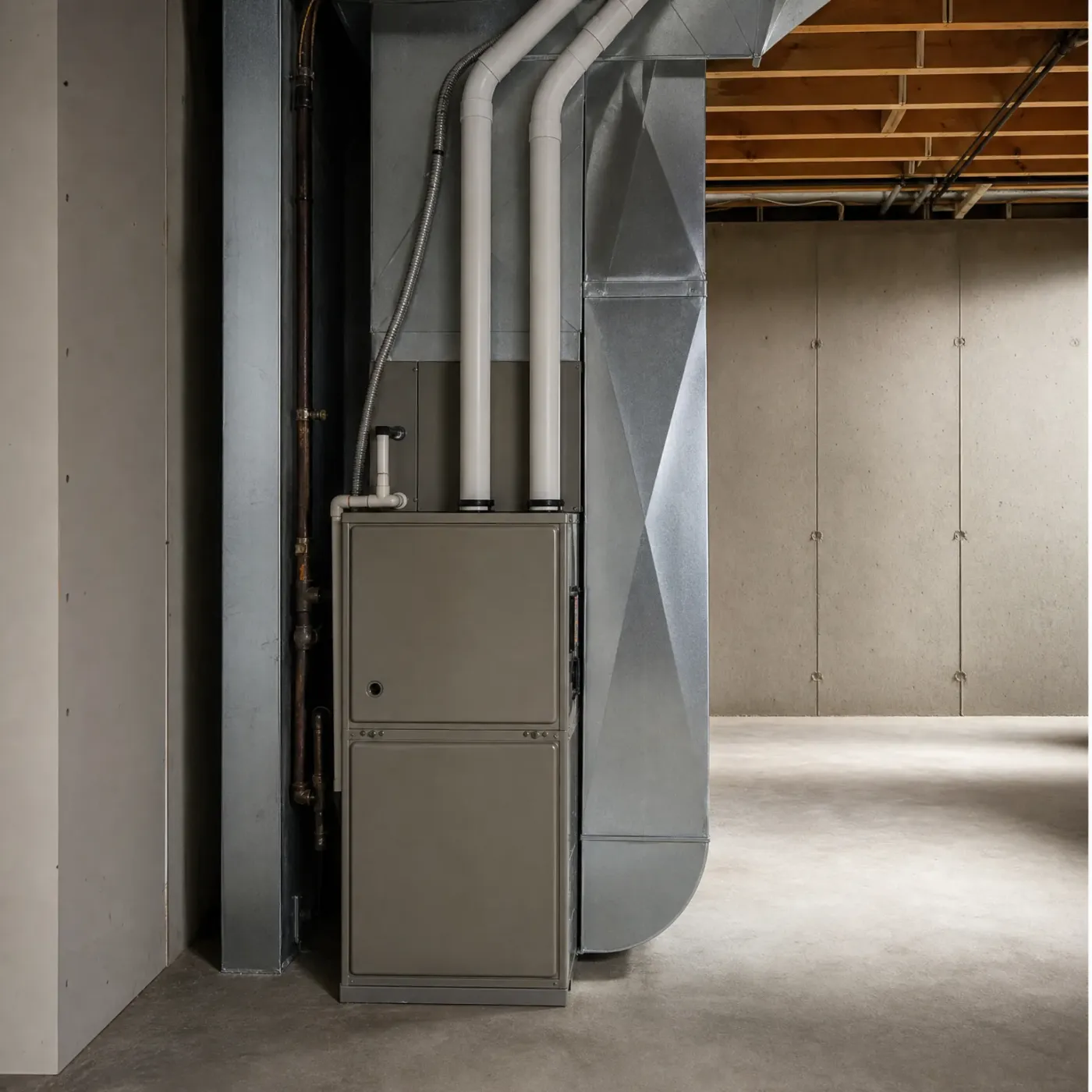
A gray high-efficiency furnace with white PVC vent pipes stands beside sheet-metal ductwork and a water heater in an unfinished basement with concrete walls and wood framing.
Furnace comes on, runs its cycle, and warm air moves through the ducts with no burning smell and no short-cycling.
A beige gas furnace with a metal flue pipe stands in a basement against concrete block walls, beside sheet-metal ductwork, copper and white plastic pipes, and a water heater at right.
Furnace stays dark after a reset attempt, or it fires and shuts off again within a minute or two.
A woman in a gray turtleneck sweater stands by a window looking outside at snowy ground, with a dimly lit living room containing a sofa, shelves, lamp and a lit candle behind her.
A woman in a cream cable-knit turtleneck sweater stands in a warmly lit living room with a fireplace and shelves behind her, looking out a window toward snow-covered trees and a railed deck.
A woman in a cream knit turtleneck sweater stands by a window looking out at snow, with a lit fireplace, sofa and lamp in the room behind her.
A woman in a gray knit sweater sits by a window looking out at falling snow, with a dimly lit living room containing a sectional sofa, pillows, a lamp and houseplants behind her.

Get your furnace to the right pro

Describe what your furnace is doing once, in one form.

No fee to send it, and nothing to sign.

A beige high-efficiency furnace in an unfinished basement, with white PVC vent pipes, a yellow gas line, metal ductwork, and exposed wood framing on a concrete floor.

Furnace resets and runs clean

Power comes back, you bump the thermostat up a few degrees, and the furnace lights within a minute or so. Air moves through the ducts warm and steady, with no burning smell and no clicking on and off. That's a normal reset.


An older beige furnace with two louvered vent panels stands on a concrete basement floor, connected to galvanized ductwork and a metal flue pipe, with gas piping and flexible conduit on the wall behind.

Furnace won't catch, or won't stay lit

You reset it and nothing happens, or it fires for a few seconds and goes dark again. The flue pipe and gas line are doing their job, but something downstream, a switch or the igniter, isn't letting the cycle finish.

Why won't my furnace come back on after the power went out?

Walk through the house and the clues are usually plain. The thermostat screen might be blank or stuck on a setting that does not match the room. Vents feel cold or push out nothing at all. Sometimes the furnace clicks and tries to light, then goes quiet again, over and over. Sometimes you hear nothing from it at all. If a Kansas cold snap is what tripped the outage in the first place, a furnace that will not restart means pipes losing their cushion against freezing the longer it sits, and a house that keeps dropping degrees while everyone's waiting on it to kick back on.

A gray high-efficiency furnace in a basement, connected to sheet-metal ductwork on the left and white PVC vent pipes above, with black gas and drain piping and an exposed wood-stud wall with OSB sheathing on the right.

Running clean after reset

This is what a normal restart looks like. The furnace fires, the burners stay lit, and warm air pushes steadily through the ductwork into the house. No rattling, no burning smell, no short-cycling. If yours looks like this after a power outage, it's doing its job.

An older gas furnace with two louvered front panels stands on a concrete basement floor beside galvanized sheet-metal ductwork, pipes, and a weathered concrete wall.

Still not right

This furnace is older, and the panels and pipes around it show some wear. After an outage, a unit like this is more likely to need more than a simple reset, a tripped switch that won't hold, a pressure problem, or a part that's finally given out under the strain.

A gray sheet-metal furnace with flue pipe and adjacent ductwork stands against a stone basement wall on a concrete floor, with white PVC and metal pipes running nearby.
Before you get your furnace repair
A gray high-efficiency furnace with white PVC vent pipes stands against a concrete basement wall beside sheet-metal ductwork, a small condensate pump on the floor, and exposed wood framing at left.
After you get your furnace repair
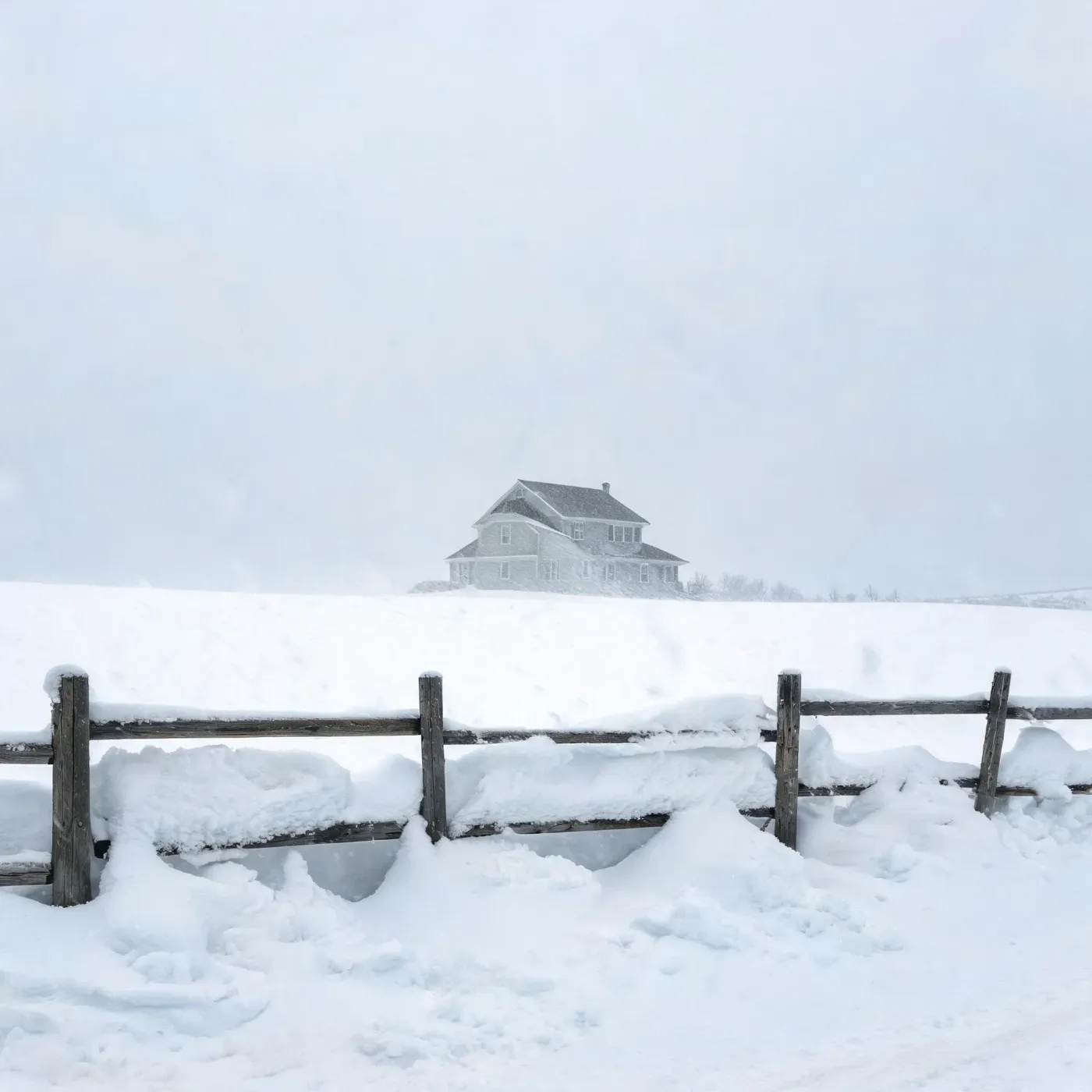
A two-story gabled house stands on a snow-covered rise under a pale overcast sky, with a snow-laden wooden rail fence crossing the foreground.

Kansas winter nights average 23°F across the state, according to NOAA climate data. At that temperature your furnace isn't cycling on for a few minutes here and there. It's running long stretches to keep the house livable, and after a power outage, that's exactly when you need it back online fast. A furnace that stays dark on a night like that cools a house quickly, and pipes along outside walls start to matter. If the power flickered off overnight and comes back while you're asleep, check the thermostat and the furnace itself as soon as you're up. Waiting until the house feels cold means you're already behind.

NOAA nClimDiv 1991-2020 county normals weighted by homes

A woman in a cream cardigan and jeans stands with one hand raised facing an open front door of a gray horizontal-siding house, with a black lantern wall light, a potted shrub with yellow flowers, and a stone-faced porch column.

So where does that leave you

Power comes back, you reset the thermostat, and either the furnace lights and holds or it doesn't. If it runs clean through a full cycle with warm air steady at the vents, you're done. If it fires and quits, or stays dark after a fair try, something past a reset is wrong, and at 23°F outside that's not a thing to sit on.

If you're at that point, the next step isn't more troubleshooting on your own. It's getting matched with a contractor who knows gas furnaces and this kind of outage trouble, one who'll call you directly instead of you working down a list of numbers, repeating the same description of what the furnace did and didn't do, and weighing quotes against each other with no way to compare them fairly. That part of it is off your plate once you ask for it.

A living room corner with a light beige sofa holding a textured taupe cushion, a large ceramic vase of olive branches by a window, a framed neutral artwork on the wall, and a dark bowl with stacked books in the foreground.
A gray high-efficiency furnace in an unfinished basement, connected to sheet-metal ductwork and two white PVC vent pipes, with copper piping and exposed wood floor joists nearby.

The right pro for this job

Connect with a pro

Answer a few questions instead of calling shop after shop.

Sending the form costs nothing.