A furnace that's ready for it
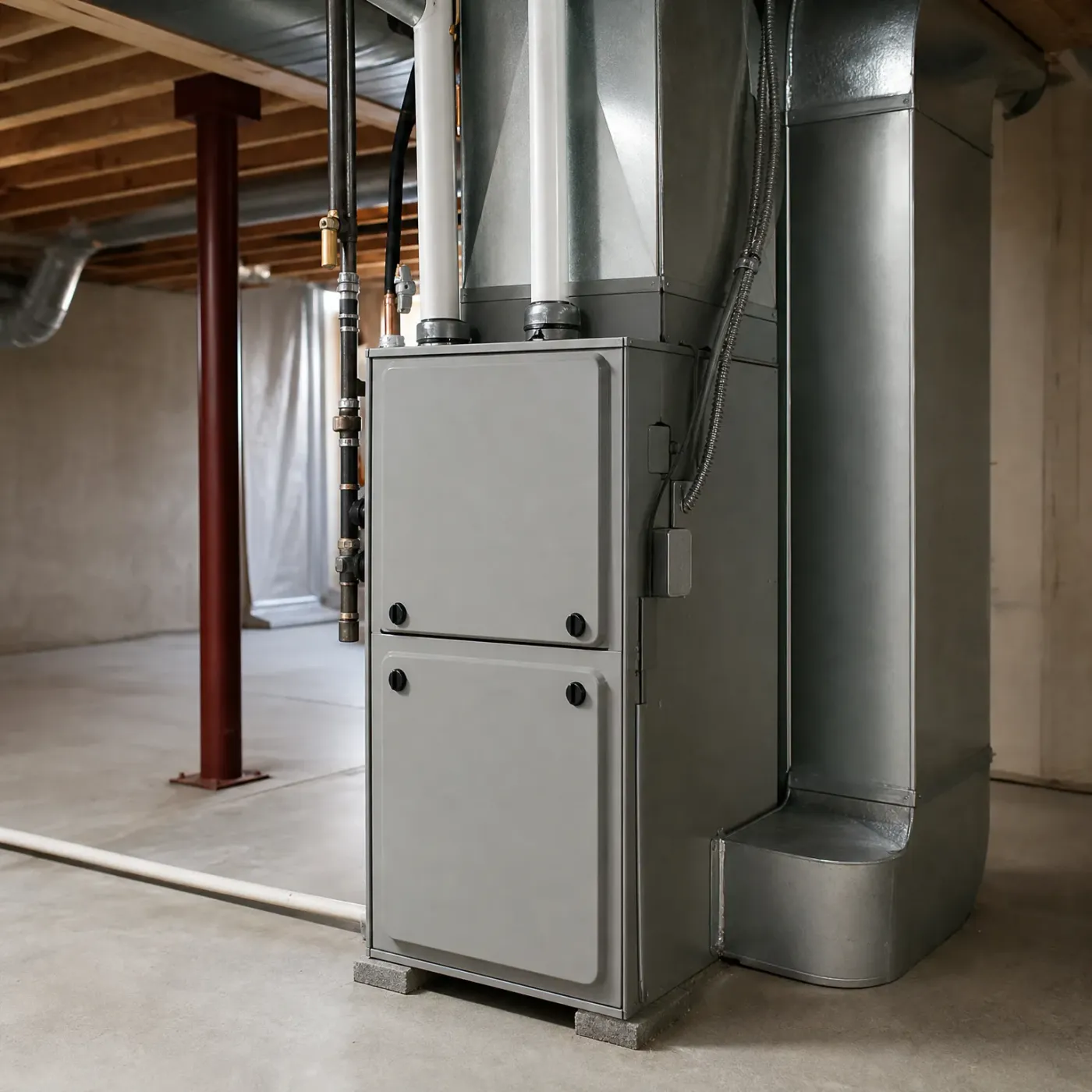
This is what a tuned-up furnace looks like going into winter. The flue pipes are clear, the ductwork plenum is sealed tight, and the burners fire clean. Nothing here is guessing what October will bring.

A furnace tune-up before winter means having a contractor check and clean your furnace while it's still mild out, so it's ready when Wyandotte County turns cold. The technician checks the igniter, cleans the flame sensor, tests the gas pressure, and inspects the heat exchanger for cracks. A furnace that sat idle since spring can have a layer of dust on its burners or a flame sensor too coated to hold a signal, and either one can keep it from starting on the first cold morning. Catching that in October or November means it gets fixed on a mild day instead of a night when it's 20 degrees outside and the furnace won't fire. Most homes here heat with gas, and a gas furnace that's been checked over runs cleaner and safer through the months it carries the full load. Scheduling it now, before the cold sets in, is what makes it a tune-up instead of an emergency repair call.




A furnace fires in a specific order, and a tune-up follows that order to find where it breaks down. The inducer motor has to clear exhaust from the heat exchanger before the igniter gets the signal to fire. If that motor is weak, the furnace hesitates or won't start at all. Once it lights, the flame sensor has to see it burning. A film of dust or corrosion on that sensor reads as no flame, and the gas valve shuts even though the furnace is working fine. A technician also checks gas pressure, since pressure set too low means the air coming out of your vents never gets quite as warm as it should. The heat exchanger itself gets inspected for cracks or corrosion, because a damaged one can let exhaust mix into the air moving through your house. Wiring at the control board gets checked too. Loose connections there show up as a furnace that runs a few minutes and shuts off for no clear reason. A filter check matters as well, since a clogged one chokes airflow and the furnace overheats before your house warms up.





This is what a tuned-up furnace looks like going into winter. The flue pipes are clear, the ductwork plenum is sealed tight, and the burners fire clean. Nothing here is guessing what October will bring.

This older furnace still runs, but nobody's looked at the flue connection or the burners since last winter. A cracked heat exchanger or a loose flue joint doesn't announce itself. It just waits for the first cold morning in Wyandotte County to fail.


Fill out one form instead of calling around for a furnace tune-up.
Send the form and the furnace tune-up stops being something to remember.
You're not committing to anything by asking.
Maybe it's a smell of dust burning off the first time you run the heat, or a clatter when the blower kicks on. Maybe a room upstairs never gets as warm as the rest of the house, or the furnace runs longer than it used to just to hold the same temperature. A yellow flame instead of blue is worth noticing too. None of this means you're without heat tonight. Left alone through a Wyandotte County winter, a small issue like a dirty sensor or a weak igniter is what turns into a furnace that won't start on the morning you need it most.

This is a furnace running the way it should. The ductwork is intact, the flue pipes sit clean, and nothing around the unit shows strain. A furnace like this was checked before the cold set in and the contractor found nothing to flag.

Rust like this on the cabinet or the pipes means moisture has been sitting somewhere it shouldn't. A furnace in this shape can still run, but it's working harder than it needs to, and it's the kind of thing a tune-up catches before it becomes a no-heat call.
At 23°F, your furnace is running most of the night, not just kicking on now and then. That's hours of steady work on the igniter and blower every single night from December through February, which is exactly why a check beforehand matters more here than somewhere milder.
NOAA nClimDiv 1991-2020
A furnace tune-up before winter comes down to one thing: having someone check the igniter, the flame sensor, the gas pressure, and the venting while there's still time to fix whatever turns up. That's the whole job. Do it in October and a contractor can work it into your schedule instead of squeezing you in between emergency calls once the cold snap hits and every furnace in Wyandotte County wants attention at the same time. Skip it and you're betting the furnace holds up on its own, and the morning it doesn't is usually the coldest one of the year, not the mildest.
The part of this that actually wears on people isn't the furnace, it's finding someone to look at it. Calling around Wyandotte County, explaining the same thing to four different shops, waiting on quotes, trying to tell which one knows what they're doing. Send one form and that work is gone. You're not vetting anyone or comparing bids. A contractor gets in touch, looks at the furnace, checks what needs checking, and clears it or fixes it.
Once that's done, you're finished with it. Not finished thinking about the furnace entirely, nobody's furnace is maintenance-free, but finished with this round of it. It'll fire on the first try in December, run through the cold stretch in January, and still be doing its job in February without you standing over it. That's what the check buys. Nothing dramatic, just a furnace that works when it's asked to.





Skip calling around to set up a furnace tune-up.
It costs nothing to send, and you don't have to hire anyone.