Tell us about the job
Takes about a minute. No obligation.
Sizing a furnace for a Cheyenne County home means sizing it for a workload that runs through most of the calendar, not a mild or occasional one. Homes in Cheyenne County, KS run heat about eight months a year, from October through May. The burner and heat exchanger cycle through that demand repeatedly, and a unit that leaves the house undersupplied on the coldest days runs longer and harder than one matched to the actual load. A contractor quoting a replacement here has to establish that load precisely before anything else, because an install that is slightly off shows its flaw sooner than it would somewhere the equipment spends more of the year at rest.
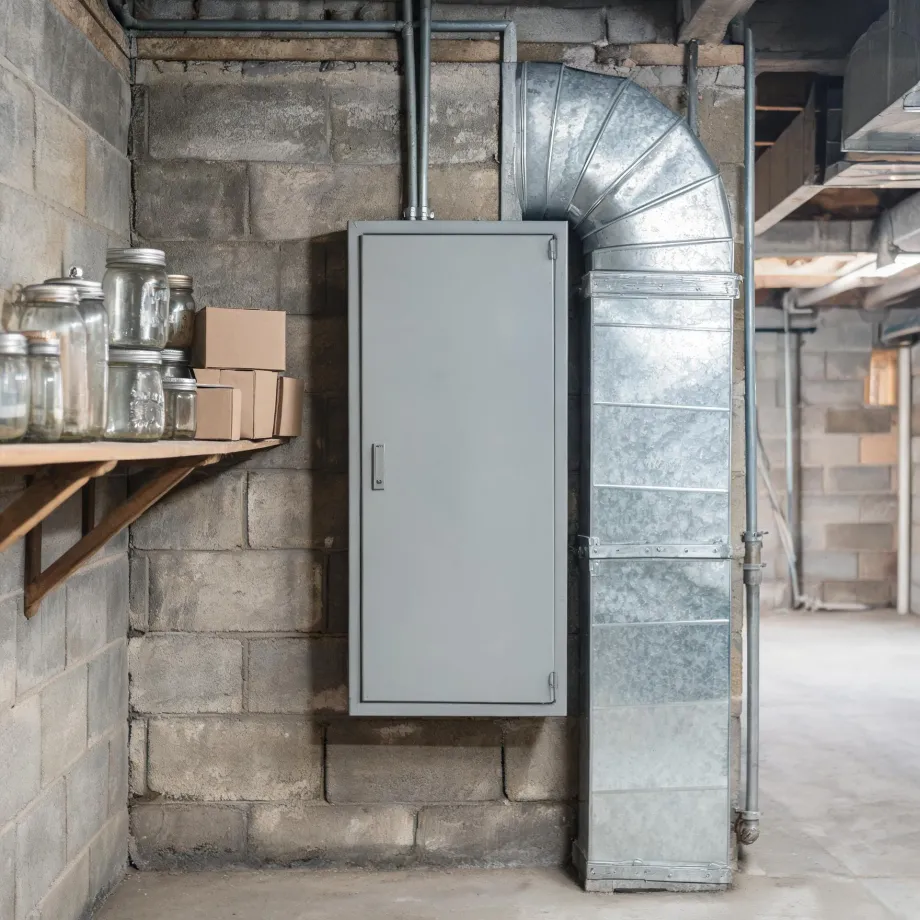
Ductwork sized for a previous generation of equipment does not automatically carry a new furnace well. A contractor pricing an installation here has to assess what is already in the walls before the equipment selection means much, because the duct layout and the electrical service reflect what the house was built around, not what runs in it now. Half the homes in Cheyenne County, Kansas were built in 1951 or earlier (2020-2024 ACS 5-year). That gap is where installation jobs in this county get complicated or stay simple.
What Gets Installed With a New Furnace
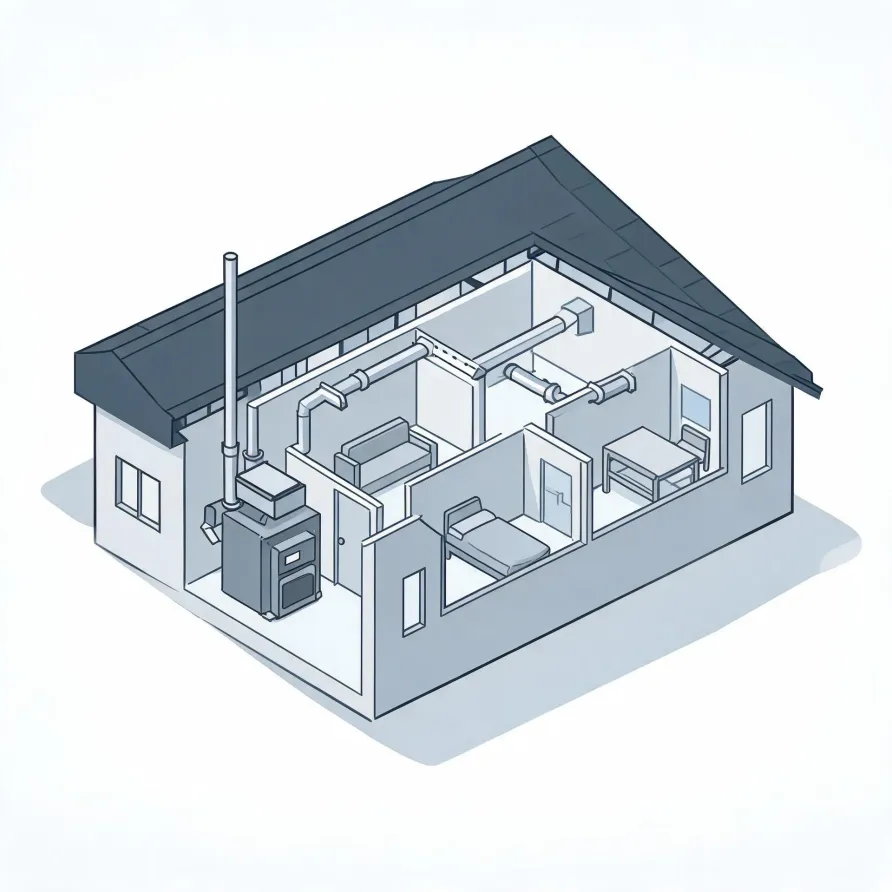
The furnace itself sits in the basement, utility room, or crawl space and is the central unit a homeowner is buying. Inside it, the heat exchanger, burners, and blower motor are the parts that get set into place. The burners fire the fuel, the heat exchanger contains the combustion, and the blower motor pushes conditioned air outward.
The flue pipe runs from the furnace up and out of the house, giving combustion gases a path to exit. The thermostat mounts on an interior wall and is the control point a homeowner touches. A new furnace installation also brings a fresh air filter housing into place at the return-air opening, where it catches particulates before they reach the unit.
The drawing shows a typical layout, and a licensed contractor determines exactly what applies to this house.
Get matched in Cheyenne CountyCheyenne County, Kansas, by the numbers
306 severe weather events were recorded in Cheyenne County, Kansas between 2015 and 2024.
NOAA National Centers for Environmental Information, Storm Events Database, bulk CSV export, events 2015-01-01 through 2024-12-31.Half the homes in Cheyenne County, Kansas were built in 1951 or earlier (2020-2024 ACS 5-year).
U.S. Census Bureau, 2020-2024 American Community Survey 5-Year EstimatesCheyenne County, Kansas holds 1,455 housing units (2020-2024 ACS 5-year).
U.S. Census Bureau, 2020-2024 American Community Survey 5-Year EstimatesOwners occupy 77.9% of the occupied homes in Cheyenne County, Kansas (2020-2024 ACS 5-year).
U.S. Census Bureau, 2020-2024 American Community Survey 5-Year EstimatesFurnace Installation Rules on the Books for Cheyenne County, Kansas4 sourced standards and codes
What the installation actually looks like
Non-weatherized gas furnaces manufactured on or after November 19, 2015 must reach 80.0 percent AFUE.
Non-weatherized oil-fired furnaces manufactured on or after November 19, 2015 must reach 83.0 percent AFUE.
Mobile home gas furnaces manufactured on or after November 19, 2015 must reach 80.0 percent AFUE.
Non-weatherized gas furnaces manufactured on or after December 18, 2028 must reach 95.0 percent AFUE, up from the 80.0 percent minimum that applies to units manufactured before that date.
Severe Weather Events in Cheyenne County
Weather puts direct strain on heating equipment, and what the climate does in this part of Kansas shapes how hard a furnace has to work and how reliably it needs to hold up. A contractor sizing and installing equipment here accounts for local conditions, not regional averages.
306 severe weather events, 2015–2024. Source: NOAA National Centers for Environmental Information, Storm Events Database.