Tell us about the job
Takes about a minute. No obligation.
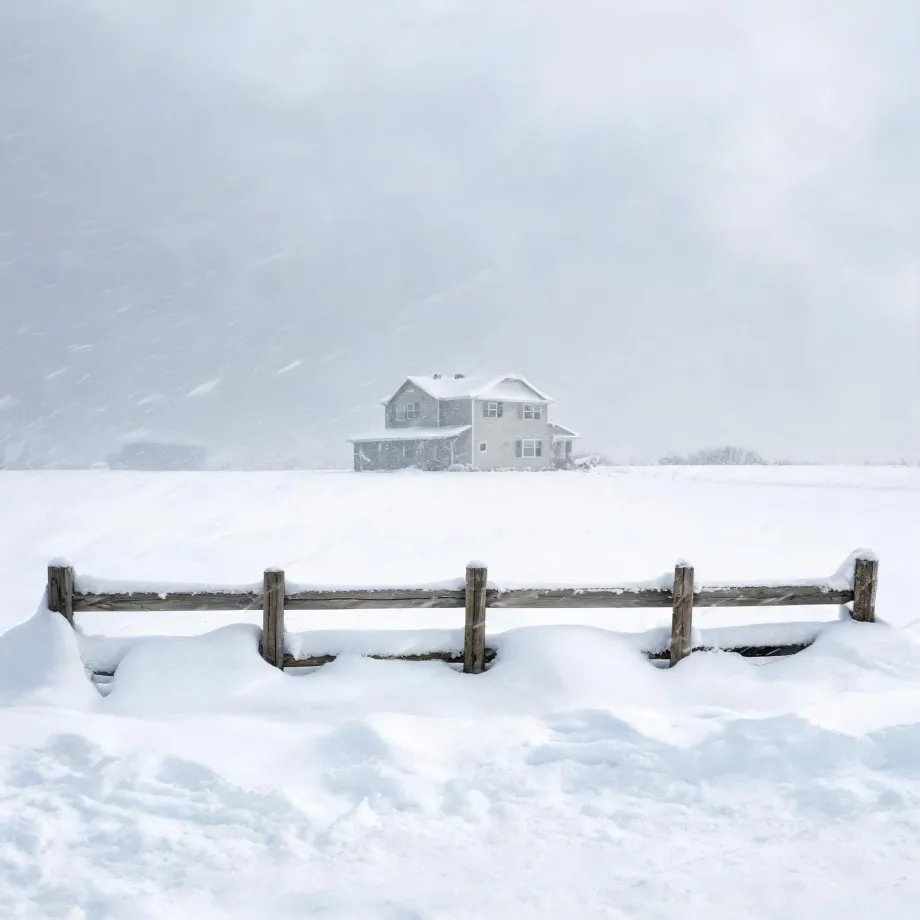
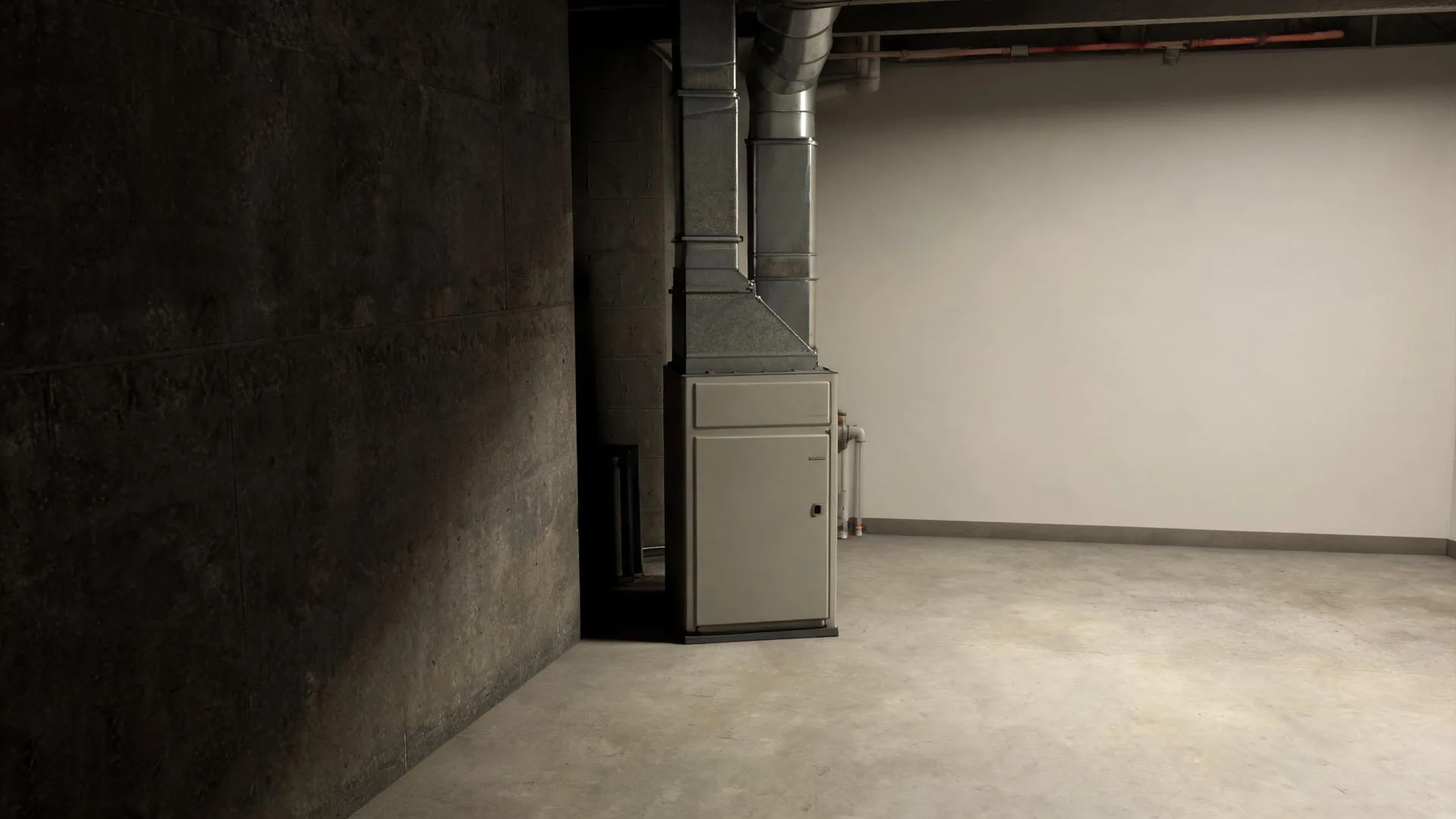
Sizing a furnace for a Marshall County home means accounting for a long, sustained demand on the burner and heat exchanger, not a brief seasonal push. Homes in Marshall County, KS run heat about seven months a year, from October through April. The ignition system cycles every time the furnace kicks on, and the heat exchanger flexes with every firing. A contractor running a load calculation here has to get that sizing right from the start, because an undersized or poorly sealed installation has nowhere to hide across a heating season that long. Ductwork leaks, a loose flue connection, or a combustion air shortfall all compound over months of continuous use.
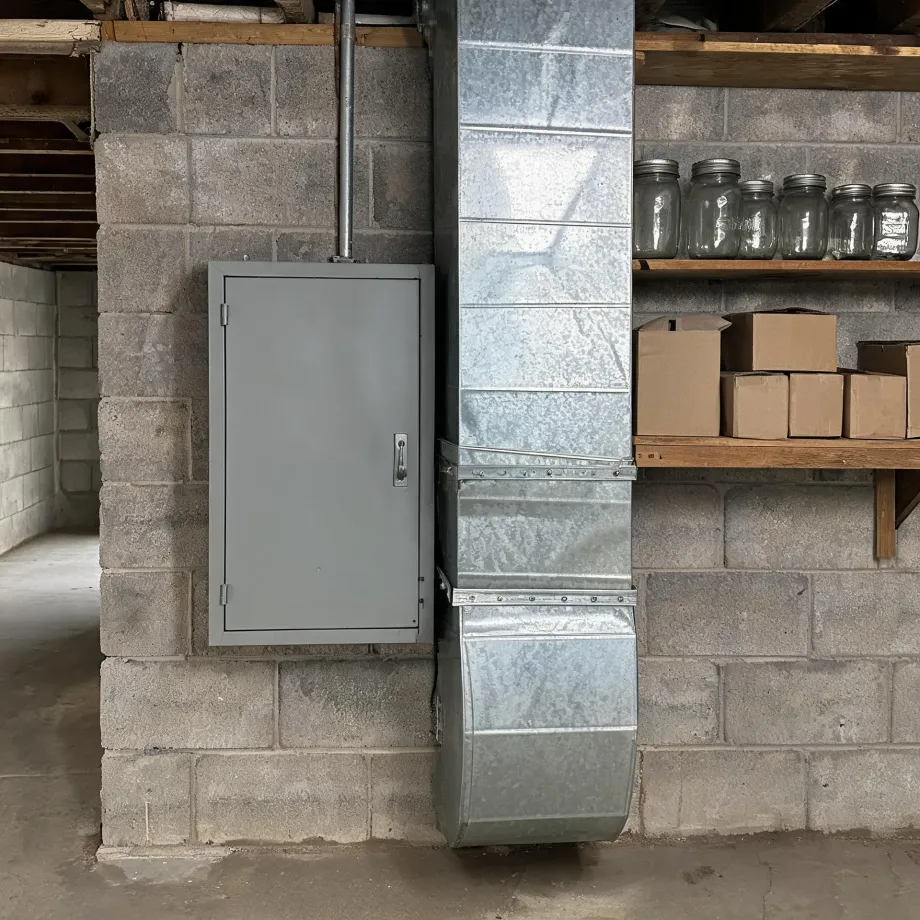
Ductwork laid out for the heating systems these houses were originally built around was not engineered for what a current furnace moves. Half the homes in Marshall County, Kansas were built in 1959 or earlier (2020-2024 ACS 5-year). That gap between the original duct layout and what a new unit actually needs is where a furnace installation either holds or stalls. A contractor sizing a new furnace here has to assess whether the existing trunk lines and branch runs can carry the airflow before the equipment selection means anything. If they cannot, the ductwork becomes the job, and the furnace comes second.
What Gets Installed With a New Furnace
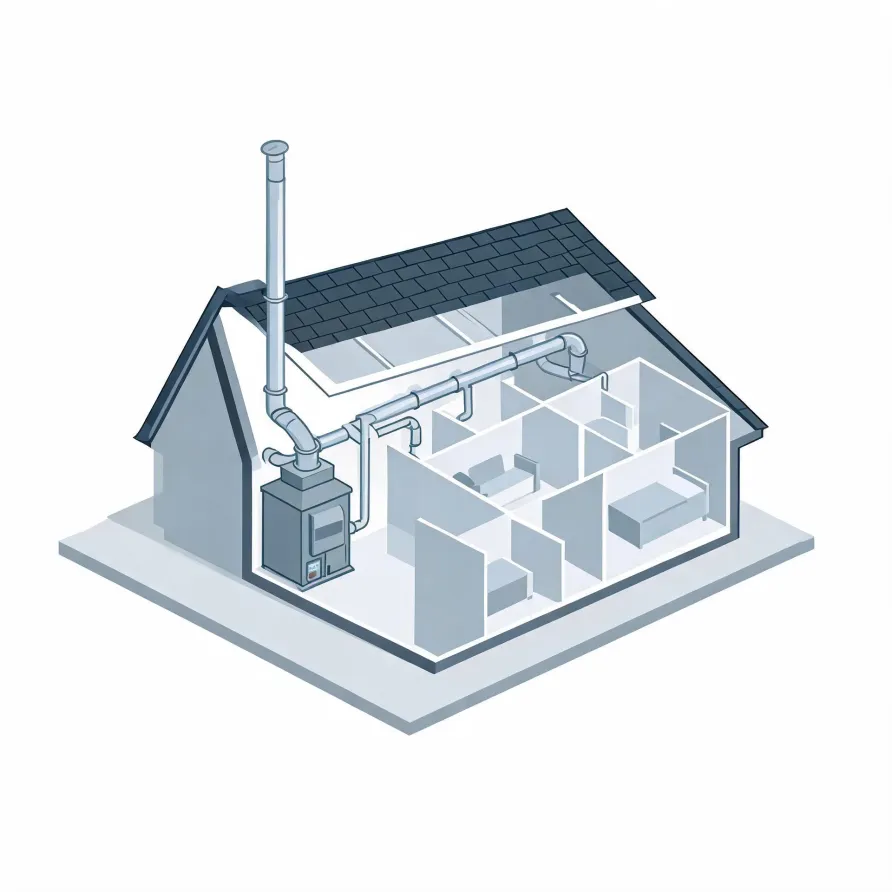
The furnace itself sits in the basement, utility room, or mechanical closet and is the unit that produces heat for the house. Attached to it is the flue or vent pipe, which runs to an exterior wall or up through the roof and carries combustion gases out of the home.
The air handler and blower assembly, housed inside the furnace cabinet, push conditioned air into the duct system. The thermostat mounts on an interior wall and is the control point that tells the furnace when to fire and when to stop.
The drawing shows a typical layout, and a licensed contractor determines which components and configurations apply to your specific home.
Get matched in Marshall CountyMarshall County, Kansas, by the numbers
172 severe weather events were recorded in Marshall County, Kansas between 2015 and 2024.
NOAA National Centers for Environmental Information, Storm Events Database, bulk CSV export, events 2015-01-01 through 2024-12-31.Half the homes in Marshall County, Kansas were built in 1959 or earlier (2020-2024 ACS 5-year).
U.S. Census Bureau, 2020-2024 American Community Survey 5-Year EstimatesMarshall County, Kansas holds 4,751 housing units (2020-2024 ACS 5-year).
U.S. Census Bureau, 2020-2024 American Community Survey 5-Year EstimatesOwners occupy 80.0% of the occupied homes in Marshall County, Kansas (2020-2024 ACS 5-year).
U.S. Census Bureau, 2020-2024 American Community Survey 5-Year EstimatesFurnace Installation Rules on the Books for Marshall County, Kansas4 sourced standards and codes
What the installation actually looks like
Non-weatherized gas furnaces manufactured on or after November 19, 2015 must reach 80.0 percent AFUE.
Non-weatherized oil-fired furnaces manufactured on or after November 19, 2015 must reach 83.0 percent AFUE.
Mobile home gas furnaces manufactured on or after November 19, 2015 must reach 80.0 percent AFUE.
Non-weatherized gas furnaces manufactured on or after December 18, 2028 must reach 95.0 percent AFUE, up from the 80.0 percent minimum that applies to units manufactured before that date.
Severe Weather Events in Marshall County
Weather extremes put direct stress on heating equipment, shortening service life and driving demand at the worst moments. Furnace installation in Marshall County is a local decision partly because local conditions shape how hard that equipment has to work.
172 severe weather events, 2015–2024. Source: NOAA National Centers for Environmental Information, Storm Events Database.