Tell us about the job
Takes about a minute. No obligation.
Sizing a furnace for a Butler County house is not a calculation a contractor can borrow from a neighboring county and call close enough. The burner, heat exchanger, and ignition components carry the full weight of the local heating demand, and a system that was sized short or installed without a proper load calculation will reach that limit in the heat exchanger first. Homes in Butler County, KS run heat about seven months a year, from October through April. A contractor quoting a replacement here factors that runtime into equipment selection before anything else, because a unit that is marginal on capacity will cycle harder and more often than the manufacturer's wear assumptions expect.
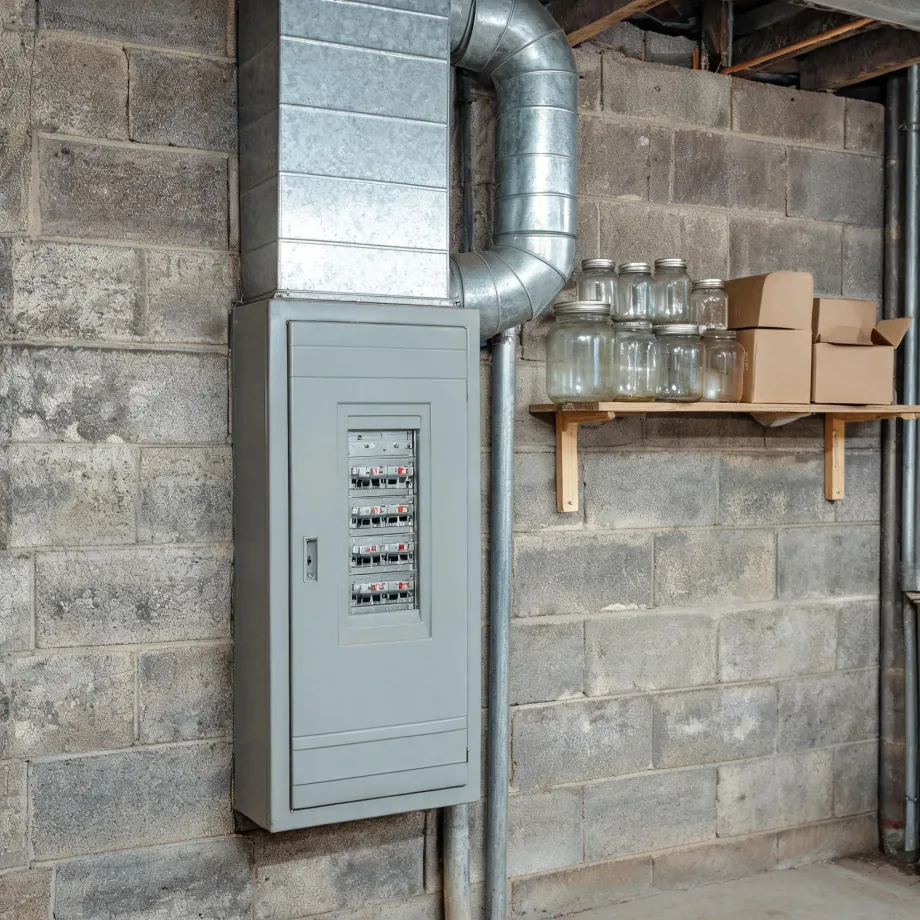
Existing ductwork is what a furnace installation turns on here, and in much of this county's housing stock that ductwork was sized and routed for a different system. Half the homes in Butler County, Kansas were built in 1984 or earlier (2020-2024 ACS 5-year). A contractor pricing a new furnace has to establish whether those runs will carry the airflow a modern unit needs, and whether the electrical service at the panel will handle the load, before the equipment choice matters at all. Where the ductwork falls short, the retrofit scope drives the project cost more than the unit itself does.
What Gets Installed With a New Furnace
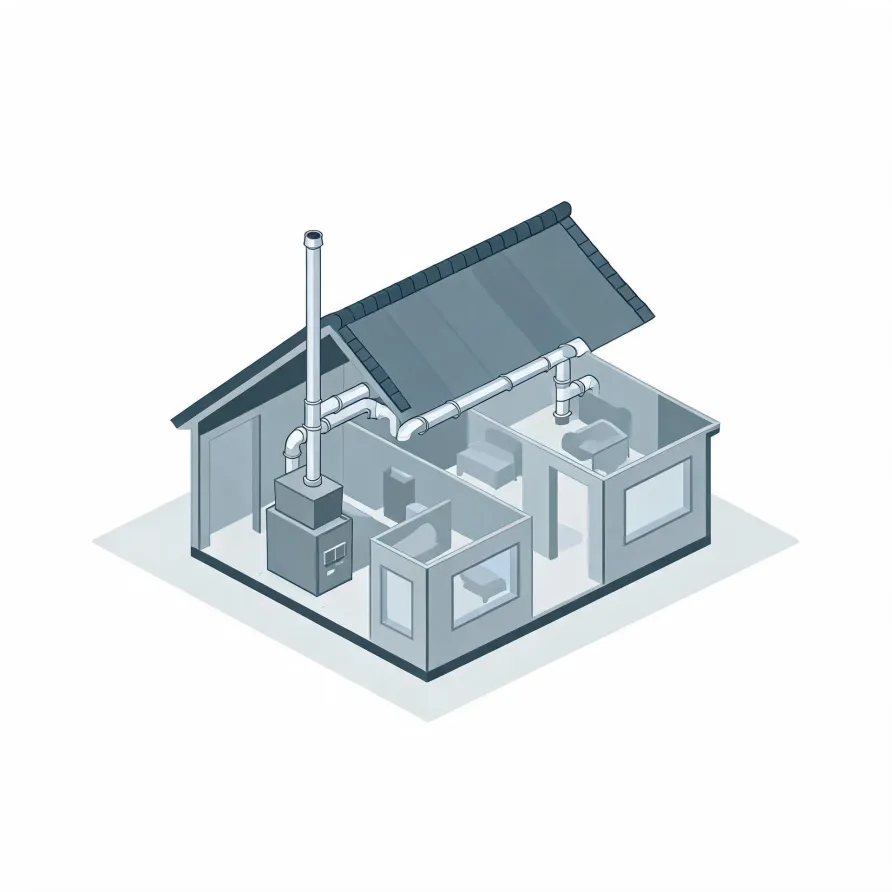
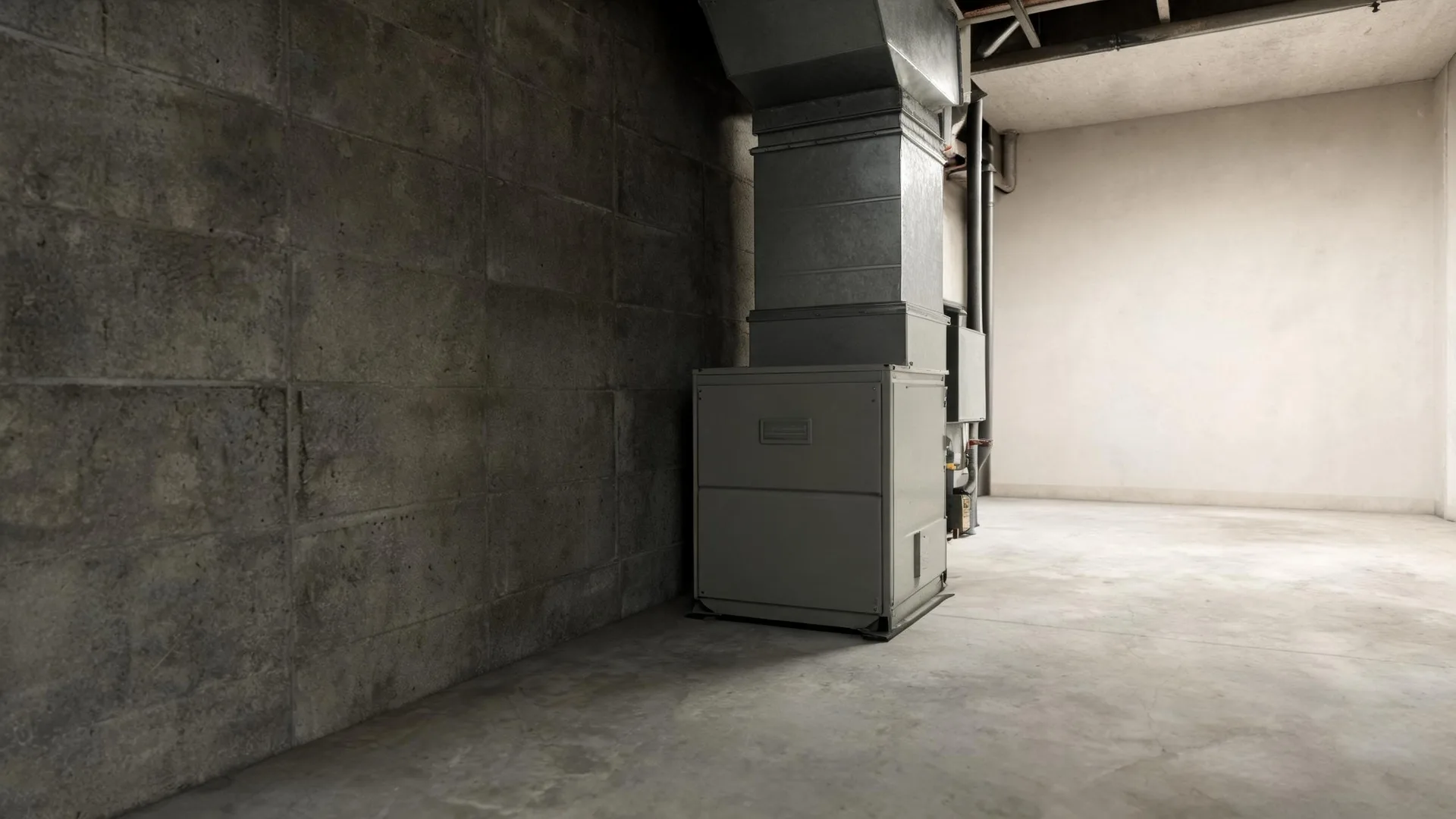
The furnace itself sits inside the house, almost always in a basement, utility closet, or mechanical room. That cabinet holds the burner assembly, the heat exchanger, and the blower. The burner fires the fuel, the heat exchanger captures that heat, and the blower pushes conditioned air out into the home.
The flue pipe runs from the furnace to an exterior wall or through the roof, carrying combustion gases out of the house. Alongside it, the contractor installs a new thermostat on an interior wall, which is the control point the household uses to tell the furnace when to run and at what target temperature.
The drawing shows a typical layout, and a licensed contractor determines exactly what applies to your house.
Get matched in Butler CountyButler County, by the numbers
379 severe weather events were recorded in Butler County, Kansas between 2015 and 2024.
NOAA National Centers for Environmental Information, Storm Events Database, bulk CSV export, events 2015-01-01 through 2024-12-31.Half the homes in Butler County, Kansas were built in 1984 or earlier (2020-2024 ACS 5-year).
U.S. Census Bureau, 2020-2024 American Community Survey 5-Year EstimatesButler County, Kansas holds 27,485 housing units (2020-2024 ACS 5-year).
U.S. Census Bureau, 2020-2024 American Community Survey 5-Year EstimatesOwners occupy 77.6% of the occupied homes in Butler County, Kansas (2020-2024 ACS 5-year).
U.S. Census Bureau, 2020-2024 American Community Survey 5-Year EstimatesFurnace Installation Rules for Butler County, Kansas4 codes, standards & citations
What the installation looks like on your end
Non-weatherized gas furnaces manufactured on or after November 19, 2015 must reach 80.0 percent AFUE.
Non-weatherized oil-fired furnaces manufactured on or after November 19, 2015 must reach 83.0 percent AFUE.
Mobile home gas furnaces manufactured on or after November 19, 2015 must reach 80.0 percent AFUE.
Non-weatherized gas furnaces manufactured on or after December 18, 2028 must reach 95.0 percent AFUE, up from the 80.0 percent minimum that applies to units manufactured before that date.
Severe Weather Events in Butler County
Butler County's weather puts real load on heating and cooling equipment, and that load shapes what a furnace here needs to handle year after year. Installation decisions that ignore local conditions tend to surface as problems later, which is why the weather record belongs alongside the equipment conversation.
379 severe weather events, 2015–2024. Source: NOAA National Centers for Environmental Information, Storm Events Database.